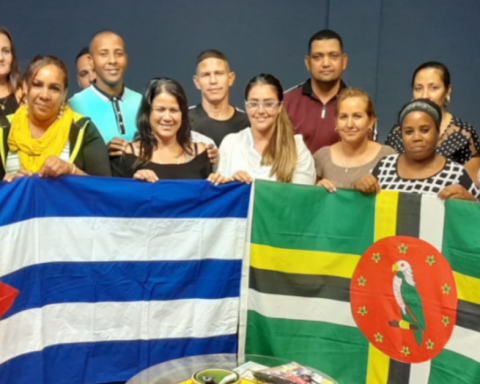
Madrid/Several customs workers and the Interior Ministry of Cuba The diplomas received this weekend that accredited their attendance at five days of the course, at the facilities of the José Martí International Airport in Havana, for the confrontation of drug trafficking that the Customs of France taught.
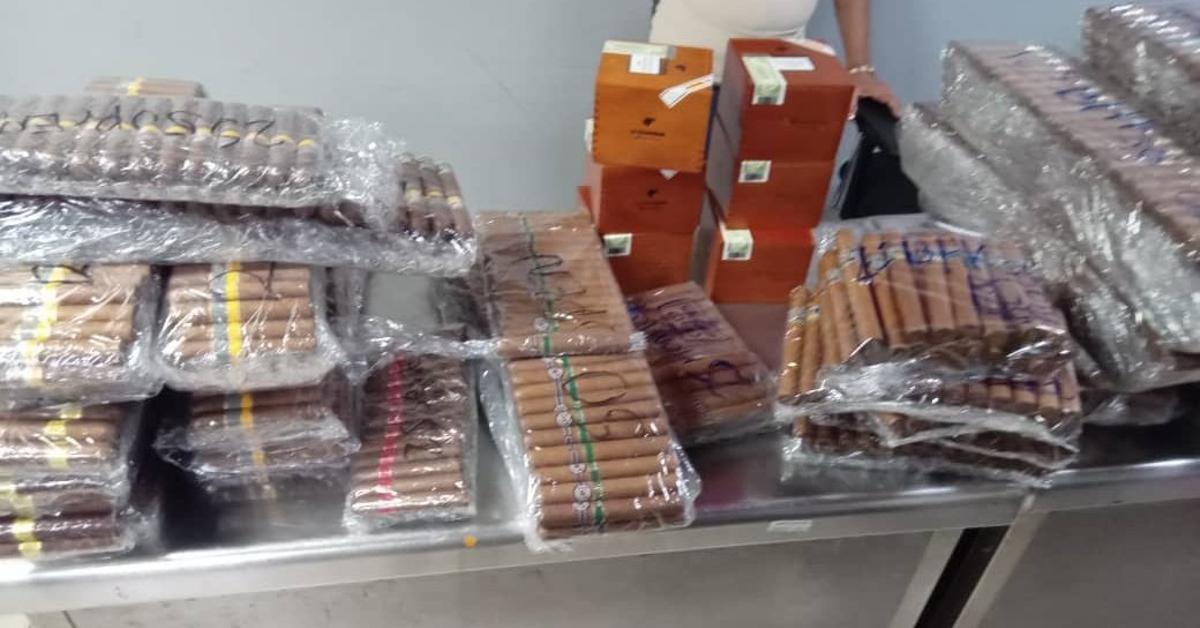
The course, with theoretical and practical exercises, began on Monday and ended on Friday and coincided with the detection of a smuggling operation of 4,500 cigars that transported two passengers. The fact was disclosed by Wiliam Pérez González, first vice chief of the General Customs of the Republic, which told in his X account That, once proven that the merchandise was false, the complaint was made to the police and extended the case.
It was the second time in a few days that the official warned of a similar event, also as regards the amount. September 2, nine days beforePérez González also gave the voice of alert to the detection of 4,400 loose tobacco with rings that were packed to leave the country without declaring. “The smuggling of this item reports great profits,” he said, adding that he had proceeded to denounce conveniently.
Operations of this type – or their dissemination, at least – have accelerated in recent times. In July last year, Pérez González showed images of another great seizure of tobacco detected by customs. Although on that date he did not say the number of units that had been intervened, the images showed another large number of beans, as well as vitolas and labels of all kinds. “Enabling recognized brands tried to introduce the country from the United States and significant amounts of tobacco are seized at the exit, violating the provisions of illicit traffic operations,” he warned then.
A very similar message published on the last day of May 2024, when he warned of more tobacco detections and qualifications. “Those who try to profit from one of Cuba’s main exportable products collide with the armor of our borders,” he said.
Cooperation between Cuba and France in customs comes from far back. Both countries signed an administrative mutual assistance agreement for prevention, research and confrontation with customs fraud, which was renewed in 2022. The pact includes collaboration between customs training schools in several matters, one of them is the single window of foreign trade, although the most important is linked to drug trafficking in ports and airports, for which these seminars are taught and Visits
Bruno Margarite, an official of the French embassy in Cuba, participated in the closing ceremony and highlighted the importance of these workshops to “consolidate cooperation ties and strengthen the confrontation of drug illicit.”
A Habanos lot is also today protagonist of information in the European pressalthough for very different reasons. In this case, it is a Balearic Court that has proved a man in front of the Regional Delegation of the Spanish Customs Customs in charge of special taxes.
In January 2020, the complainant traveled with two friends to Cuba and brought 133 tobacco to Ibiza, where they resided. Since the exempt limit is 50 beans per person, the group left the airport without declaring the product. However, once they were in their homes they gathered the product and packaged it to send the neighboring island of Mallorca, where a friend was going to celebrate a birthday party. At that time, the man told the transport company what was inside the box.
In January 2020, the complainant traveled with two friends to Cuba and brought 133 tobaccos from the island to Ibiza, where they resided
The technicians of the Risk Analysis Unit intervened the package and contacted the sender to indicate that it would be sanctioned for having hidden this import. The file included the appraisal of the Habanos, worth 3,710 euros and a fine that multiplied them by three, exceeding 11,000 euros. According to the Ibiza Diarioin addition to money, the product never reached the party and stayed in the customs warehouses.
The tourist denounced before the courts of administrative contentious claiming that there was no “mood of concealment precisely because the work of intervened tobacco were legally introduced in Spain, not having committed any infraction and therefore there is no need to hide or mask any data.”
Justice has considered that, in effect, there was no intention to hide or disappoint. “Contrary to what is indicated, it is accredited that there were no homes or fictitious names in the shipment and that the appellant, from the first moment, even knowing that the shipment had been intervened, declared how the genre had acquired, that it did not belong exclusively to it, and recorded the transport company that the content of the package was pure,” said the judge in the sentence.
Therefore, the fine of 12,245 euros plus the interest generated and the 133 pure confiscated is returned.