Havana/Without a single image, audio or statement from the survivors, the program Reasons for Cubaled by the ruling party Humberto López, this Friday once again established the regime’s version of the shooting that occurred on February 25 in the northern keys of Villa Clara. The story, constructed exclusively from institutional voices belonging to the Ministry of the Interior and the Attorney General’s Office, insists that the attack was initiated by the boat from Florida, that the incursion had “terrorist” purposes and that the response of the Border Guard Troops was “rational, defensive and proportional.”
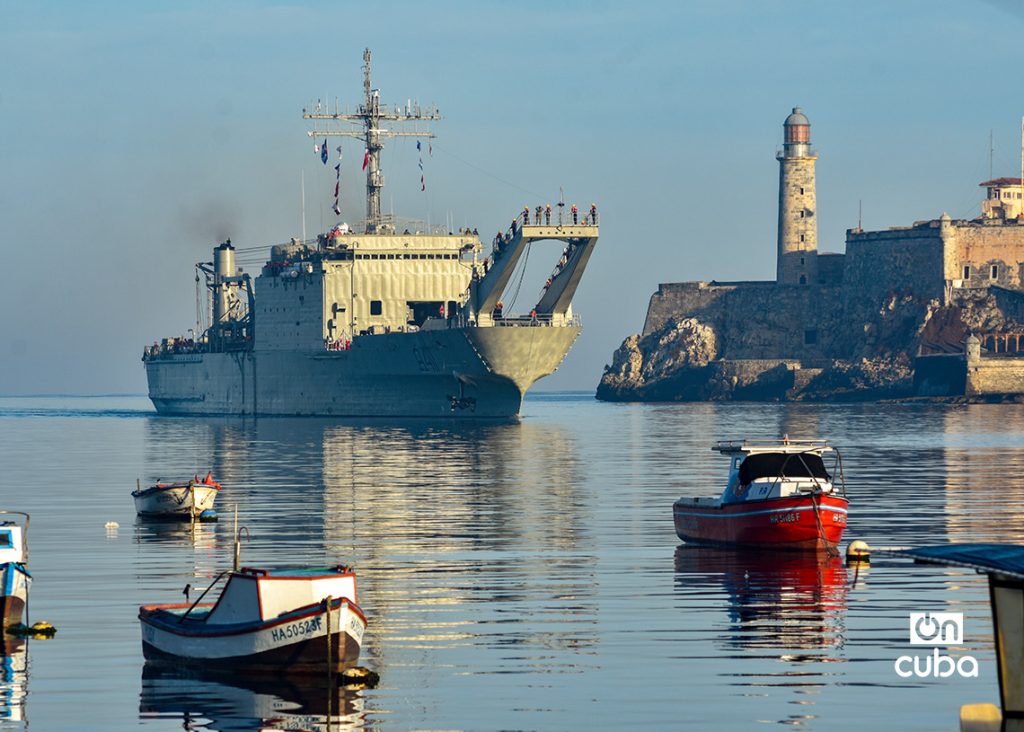
First Colonel Ebay Carballo Pérez, chief of the General Staff of the Directorate of Border Guard Troops, assured that the vessel was intercepted “one mile from the outer strip of the keys” and 11 miles within Cuban territorial waters. According to their chronology, at 7:10 in the morning the technical means detected a “naval target” approaching at 24 knots.
However, the official narrative leaves cracks. Miguel Díaz-Canel himself had declared on February 5 that the Government was aware of “plans for terrorist acts” supported and financed from the United States. If the previous information existed, was it then a simple fortuitous radar detection or a follow-up operation? Added to this is the erroneous inclusion in the first reports of an alleged crew member – Roberto Azcorra Consuegra – who was never on the boat, which suggests that the authorities managed a preconceived list of names in advance.
While hospitals, transportation and basic services suffer an acute fuel crisis, Colonel Carballo assured that the Border Guard Troops maintain a “device in permanent combat readiness,” with naval units “dislocated” throughout the country and active radiotechnical and visual means. The statement confirms what many Cubans confirm daily: precariousness never reaches the military apparatus.
If a second boat really existed, why wasn’t it exhibited as evidence?
Colonel Víctor Álvarez Valle, second head of the body specialized in crimes against State security, added another element: originally there were two boats. One suffered mechanical damage and was left stranded; Its crew and cargo were transferred to the boat that was finally intercepted.
According to a source close to the group, the boat they initially planned to use never left Florida. In fact, he claims to have seen it still broken down in its usual place just a day before the television program aired. This circumstance would explain why they ended up taking over another boat to make the journey.
The data is relevant because in Reasons for Cuba There was talk of two boats: one that had been left stranded after suffering damage and another in which the ten intercepted men were finally traveling. However, only one was shown on the broadcast. For the source consulted, the authorities were expecting a specific boat, based on previous information, and the story of the alleged transshipment would be a way of adjusting the official version to a ship that does not match the one they had allegedly identified.
If a second boat really existed, why was it not exhibited as evidence, in the same way as the weapons and the rest of the seized cargo?
The numerical and material disproportion also deserves examination. The interceptor boat, with five combatants armed with three AKM rifles and an RPK machine gun, approached a boat that, according to the official version, was transporting ten men, 1.8 tons of cargo and a 250-horsepower outboard motor. However, Carballo himself admitted that the “offending” boat was stopped and that some of its occupants were in the water when they were surprised. After noticing the presence of the border guards, they reembarked and headed west.
/ Screenshot
The exchange of shots – just 20 meters away – initially left three dead and seven injured on the boat with Florida registration. On the official boat, only the skipper, Captain Yosmany, was injured, who, according to the story, received an impact in the abdominal region and in the forearm, but continued at the helm with “bravery and conviction.” The exaggeratedly epic tone contrasts with the absence of any independent testimony about what happened on Wednesday.
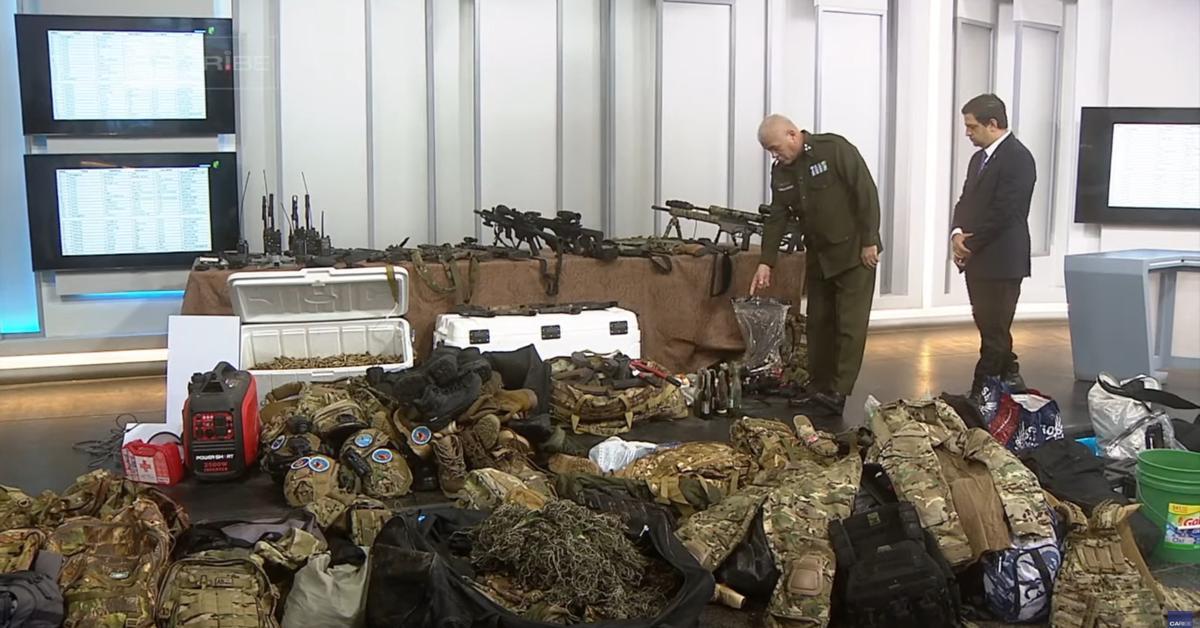
According to Álvarez Valle, the official boat received 13 bullet hits and the boat from Florida, 21. The figures draw attention if one considers that, according to the television exhibition, the ten occupants were carrying three AK-type rifles of Soviet and Chinese origin; a dozen AR-15 platform rifles – very common in the US civilian market; two higher-powered rifles commonly used for precision shooting or big game hunting; eleven semi-automatic pistols from different manufacturers, most in 9 millimeters; in addition to 12,846 ammunition. Altogether, this is a varied arsenal that combines long and short weapons available on the legal market in the United States.
However, the source consulted by this newspaper assures that, in their practices, they only used semi-automatic rifles – that is, weapons that fire a projectile for each pull of the trigger – and denies that they had automatic weapons for military use. The arsenal, displayed in the studio, occupied several meters. If the crew members were superior in number and weapons and, as the Government claims, they opened fire first, it is difficult to explain the inequality in the damage and human toll.
The authorities emphasized the alleged leadership of Amijaíl Sánchez González, presented as a “terrorist” and linked to events that occurred in Cuba even when he was already residing in the United States. People close to the group contacted by this newspaper deny, however, that Sánchez was the leader of the expedition.

/ Screenshot
Even more striking is the attempt to present Maritza Lugo Fernández, a former political prisoner and immigrant resident in the United States, as the “intellectual author” of the events. The indictment not only expands the case beyond the intercepted vessel, but also shifts the focus to the exile community.
By attributing criminal responsibilities to an opponent based in the United States, the regime seems to seek several simultaneous objectives. On the one hand, it internationalizes the file and puts pressure on agencies such as the FBI to be forced to open or reactivate investigations into Cuban exiles identified by Havana. On the other hand, it extends the political and judicial siege on the diaspora, sending the message that any activism can be reinterpreted as support for violent actions.
Among the seized cargo, the program showed emblems of the People’s Self-Defense and the November 30 Democratic Movement, in addition to canteens, camouflage meshes, Molotov cocktails and other artifacts. In a revealing moment, Carballo stated: “If we did not respond as we acted, the dead would have been on our side.” The phrase, far from closing the discussion, revives the central question: who shot first and under what exact circumstances?
The prosecutor Edward Robert Campbell He announced that the sentences could range between 10 years in prison and life imprisonment or even the death penalty. Humberto López intervened to point out that, however, the procedural outcome “is obvious.”
For his part, military doctor Juan Antonio Rodríguez Aguilera reported that the skipper of the official boat is out of danger. He did not clarify, however, the circumstances under which the fourth officially reported deceased died. He did assure that the detainees receive medical care “with all the resources they need.” When asked why resources are allocated to those who “invaded” the country, he responded that this is part of the ethics of the Revolution. What the official discourse omits is that providing health care to the wounded and people in custody does not constitute an ideological concession, but rather a basic obligation of international humanitarian law. Failure to comply would constitute a crime.