Madrid/Since her husband gave his first statements to the Spanish press on Monday, nothing additional has been known about the Cuban woman. Tamara Valdesone of the passengers who were traveling on the unfortunate train that went from Madrid to the south and that on Sunday evening collided with another that was traveling in the opposite direction, in Córdoba. “I’m very nervous, I haven’t been able to locate her yet,” said José Ramón Martín García – mistakenly identified with the last name Montón at first – upon arriving in the town of Adamuz, where the authorities had concentrated the survivors. His wife was not there.
Tamara’s name has been absent from the numerous testimonies, profiles and stories of the victims that have appeared in the local media, a sign of the maximum discretion with which the family has wanted to carry their cross. A phone hung up without explanation was the response to this newspaper when he called her work to find out about her.
This Thursday, the mayor of Aljaraque, the town in the Andalusian province of Huelva where Tamara lived, confirmed the official identification of her body. The local press publishes a farewell text from his colleagues at the RE/MAX real estate agency: “The loss of our dear companion (…) leaves us with a deep emptiness and a sadness that is difficult to express in words. Life, sometimes, is tremendously unfair, and moments like this remind us how fragile everything is.”
This Thursday, the mayor of Aljaraque, the town in the Andalusian province of Huelva where Tamara lived, confirmed the official identification of her body.
So far, 42 of the 43 deceased have been identified – the majority from Huelva – in a process that has involved Civil Guard helicopters transporting the DNA samples to Córdoba, and from there traveling to Madrid by plane to be analyzed in the crime laboratory, and which has kept the relatives tied to the hope of a miracle. 31 people remain admitted to hospitals, 28 adults and 3 children.
“You were ready to leave, but you never prepared me for so much.” This message from your friend Yaniurys Rodríguezon Tuesday, was one of the few public indications that the outcome was the worst feared. Her words paint a luminous being: “Always authentic, always you, so firm, so impetuous and at the same time so radiant with colossal tenderness. Always shine with your glass up there, until I arrive and the rumbón is formed. From here we have not been able to fulfill what we promised. We cannot stop crying for you, we cannot stop feeling deep pain for your unexpected departure. Forgive us, because we do not know how to live without you.”
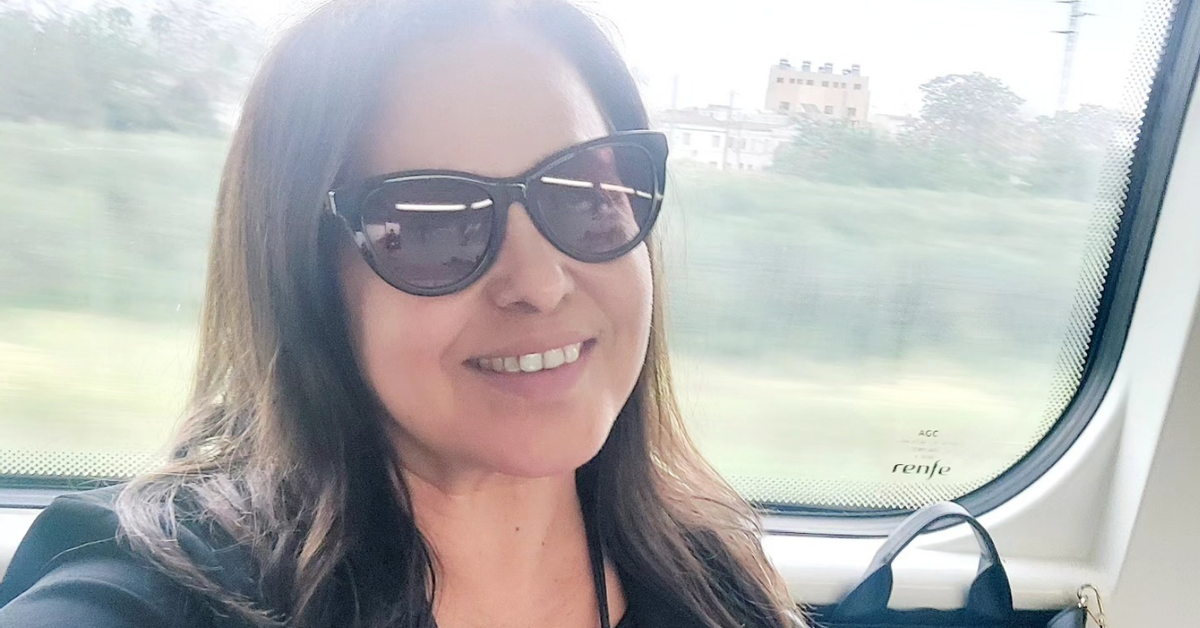
The open photographs and the brief texts that accompany them on Tamara Valdés’ own social networks corroborate this portrait and, at the same time, are traces of her biography. Trips here and there, friends, succulent meals, endless white sand beaches – those found in the Spanish southwest –, toasts at sunset, smiles that come out of your eyes. The woman, who was turning 51 in two weeks, was enjoying life.
Rosy del Todo Fournier also credits it, who has given an interviewto The Touch. I had spent the weekend in Madrid with this friend. Both had left Cuba together, according to what they told the independent media, in 1995. They were part, as dancers, of a show organized by the Cuban Ministry of Culture that would tour Spain. Part of the members, as has happened on so many occasions, especially in that Special Period, did not return.
They first worked in an orchestra in Orense (Galicia) and lived together until 2001, when Tamara moved to Tenerife, in the Canary Islands, and Rosy stayed in Galicia. Last weekend in the Spanish capital was the first time they had seen each other since then.
If anything tarnished the picture, it was having his Cuban family far away. This is how the messages sent in public to two sisters, Rosa Elena and Consuelo Isabel, and their nephews, Joel, Humberto and Sergio, are read.
Married in 2016 to José Ramón Martín –Popefor friends – and together with his daughter Juliana, who is now 18 years old, Valdés found happiness in Huelva.
If anything tarnished the picture, it was having his Cuban family far away. This is how the messages sent in public to two sisters, Rosa Elena and Consuelo Isabel, and their nephews, Joel, Humberto and Sergio, read.
Resident in Bellavista (Aljaraque), an enclave that floats above the privileged environment of the Odiel marshes, scented with pine trees and full of birds, she worked as director of a central real estate agency in the provincial capital. Her work is what forced her to leave on Sunday, after meeting friends in Madrid. “I had a meeting first thing on Monday,” said Rosy del Todo, who has the only consolation that “her last moments were happy.”
The other Cuban who was traveling on the same train, Daniela Arteaga, was only injured, with fractured ribs and bruises on her head, but she was immediately out of danger. This young woman, 28 years old and graduated from the Higher Institute of Design, had received a scholarship from the International University of Andalusia (Unia) and had just arrived in Madrid, where she took the train to Huelva.
The Cuban Embassy in Spain reported via X on Tuesday that Spanish authorities had confirmed “the presence of three Cuban citizens in the train accident in Andalusia.” They did not give names, but they said that two had been discharged and one remained hospitalized, which ruled out Tamara Valdés from that list. Although the diplomatic headquarters promised “updates”, so far they have not taken place.
The accident occurred around 7:43 p.m. on Sunday, when the last carriages of a train from the Italian company Iryo, which was traveling from Malaga to Madrid, derailed on the adjacent track.
The accident occurred around 7:43 p.m. on Sunday, when the last carriages of a train from the Italian company Iryo, which was traveling from Malaga to Madrid, derailed on the adjacent track and hit the Alvia train from the state-owned Renfe, which was passing at that time in the opposite direction, Madrid-Huelva.
Although the conclusions of the investigation are pending, notches have been found in the bogies – the structures where the wheels are mounted – of trains that previously passed through the same point where the Iryo derailed, which suggests a possible defect in the track. The Spanish Minister of Transport, Óscar Puente, admitted this Wednesday at a press conference that this is “an undeniable possibility”, although he said that “it is very risky to say that the marks on the bogies represent a problem in the infrastructure.”
In Gélida (Barcelona), another derailment in the Rodalies (Cercanías) system this Tuesday left one dead and 37 injured, five of them seriously. The main union of machinists in Spain has called a strike for next February 9, 10 and 11. They allege that the situation of the railway and its “constant deterioration” in recent years is “inadmissible”, and demand “different measures be urgently implemented to guarantee the integrity of professionals and users.”