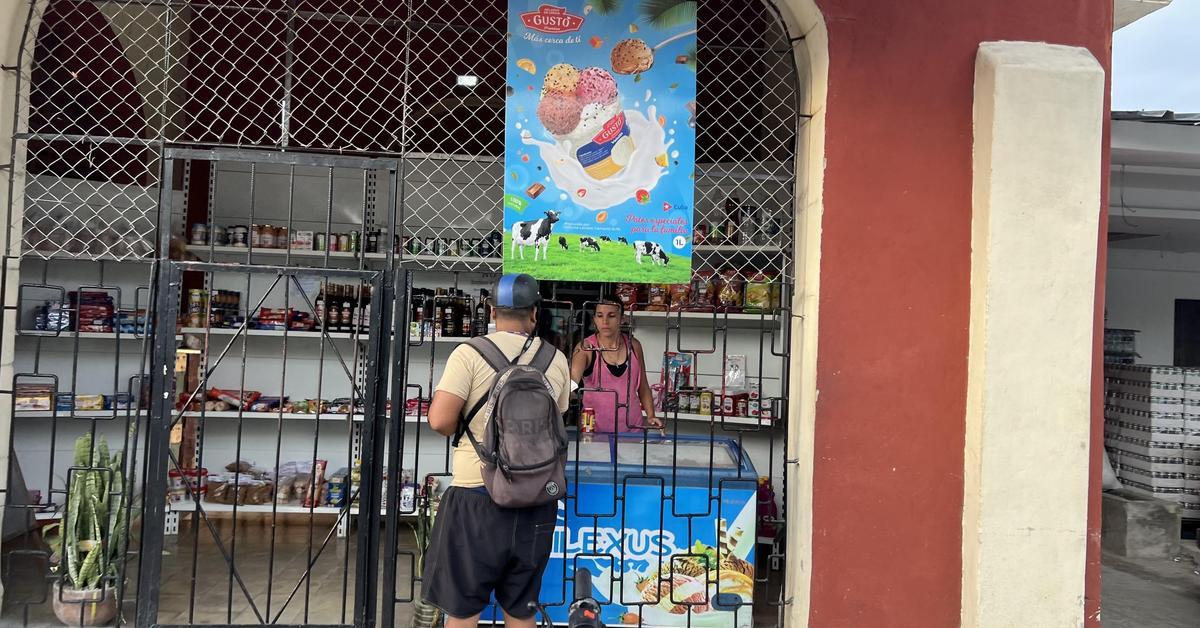
Havana/The newly disclosed First Business Climate Study for Cuban MSMEscarried out by the consulting firm Boomreveals a contrast that well summarizes the moment that the private sector is experiencing on the Island. The results of the study were presented this Friday during El Break, a meeting held in Nodo Habana.
According to the study, 76% of the businessmen surveyed say they feel optimistic or very optimistic about 2026, while 60% predict that the national economy will be somewhat or much worse next year. The apparent contradiction, described in the report itself as a “marked divergence,” shows the disconnection between the individual performance of small firms and the perception of the economic environment in which they are forced to operate.
The study, the first of its kind prepared independently in Cuba, gathers the opinion of 175 managers of private companies with up to 100 employees and mostly with more than three years of operation. Auge warns that the selection of interviewees was not random and that the results should be assumed as a qualitative approach and not as a statistical generalization of the country’s business universe. Even so, the consultancy highlights that this first map offers a valuable perspective on the experiences and concerns of a representative segment of the current MSME fabric.
One of the most striking elements of the analysis is the coexistence of a marked optimism about one’s own performance with a deep distrust of the country’s future. For the authors, this tension crudely demonstrates the lack of security in the regulatory and economic environment and explains why, despite the push of the private sector, investment remains timid and innovation is oriented more towards resistance than towards making qualitative leaps. Although the majority of respondents expect to increase their sales and profits in 2026, they are more cautious when it comes to forecasting increases in investment or employee numbers, a sign of the insecurity caused by regulatory volatility and macroeconomic unpredictability.
The consulting firm recommends improving legal predictability, enabling transparent mechanisms for access to foreign currency, institutionalizing a dialogue between private actors and the Government and adopting firm measures to contain inflation.
Among the most optimistic companies, those dedicated to information and communications technologies, wholesale and retail businesses, industrial and agricultural production, and gastronomic and accommodation businesses stand out. They are sectors that, despite operating in adverse conditions, maintain a certain dynamism and adaptability.
However, present obstacles continue to erode its room for maneuver. This year, the most highlighted problems were inflation –mentioned by 60%–, deficient state infrastructure –43.4%– and the difficulty in accessing foreign currency –38.9%–. Concerns for 2026 grow in intensity, as 68% fear greater economic instability, 56.6% anticipate new regulations that further complicate private activity, and 48% expect an additional increase in costs due to inflation.
The report sees in this set of concerns a map of systemic bottlenecks that are worsening on a shifting ground marked by increasing rates, prolonged blackouts, persistent inflation and the absence of a formal and stable mechanism for MSMEs to access foreign currency. The entrepreneurs were explicit in identifying what they consider the three priority areas for the authorities: guaranteeing regulatory stability, opening real and autonomous access to foreign currency and formally recognizing the contribution of the private sector to the national economy. Without tangible progress in these directions, Auge maintains, the country will continue to be trapped in a dynamic of low investment, low productivity and innovation reduced to survival strategies.
MSMEs have become one of the few actors with the capacity to adapt and generate a certain economic dynamism
Based on the conclusions of the study, the consulting firm recommends improving legal predictability, enabling transparent mechanisms for access to foreign currency, institutionalizing a dialogue between private actors and the Government and adopting firm measures to contain inflation. In Auge’s opinion, any attempt to boost the Cuban economy necessarily involves offering a more stable and less arbitrary framework for the activity of non-state companies.
Between 2020 and 2024, the country’s GDP has contracted by 11%, and no growth is expected in the current year. Although an official forecast for 2026 has not been released, nothing points to a change in trend. Failed internal economic policies and the difficulties faced by the regime’s main allied countries have aggravated structural problems that are expressed in shortages of food, fuel and medicine, daily blackouts, overwhelming inflation, fiscal deficit, deterioration of state services, bank decapitalization, growing dollarization and massive migration that does not stop.
In this turbulent panorama, MSMEs have become one of the few actors with the capacity to adapt and generate a certain economic dynamism. But his optimism contrasts with the increasingly widespread certainty that the country is sliding towards sustained deterioration.