The Cuban Foreign Ministry denied the presence of terrorists and foreign military infrastructure in the country and stated that it was willing to “renew technical cooperation” at a time of maximum tension with Washington.
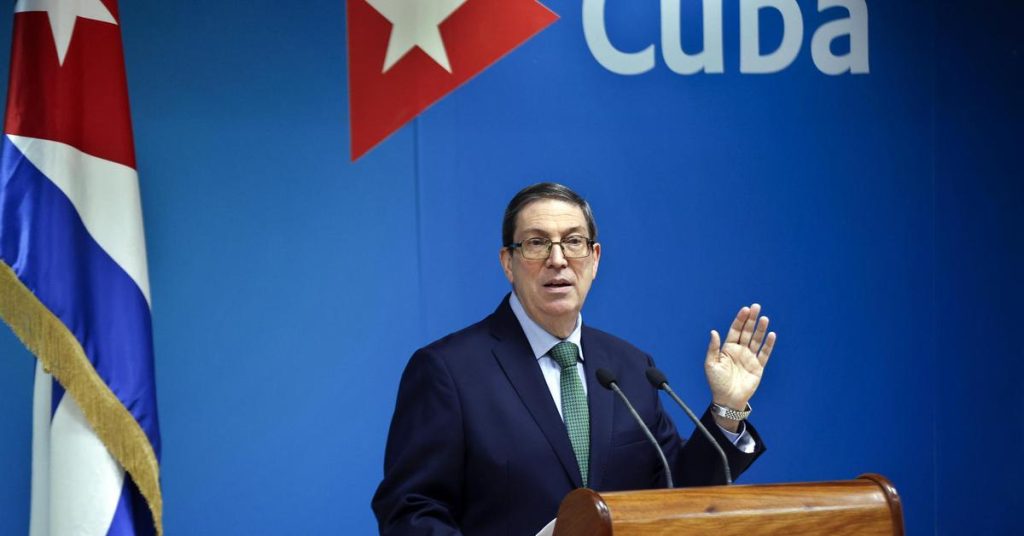
MADRID, Spain.- The Cuban regime rejection this weekend the accusations of the US administration that point him out as a threat to the national security of the United States and he once again presented himself as an actor willing to cooperate in matters of international security, despite his long history of political confrontation with Washington and the repeated complaints about his lack of transparency and respect for human rights.
In an official statement released by the Ministry of Foreign Affairs (MINREX), the Government of Havana stated that it “unequivocally condemns terrorism in all its forms and manifestations” and assured that it “does not host, support, finance or allow the existence of terrorist organizations” in its territory, a statement that contrasts with the recurrent inclusion of Cuba in international lists of terrorism sponsoring countries and with persistent questions from the United States and other Western governments.
The statement insists that Cuba maintains a policy of “zero tolerance” towards terrorist financing and money laundering, and categorically denies that it represents a threat to the United States.
However, the statement avoids any reference to the role of the Cuban intelligence apparatus in the region, as well as its strategic alliances with authoritarian governments and geopolitical actors adverse to Washington, elements that have been repeatedly pointed out by the White House as risk factors for hemispheric security.
In relation to past contacts with people later included on terrorism lists, the regime only mentions that these interactions occurred “in a limited manner and in humanitarian contexts”, linked to peace processes and at the request of the governments involved, a justification that Havana has used on other occasions to avoid political and diplomatic responsibilities.
Despite the deterioration of bilateral relations and the tightening of US policy towards the Island, the Cuban Government claims to be willing to “renew and expand technical cooperation” with Washington in areas such as the fight against terrorism, drug trafficking, money laundering, cybersecurity and human trafficking, without offering specific details on mechanisms, deadlines or verifiable commitments.
The statement concludes with a call for “a respectful and reciprocal dialogue, aimed at tangible results,” which Cuba is willing to sustain “based on mutual interest and international law.”
The MINREX statement comes a few days after the Castro dictatorship released another official statement in which it condemned US President Donald Trump’s decision to declare a national emergency due to the “policies, practices and actions of the Government of Cuba.” In that text, the regime described the measure as “a new escalation” of hostility against the country.
In that same note, shared publicly by the ruler Miguel Díaz-Canel, Havana accused the White House of “imposing an absolute blockade on fuel supplies” and maintained that the characterization of Cuba as an “unusual and extraordinary threat” to the national security of the United States is “absurd.” According to the official speech, it is Washington that “attacks the security, stability and peace of the region and the world.”
The regime’s new statements also coincide with statements made this weekend by Trump, who confirmed that his administration has initiated contacts with Havana. The US president pointed out that Cuba “needs help for humanitarian reasons” and assured that his Government is looking for a solution for people who, he said, “have been treated very badly by Cuba” and wish to return to the Island after decades of separation from their families.
The US president’s words came shortly after the signing of an executive order authorizing the imposition of additional tariffs on goods imported from any country that supplies oil to the Cuban regime, as part of the national emergency declared against Havana. Washington has defended the measure as a mechanism to limit financing of the Cuban state apparatus.
Trump insisted that his policy towards Cuba responds to the repressive nature of the regime and its history of human rights violations, while justifying the sanctions as a way to demand responsibility from the island’s authorities, in contrast to the official Cuban discourse, which continues to attribute the internal crisis and international isolation exclusively to external factors.