The lack of public details about what was agreed is the most relevant point to evaluate the real scope of the “reordering.”
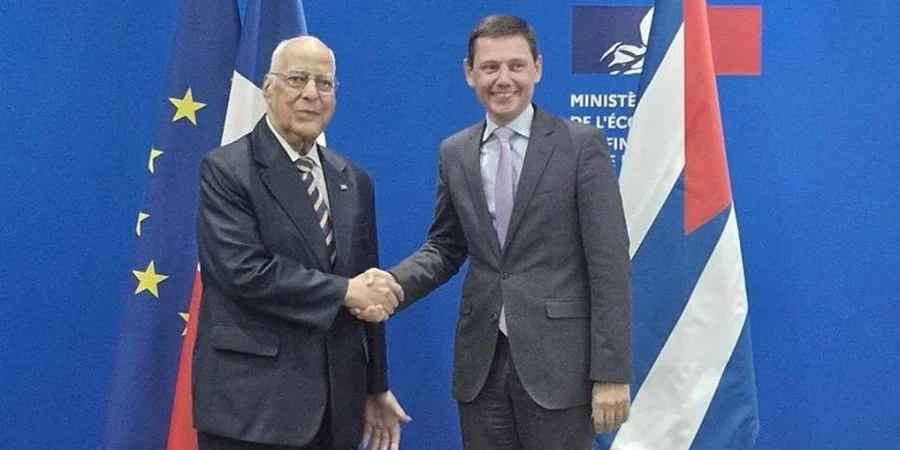
MIAMI, United States. – Havana and the Paris Club agreed to “amend” the terms of the Cuban debt consolidation agreements signed in December 2015 and June 2021, according to an official statement from the Paris Club.
The document released by the group of creditors indicates that the “rescheduling” offers “better conditions” for the Cuban Government to face “its economic and financial difficulties in the coming years” and preserve the relationship with the creditor countries “through the full implementation” of the previous agreements. The note, however, does not include amounts, payment schedules, or specific rates or conditions.
In the coverage of the Cuban state press, the agreement was presented as a liquidity relief in a “challenging economic scenario,” and it was highlighted that the Cuban delegation—led by Deputy Prime Minister Ricardo Cabrisas—explained to the creditors “the complex situation” of the country.
Latin Press reported that Cabrisas attributed this situation to the US embargo: “He pointed out the impact of the economic, commercial and financial blockade that the United States has imposed on his country for more than six decades (…) which constitutes the main obstacle to its development.”
Granma and other official media also highlighted that Cabrisas “appreciated the sensitivity of the creditors” and “the understanding” of Havana’s explanation, in addition to the “role played by the European Union” in the negotiations, “particularly by the host France.” In that same story, it was reiterated that Cuba “ratified the will (…) to honor the commitments” and that, after the signing, it would be necessary to move “in the shortest possible time” towards bilateral agreements.
The Paris Club is made up of 14 countries: Australia, Austria, Belgium, Canada, Denmark, Finland, France, Italy, Japan, the Netherlands, Spain, Sweden, Switzerland and the United Kingdom.
The lack of public details about what was agreed is the most relevant point to evaluate the real scope of the “reordering”: the Paris Club did not disclose the new conditions and the Cuban state press did not publish figures or an updated payment schedule, despite presenting the negotiation as a step to “fulfill its commitments.”
This opacity prevents us from knowing what was granted, what was postponed and under what guarantees the new amendment was agreed upon, in a history where the official press itself had already recognized the existence of “unfulfilled payments” in previous negotiations with the same group of creditors.