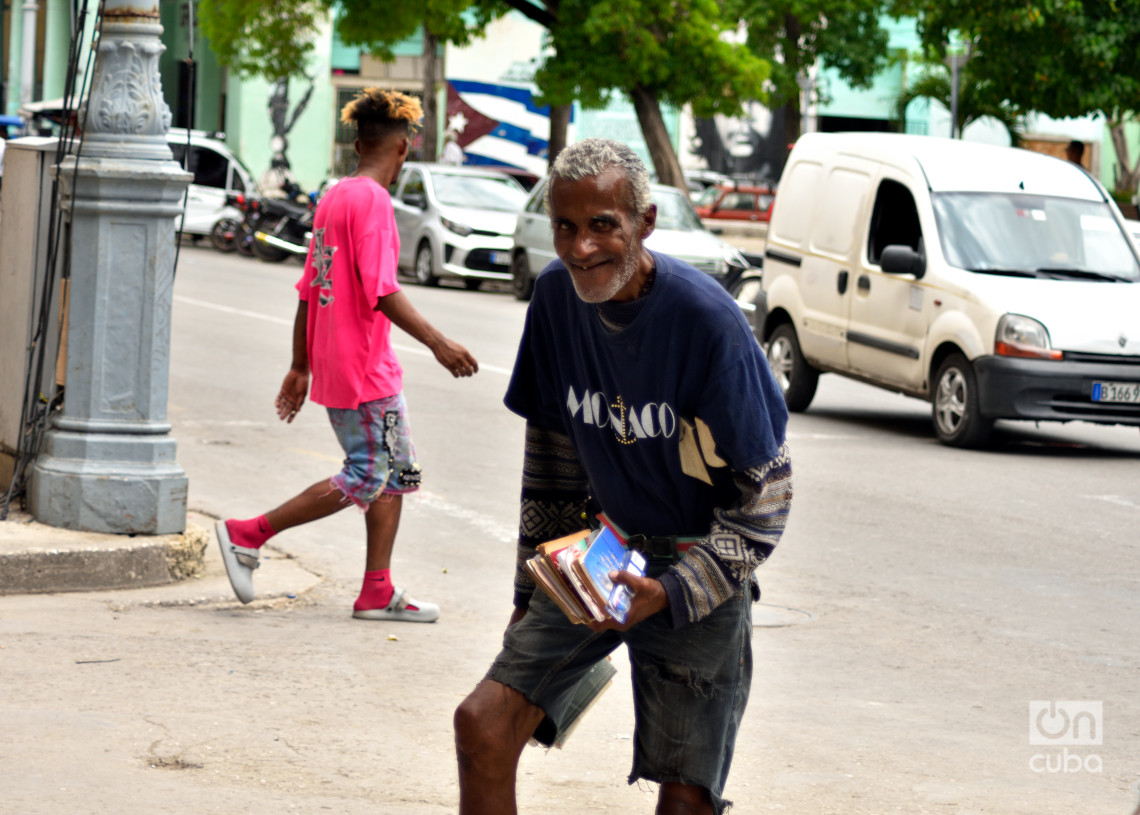
The Cuban Government seeks to promote care for people who are currently in vulnerable situation and they reside in intricate areas of the country, a number that could skyrocket in the midst of the social crisis that may worsen even more after the blockade of oil supplies implemented by the United States.
To enhance this service, it is intended to create 325 Community Food Homes throughout the island, like the 29 that already operate in the provinces of Guantánamo, Santiago de Cuba and Holguín, highlights a publication from the diary Granma.
The program’s priority is to cover the more than 3,000 vulnerable people who live in rural and difficult-to-access areas, as well as in isolated and suburban areas, Grettel Portales Pérez, general director of services at the Ministry of Domestic Trade (Mincin), explained to the media.
The official specified that 25 of the centers created are located in the easternmost province of the island, and guarantee the feeding of around 250 people who were previously in a fragile situation.
There are four centers that currently operate in Holguín and one has already opened its doors in Santiago, all with very good acceptance, in the opinion of Portales Pérez.
It is planned that 105 of these new homes will be located in the eastern region of the country, where the largest number of people who face the most complex situations to meet their most basic needs are concentrated.
Poverty in Cuba: Ministry of Labor establishes new regulations to serve “vulnerable groups”
According to the information, coverage will be mainly aimed at older people who live alone or with other older people, without family support.
It will also include those with disabilities who live alone, without family support, and members of families in situations of social vulnerability, without conditions at home to prepare food.
Furthermore, and exceptionally, pregnant women who live in economically vulnerable families and require nutritional reinforcement in their diet will have access to this service, the publication states.
How and with what?
Beyond the declaration of intent, Portales Pérez did not elaborate on the way these institutions operate, nor did he give details about how he intends to keep them in operation in the midst of the increasingly marked shortage of food products, to which has been added the low availability of fuel.
Although there are items in the state budget dedicated to responding to these situations, the proven reality is that until now it has not been enough to cover needs that are increasing, along with population aging and emigration.
The increase in people in vulnerable situations has recently extended to minors, as seen in images of street children sleeping in the gardens of a luxury Havana hotel, which generated the indignation of many citizens.
Months earlier, during a meeting of the Council of Ministers, the Government recognized that at the end of the first quarter of the year there was an execution of the state budget for social assistance well below what was planned.
The budget to help vulnerable families has major non-compliance, admits the Government
For the Government of the island, the concept of vulnerability transcends the economic, as it covers various social, cultural and educational spheres.
According to the most recent official data, managed by the Cubadebate website In March 2024, Social Assistance benefited 189,169 families in Cuba at that time, with coverage for 350,472 people.
The Cuban authorities have recognized the seriousness of the situation, but there is no update on the number of people who are increasingly living in these conditions.
With the current worsening of the economic crisis, the prolonged inability to produce food and the resulting inflation that impacts the price of products, as well as the recent oil blockade, it is expected that these numbers will skyrocket in the short term.