Testimonies from released prisoners, activists and relatives point out the participation of prison guards and commanders in the entry and distribution of drugs.
MADRID, Spain.- The Cubalex Legal Advice Center denounced that several prisons in Cuba face an increase in the circulation of highly dangerous drugs, among them “the chemical”, in a context marked by corruption, complicity of officials and lack of state supervision. The report, published on November 25, 2025, collects testimonies from released prisoners, activists and family members who describe a scenario where substances enter prisons with the direct participation of law enforcement officers.
Prison 1580, known as “El Pitirre”, in San Miguel del Padrón, is among the indicated establishments. According to Cubalex, drugs circulate there between inmates and guards in an environment of violence, malnutrition and mistreatment.
The organization remembers the statements offered to CubaNet by the released Ohauris Rondón Rivero, who assured that police officers introduced substances and delivered them to certain inmates for distribution. He also denounced corruption in the management of food and medicine, as well as a general climate of abuse within the prison.
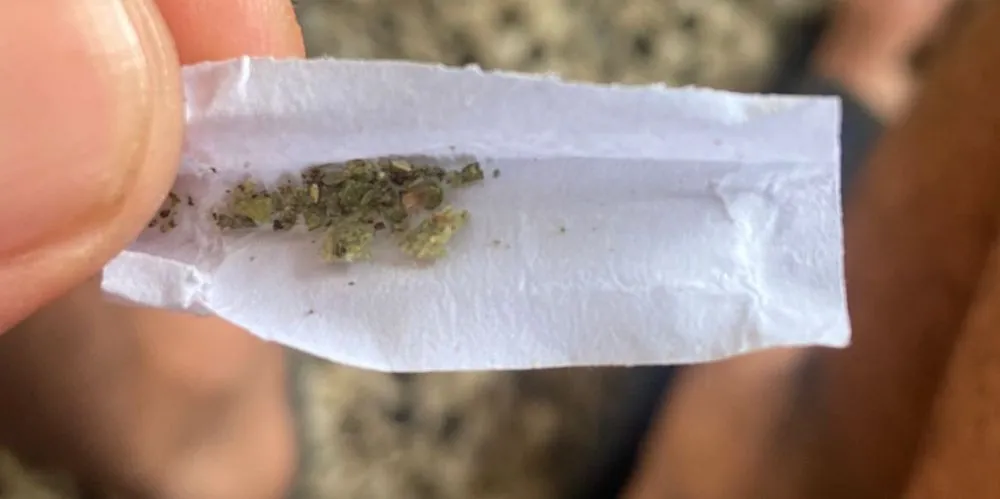
Cubalex also collected complaints about the Combinado del Este, where various testimonies describe the operation of internal drug trafficking networks. Activist Marcel Valdés stated that prison guards distributed “the chemical” or “little paper,” pointing out that the same substance that circulates on the streets is now inside the prisons.
In a publication in causing a large number of the Cuban population to be addicted to that such a dangerous substance called a chemical that causes the same effects and the same addiction as fentanyl.”
Publications on social networks incorporated into the report also indicate that an inmate, allegedly protected by officers, runs an illicit market for drugs, weapons and other goods from the inside.
Another questioned center is the Ho Chi Minh camp, in Jaruco, Mayabeque. Although the authorities justify restrictions—including the prohibition of access to books—as a measure to prevent the entry of prohibited substances, complaints indicate that “the chemical” continues to circulate within the prison.
In the Aguacate prison, in Quivicán, also in Mayabeque, Cubalex documented accusations against officials in charge of re-education. According to the complaints, a worker identified as “Sindy” would introduce pills and other drugs, in addition to appropriating food intended for the inmates. Her husband, head of reduction, would be involved in the irregular collection of permits, calls and other benefits.
The Ivanov prison, in El Cotorro, also appears in the report. He political prisoner Walfrido Rodríguez Piloto He denounced that police officers bring drugs to the prison and that these are resold by jailers, in a climate where the commanders would know the situation but do not act, either out of fear or complicity.
Cubalex also warns about the situation in the “Cuba Sí” prison in Holguín, where widespread drug consumption, negligence in medical care and deaths due to overdose are reported. The complaints indicate the participation of doctors, guards and high-ranking officers in the diversion of medicines and in the general deterioration of living conditions, described by sources as inhumane. At least six inmates would have died in 2024 in that center.
The report identifies a common pattern in all cases: introduction and distribution of drugs by guards and officials, internal trafficking networks that operate with the protection of commanders, extortion of inmates through the illegal sale of benefits, medical negligence, institutional violence and an increase in deaths associated with consumption inside prisons.
Cubalex emphasizes that the Cuban State, as custodian of people deprived of liberty, has the responsibility of guaranteeing their life and physical integrity, and warns that the presence of drugs inside prisons constitutes a serious violation of human rights. The organization asked to investigate the complaints and punish those responsible, in addition to ensuring decent and supervised conditions for the prison population. It also enabled secure channels so that family members and inmates can continue reporting these events with a guarantee of confidentiality and legal support.