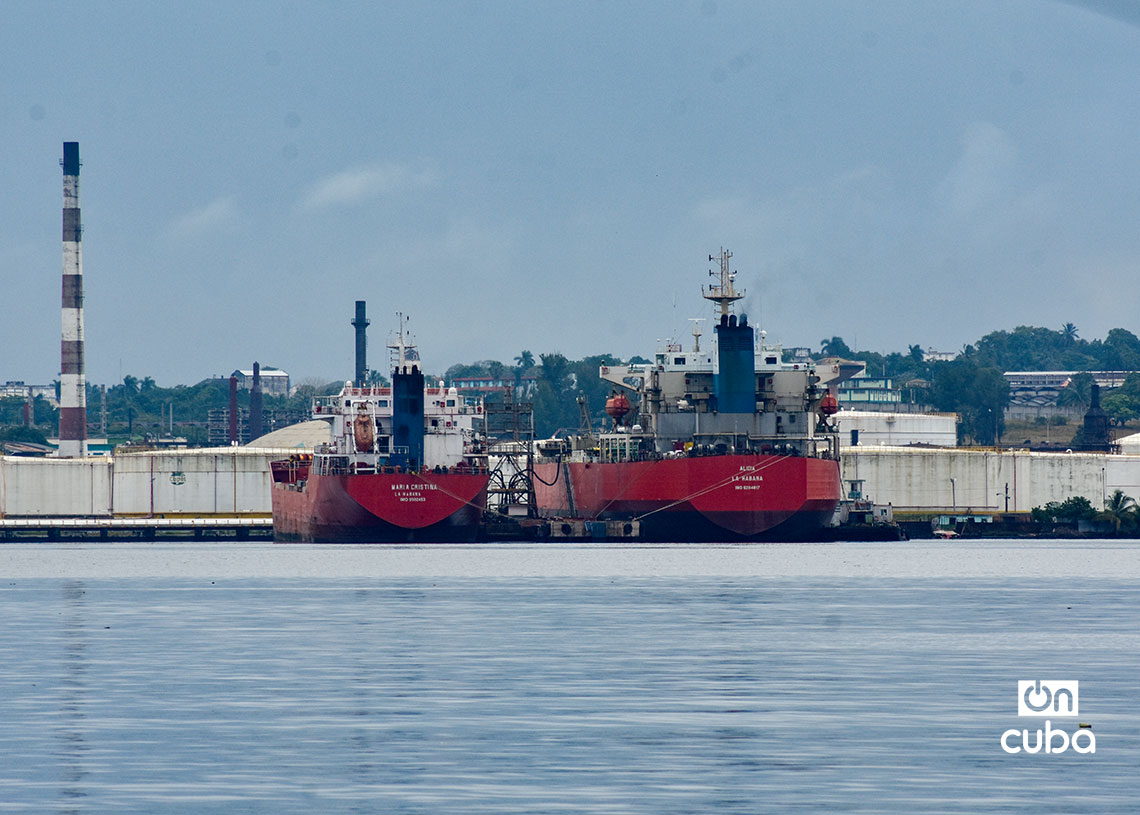
Cuba is going to face a serious crisis in six or eight weeks if it does not receive more oil or fuel, he predicts EFE Cuban expert Jorge Piñón, specialist at the Energy Institute of the University of Texas.
The analyst, dedicated to Cuba’s energy situation, assures that it is “very difficult to quantify” the country’s bankruptcy point, after the US announced this Thursday that it would impose tariffs on countries that directly or indirectly sell or supply oil to Cuba.
“If in the next 6 to 8 weeks we do not see any deliveries of crude oil or fuels—coming from Venezuela, Mexico, Russia, the United States, or purchased by Cuba with its own resources—then they will face a serious crisis,” he assesses.
Piñón highlighted the “fundamental” role of diesel in this situation, because according to his calculations it represents around 20% of fuel demand in Cuba.
“The impact would be catastrophic, since diesel is used for the transportation of passengers and goods, railways, agriculture (tractors), industry and as fuel for the water distribution system, as well as distributed generation (generator sets),” he explained.
The so-called distributed generation is made up of the battery of engines distributed throughout the country that, with diesel and also fuel oil, generate energy for the National Electric System (SEN). It is estimated that they are responsible for around 40% of the energy mix.
Mexico warns of a “far-reaching humanitarian crisis” in Cuba if it does not receive oil
Worsening of the energy crisis
The fuel shortage in recent months—mainly due to the Cuban State’s lack of foreign currency to import it—was responsible for a large part of the blackouts suffered by the island, lasting more than 20 hours a day in large regions of the country.
Cuba requires around 110 thousand barrels of oil per day, according to different estimates and in the absence of official data. Of this amount, around 40 thousand come from its national crude oil production, with approximately two thirds must be imported.
Its main historical supplier was Venezuela, which last year supplied it with about 27 thousand barrels per day, according to the Reuters tracking system, far below the up to 100 thousand per day that it once provided. This ended with the capture of the president of that country, Nicolás Maduro, on January 3.
Then there was Mexico, with between 6 thousand and 12 thousand barrels per day last year, according to different sources that EFE has not been able to independently verify. Washington had been increasing its pressure on this country in recent weeks.
Russia, for its part, sent about 6,000 barrels a day to Cuba last year, according to the Energy Institute at the University of Texas.
The gap that remains between the sum of all real imports and the 70 thousand was a good part of the cause of the blackouts.