Cuba is going through an unprecedented energy crisis taken to the extreme after the establishment of an oil blockade by the United States, which has left the island without crude oil imports since December, to which the Government has responded with a package of emergency measures.
The program includes fuel rationing, the reduction of public services and the prioritization of essential activities in sectors such as health, water service and defense.
“As there is not enough fuel, we cannot maintain the sales levels that we had in previous weeks,” acknowledged Deputy Prime Minister Óscar Pérez-Oliva Fraga during the Round Table broadcast this Friday.
“We are not going to collapse, because the Cuban people do not collapse,” said the deputy prime minister.
Pérez-Oliva added that the Cuban Government will facilitate the procedures for private companies “that have the possibility” to import their own fuel. And he stressed that the State will distribute solar panels to essential workers, social centers and banks.
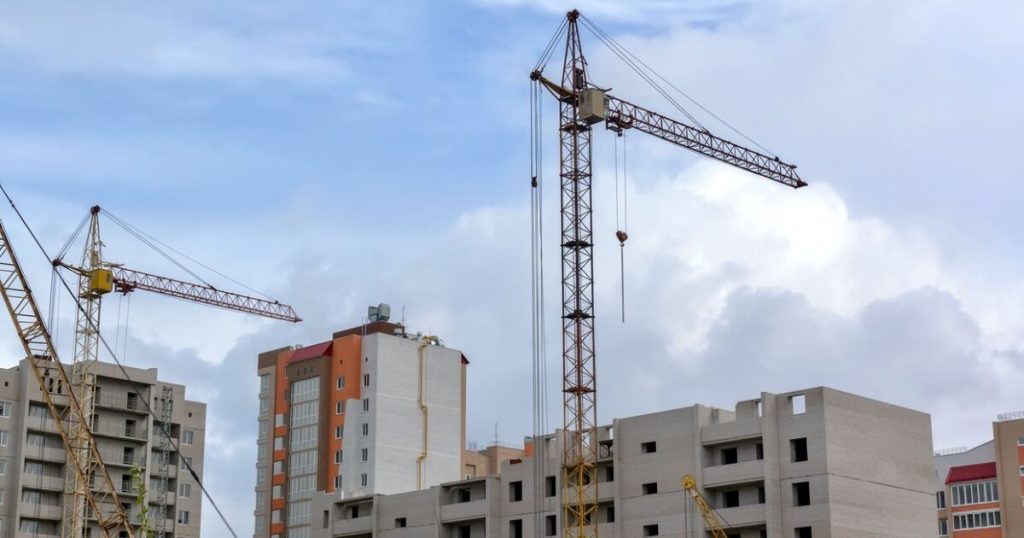
Likewise, the executive explained that the country’s first decision is to continue with the development of the installation program of photovoltaic solar parks, under the auspices of China. By the end of 2026, this energy source must deliver about 2 thousand MW to the island’s energy mix, which is currently suffering from blackouts of more than 20 consecutive hours throughout the country, except in Havana, where interruptions have reached up to 17 hours in recent weeks.
Rationing and essential services
The Council of Ministers approved limiting the sale of fuel and concentrating administrative activities from Monday to Thursday to save energy.
Pérez-Oliva stressed that the little fuel available will be used for “essential services, electricity generation, health services, water supply and defense activities.”
For his part, the Minister of Transportation, Eduardo Rodríguez Dávila, confirmed that national and international flights and the operation of airports and ports will continue, although interprovincial trains and buses will operate less frequently.
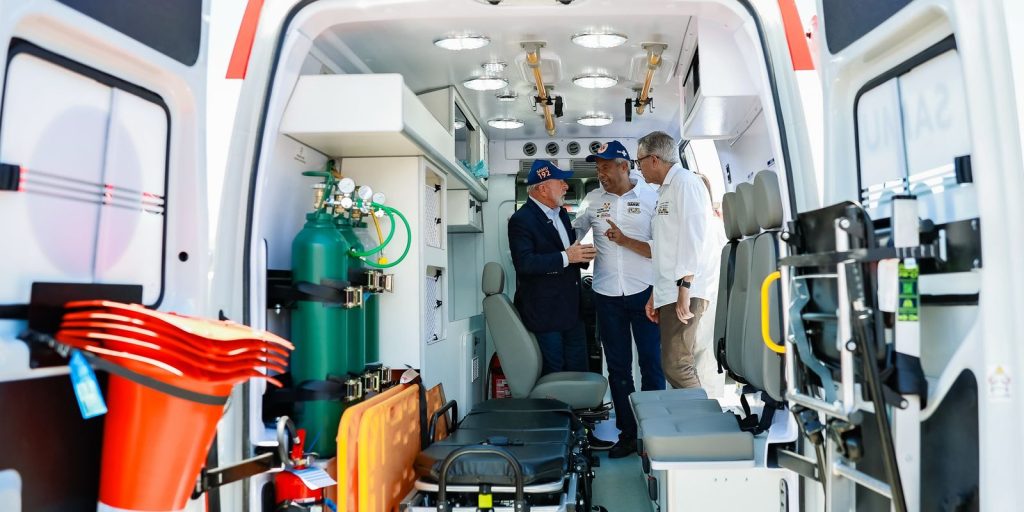
The official assured that medical services such as patient transfers for chemotherapy and radiotherapy continue to be guaranteed through the Medibús scheme, as well as kidney patients in need of hemodialysis, who in some cases would have to be hospitalized.
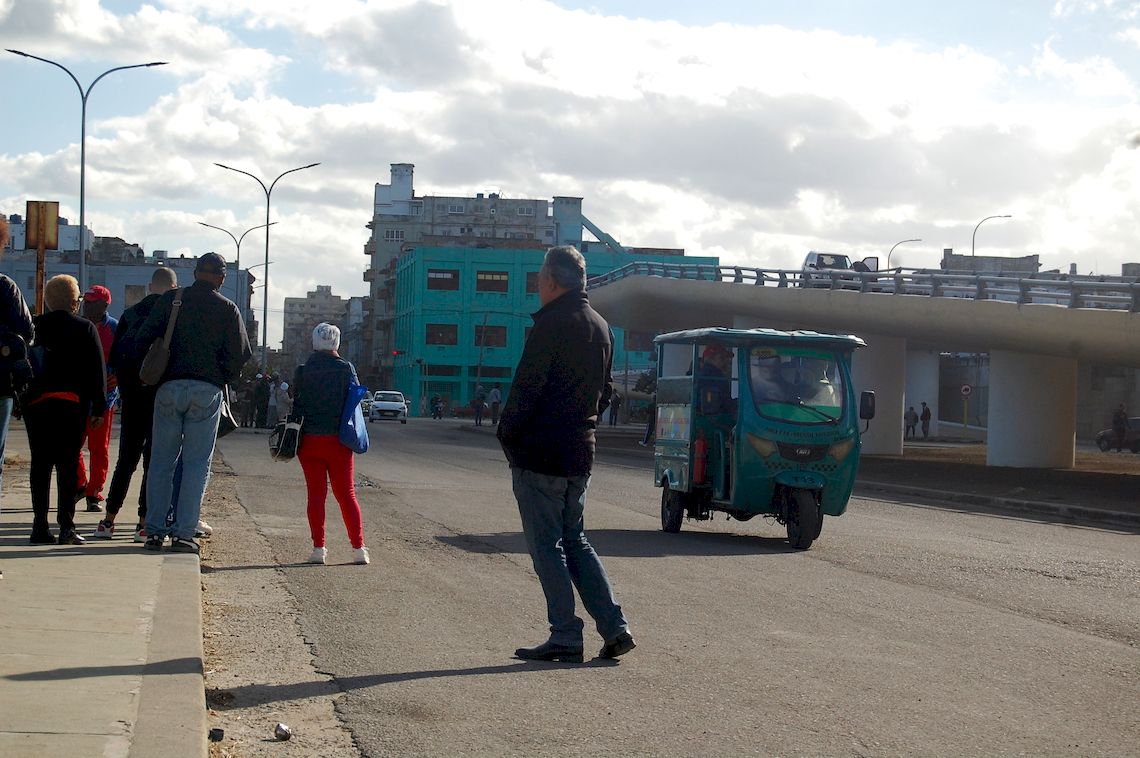
The immediate destiny of public passenger transportation in Cuba is oriented towards rationalization and electrification, with the incorporation of tricycles, in addition to charging station projects with solar backup.
With Havana collapsed in its network of bus routes, Rodríguez Dávila announced that an analysis is being carried out in the capital to reorganize public transport routes, seeking to sustain essential services while moving towards a more resilient model supported by renewable energies.
Holguín begins the installation of batteries to back up the solar panels
Renewable energy and national production
The Government is committed to accelerating the installation of photovoltaic solar parks and domestic renewable energy systems.
Pérez-Oliva stated that “that is the path, that is the point where we have to get to,” in reference to energy independence.
In addition, an increase in the national production of heavy oil was announced to sustain electricity generation, one of the causes of the constant breakdowns and partial maintenance of the old plants, whose most recent generation unit dates back to 1995 at the Lidio Ramón Pérez Thermoelectric Power Plant (Felton), located in Holguín.
For the first time, those who generate electricity will be able to sell it directly to third parties, which opens a new space for non-state economic actors.
Agriculture and food
The energy crisis also impacts food production. The government decided to protect the planting of rice with fuel – with a goal of 200 thousand hectares – and other strategic crops, such as tobacco, while promoting urban agriculture and the use of animal traction to make up for the lack of machinery.
“We are not going to have fuel for the massive participation of equipment in agricultural work,” acknowledged Pérez-Oliva, who called for integrating all forms of production and seeking alliances with non-state economic actors to reduce prices.
Another partial collapse of the Electrical System leaves eastern Cuba in darkness
Health, education and social protection
The health sector maintains absolute priority. Chemotherapy, radiotherapy and hemodialysis treatments are guaranteed, even with the possibility of admitting patients to hospitals if necessary.
The Minister of Education, Naima Trujillo Barreto, assured that the teaching system will continue its course, although with local adaptations and flexibility in schedules. “Today a fundamental dialogue process begins,” he said, highlighting the participation of families in school decision-making.
In the workplace, the Minister of Labor, Jesús Otamendiz Campos, announced teleworking modalities, schedule adjustments and relocations to protect workers. Those who do not get a readjustment in the labor market will be paid one month’s salary before they become vacant.
Tourism, culture and defense
Tourism, vital for the entry of fresh foreign currency and in sharp post-pandemic decline, remains operational with energy saving plans in hotel facilities. The production of tobacco and other exportable items is also protected.
In the cultural and sports field, community activities are reorganized and the continuity of the National Baseball Series is guaranteed, although with measures to reduce fuel costs.
“Preparation activities for defense and internal order are ensured,” said Pérez-Oliva, in the midst of a feverish military preparation of the civilian population as established by the national defense doctrine, established in the 90s in the face of the Soviet collapse.
Data from 2025 confirm an “annus horribilis” for tourism in Cuba
A country under pressure
President Miguel Díaz-Canel denounced Washington’s “energy blockade” and described the policy towards Cuba as “criminal”, while reiterating the willingness of a multi-thematic dialogue with the White House, but without pressure and under certain conditions, including respect for the island’s sovereignty.
“It was said that today we were collapsed. They are probably not explaining it to you. We are not going to collapse because the Cuban people do not collapse and they have demonstrated it throughout their history,” said Pérez-Oliva, for his part.
The United States closed the tap of Venezuelan oil to Cuba after the capture of Nicolás Maduro on January 3, and a few days later announced tariffs for any country that supplied fuel to the island in an extraterritorial measure that has been rejected by Cuba’s allies such as Russia and China.
Havana, which imports two-thirds of its energy needs, thus lost a key ally and a vital supply. Experts estimate that, of the 110 thousand barrels per day that Cuba requires, Venezuela would contribute about 30 thousand in 2025, which leaves the island in a critical situation.
Beyond the oil stoppage, Cuban society suffers from the combined effects of the crisis left after the Covid-19 pandemic, the terrible economic decisions that triggered inflation and widespread poverty, the exhaustion of a centralized productive management model and Washington’s sanctions, now elevated to the level of energy asphyxiation.