The Cuban Ministry of Public Health (MINSAP) reported that 2025 concluded with another significant growth in the infant mortality rate in children under one year old, which stands at 9.9 per thousand live births, the highest figure recorded in the country in more than 30 years.
The MINSAP detailed in the note published on its web portal that in the year that just ended, 68,051 births occurred in the country, which represents a decrease of more than 3,000 compared to 2024.
“This reduction in birth rates has been a common behavior in recent years and is a consequence of the demographic situation that is evident throughout the country,” the statement states.
Infant mortality, one of the indicator figures of the state of public health in the country and which in 2013 reached its lowest record with 4.7, grew this year more than two points compared to last year, when it was reported at 7.1 per thousand live births.
In mid-December, the Prime Minister of Cuba, Manuel Marrero, said when speaking in the plenary session of the National Assembly of People’s Power that Cuba would close the year with an infant mortality rate of 9.7 per thousand live births, a figure that was finally surpassed, and which, according to the official himself, is a sign of the “deterioration” of the health indicator.
The infant mortality rate increases in Cuba and closes 2025 at 9.7 per thousand live births
The provinces of Pinar del Río, Sancti Spíritus, Cienfuegos and Holguín are shown as the territories with the lowest rates in this regard in the country, the note states without providing detailed figures, and shows as “one of the most favorable indicators of the period” that 17 municipalities in the country did not report deaths under one year of age.
Other indicators
Maternal mortality also shows growth with a rate of 44.1 per 100 thousand live births, when in 2024 it was 40.6, although the note states that “the increase from one year to the next was one maternal death” and that “in 2025 there was the second lowest total number of deaths in the history of Cuban public health.”
No deaths were recorded in the stages of pregnancy, childbirth or postpartum in the provinces of Artemisa, Camagüey and the special municipality of Isla de la Juventud, as well as more than a hundred municipalities throughout the island.
The Minsap also released other statistical data related to childhood in which there are decreases compared to the previous year. Such is the case of preschool and school mortality rates.
In the first, a figure of 3.7 per 10 thousand inhabitants is reported, 24.3% lower than in 2024; and in the second, the rate was 2.2 per 10 thousand inhabitants, similar to last year, but “in absolute numbers there were seven fewer deaths.”
Causes and solutions, according to MINSAP
“The difficult economic situation; the intensification of the economic, commercial and financial blockade of the United States Government, which causes limitations in medicines, medical supplies and equipment; the circulation of arboviruses; the impact of natural phenomena such as hurricanes and intense rains, as well as the non-completion of human resources in some services,” Minsap lists the causes of the effects on health services in Cuba and its corresponding impact on the Maternal and Child Care Program (PAMI).
Recent years have been marked by a significant deterioration of health care centers throughout the country and the shortage or non-existence of medicines, supplies, equipment and possibilities for carrying out medical tests and procedures.
Complaints on social networks about these conditions have become increasingly common, given one of the aspects that, along with education, led the list of achievements of the ruling political-social system on the island.
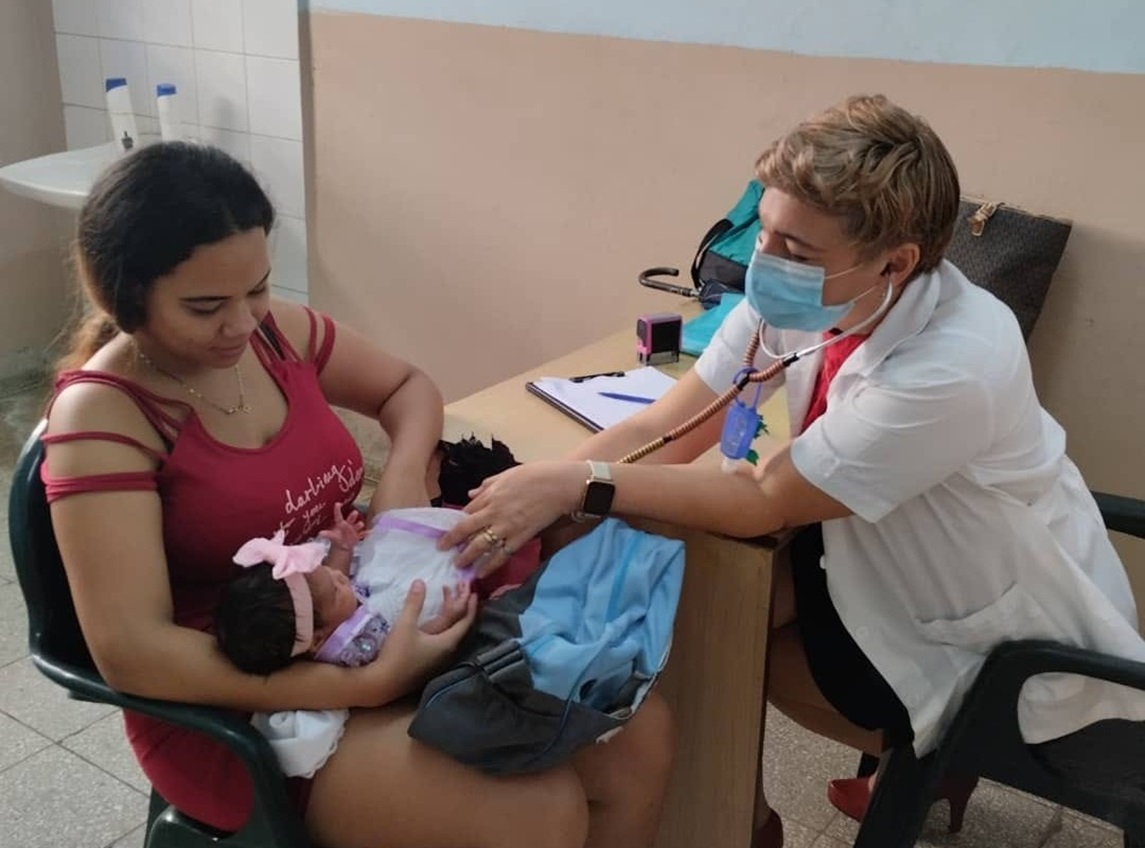
According to the statement from the Ministry of Public Health, in 2025 joint actions by health institutions and other sectors were implemented to achieve comprehensive care for pregnant women, especially in the detection and monitoring of diseases or risks during pregnancy.
It also ensures, as other achievements, the decrease in teenage pregnancy in the country, “an indicator that showed an improvement compared to 2024,” the note says without offering data.
In the case of the country’s vaccination programs, another of the essential factors in the reduction of infant mortality in all its stages, the Minsap highlights that “vaccination against pneumococcus was carried out for the first time in Cuba, a transcendental and direct step for the reduction of morbidity and deaths due to acute respiratory infections, in the first years of life. The vaccine against the human papillomavirus was also introduced for the prevention of cervical cancer from an early age.”