Madrid/In just one month, the infection rate of chikungunya has doubled in Cuba. Although the Ministry of Public Health has decided to offer data on the progress of the epidemic, the complete information – provided to the Pan American Health Organization (PAHO) – reveals some less disclosed indicators. In an assessment at the beginning of November, Cuba reflected a cumulative incidence of 183.43 cases per 100,000 inhabitants, the highest in all of America this year. This week, the account amounts to 350.5791% more.
The figures refer to chikungunya, a disease in which only Brazil competes with Cuba, although quite behind. The South American giant’s rate is 113.75 per 100,000, with a very high number of diagnosed cases, 242,067. These compared to the 38,342 on the Island seem like a real tsunami, but the Brazilian population amounts to no more and no less than 212.8 million inhabitants. The update offered this Thursday by the authorities also indicates 574 new cases in a single day, for a total of 40,174.
In addition, the Havana authorities have sent the calculation of a population of 10.9 million Cubans, even higher than the 9.7 million estimated by the National Office of Statistics and Information (Onei) or the very probable 8.6 that independent demographers handle. Taking into account that the suspected cases of chikungunya have been counted as of November 29, the real incidence is even higher, since the population – in the absence of the often postponed census – is only approximate.
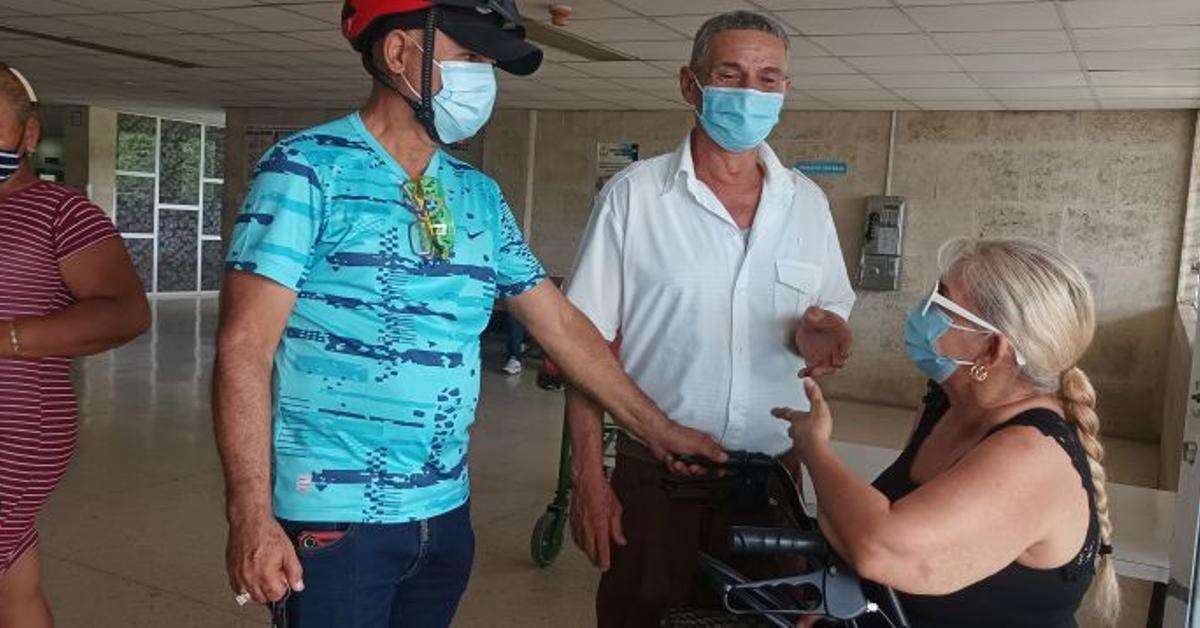
To this we must add the cases that have not been reported by Cubans who prefer to pass the infection at home without even going to the doctor.
To this we must add the cases that have not been reported by Cubans who prefer to pass the infection at home without even going to the doctor, most of the time due to mistrust, although it is not the only reason. The cases diagnosed with complete certainty are currently 1,241, since Cuba – following PAHO protocols – does not analyze all suspected cases in laboratories and notes them as such when the clinical picture matches. The analysis is only used at the beginning of an outbreak to locate it and in the most serious cases, but not when a disease becomes an epidemic.
As reported this Monday by the Vice Minister of Health Carilda Peña García, the deaths from this disease amount to 21 officially confirmed, although on the networks there is talk of numerous more cases. According to a report from the Cuban Conflict ObservatoryIn November there were three times as many deaths as those reported by the Government, with 87.
From the data published by PAHO, it should be noted that the United States has reported one confirmed case and 83 imported cases.
The organization has also updated the dengue statisticswhich in the case of Cuba had been paralyzed for two weeks. In that period of time, the deaths have gone from the three official deaths accumulated by this arbovirus to the 12 announced by the ministry. As far as this disease is concerned, the figure that has also increased – and a lot – is the incidence, which goes from 87.79 cases per 100,000 inhabitants to 237, 172% more. Suspected cases now amount to 25,995, a figure that is cumulative, although the rate of infections – always according to official sources – has been reduced.
In this context, the Ministry of Health reported this Thursday the start of clinical trials with Jusvinza
Only 351 cases of dengue They are confirmed by laboratory and, to date, 500 of the total have been considered serious. However, the disease is better known in Cuba and, despite being more deadly – the WHO considers that dengue kills and chikungunya hurts – it generates less fear among the population, accustomed to dealing with it. The same thing happens among doctors and the proof is that chikungunya is causing greater mortality on the Island in 2025, which has led many – even experts – to speculate if it is another disease that is circulating in Cuba.
Dengue is much more established on the continent and, in fact, the high incidence rate that Cuba registers this year is not, by any means, the worst. Guyana has more than 7,200 per 100,000 inhabitants, Brazil has more than 1,700, Belize has 600 and Paraguay or Panama has 400. In addition, there are many countries that have similar data to the Island, from Colombia to Bolivia or Guatemala.
In this context, the Ministry of Health reported this Thursday the start of clinical trials with Jusvinza, a medicine developed by the Center for Genetic Engineering and Biotechnology (CIGB) for the treatment of residual polyarthritis in convalescent chikungunya patients. The study has already begun in Matanzas and its objective is to reduce joint pain and inflammation, but we will still have to wait a long time to validate its conclusions.