Suspected or confirmed cases of Dengue and chikungunya in Cuba increased by 2.5% in the last week, as reported by the Ministry of Public Health (Minsap).
The epidemic has already spread to 14 provinces, while the Isle of Youth remains in a state of alarm, according to statements by Vice Minister Carilda Peña to the national press.
The official pointed out that there is a “high circulation” of chikungunyaand warned that in “many cases” sick people do not go to health centers, which causes under-recording in official data.
In the case of dengue, 13 provinces have a high concentration of cases, with a predominance of serotype 4, considered the most likely to evolve into hemorrhagic forms, he said. Cubasi.
The highest incidence rates are concentrated in Villa Clara, Sancti Spíritus, Las Tunas, Havana and Artemisa, all above the national average.
A third of the Cuban population has been infected with arbovirus, according to authorities
Increase in dengue and chikungunya
As detailed by the Minsap, during the week the increase was detected due to the active investigation exercise, especially in the eastern provinces.
Authorities recently reported 21,681 accumulated cases of chikungunyaalthough they did not offer new figures on dengue and oropouche.
The latest data available on dengue, corresponding to more than three weeks ago, spoke of 2,360 cases, mainly of the highest risk serotype, the agency recorded EFE.
In the last week, in addition, no suspected cases of oropouche were diagnosed.
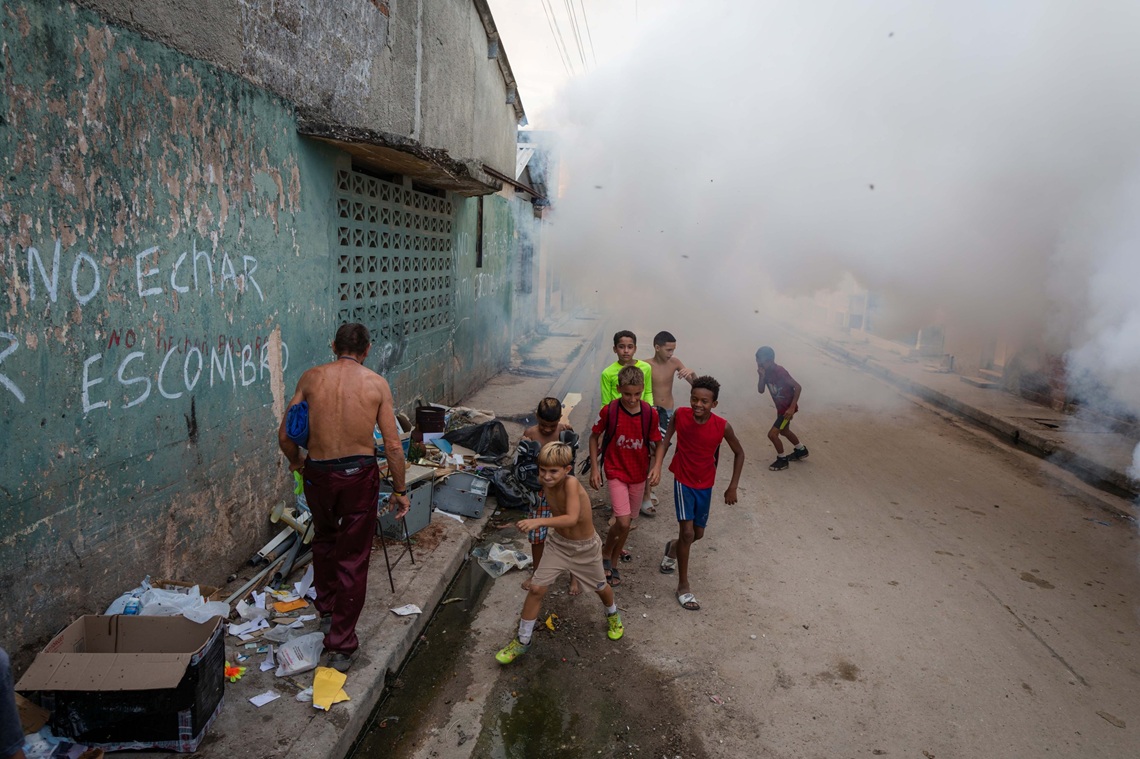
The Government has attributed the increase in arboviruses to factors such as water leaks, stagnation in urban areas, the accumulation of garbage and recent intense rains, aggravated in the east by the passage of Hurricane Melissa.
The situation is “acute”
For his part, the national director of Epidemiology of the Minsap, Francisco Durán, described the current situation as “acute”, while the authorities once again insist on the preventive approach.
Although there is talk of prevention amid the rise in cases, this has precisely been one of the issues criticized by the population itself.
Several users on social networks have stated that The situation has reached a critical point due to the lack of government foresight that has allowed garbage to proliferate for months, a scene that is repeated in most cities in the country.
Hospitalizations and home admissions
Vice Minister Peña stressed that the majority of febrile patients remain in home admission, while around 9% are hospitalized due to risk factors.
Matanzas, Cienfuegos, Havana, Pinar del Río and Guantánamo show a particularly complex epidemiological pictureas reviewed Cubasi.
In these regions, the Hygiene and Epidemiology teams and the vector control groups maintain fumigations, investigations and community surveillance, while children, pregnant women and people with associated pathologies are hospitalized, the media reported.
Cuban government recognizes the outbreak of chikungunya, dengue and oropouche as an epidemic
The head of the National Group of Pediatric Intensive Medicine, Yamirka Montesinos, warned that the infants under one year —especially those under three months old— are the group most vulnerabledue to its high probability of complications.
He also emphasized the need to go to the doctor in the event of a sudden fever, skin lesions or joint pain.
For her part, the president of the Cuban Society of Gynecology and Obstetrics, Dayana Couto, reported that No maternal deaths linked to arboviruses have been recorded.
Likewise, he confirmed that in Cuba the hospital admission of all suspected or confirmed pregnant women is protocolized.
The authorities insisted that eliminating the mosquito from each home and community continues to be the most effective tool to contain the epidemic.
However, the proliferation of uncollected garbage, a common image in today’s Cuba, makes many continue to wonder about the Government’s role in the face of a national health crisis.