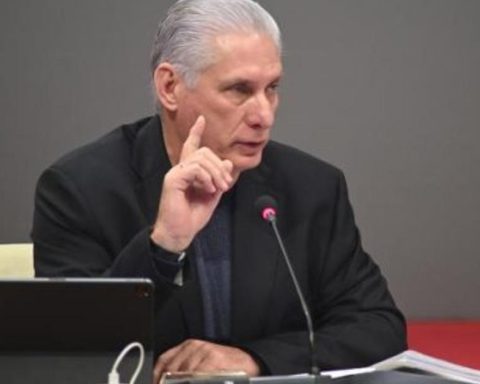
Havana/The Ministry of Public Health this Monday raised the number of deaths in the current chikungunya and dengue epidemic to 44, a figure that continues to grow despite the official rhetoric of “control” and “decrease in transmission.” The data, offered on state television by Vice Minister Carilda Peña, confirms what doctors and patients’ families have been denouncing for weeks: the epidemiological crisis is advancing faster than the institutional response.
According to Peña, eleven deaths were recorded in the last week alone. Seven corresponded to chikungunya – six of them in children under 18 years of age – and four to dengue, with two minors included. The disproportionate weight of children and adolescents among serious cases is once again activate alarms in a country where the shortage of medicines, insecticides and diagnostic reagents reduces the ability to react to a minimum.
On Sunday, 3,063 cases of nonspecific febrile syndrome were reported, the gateway for both arboviruses, in addition to 385 new cases of dengue and 199 of chikungunya. Although the authorities avoid offering accumulated dengue figures, they did recognize that chikungunya has already reached 42,015 confirmed cases since the beginning of the epidemic. The figures contrast with the data that Cuba sent to the Pan American Health Organization, where 25,995 cases of dengue appear until the end of November, a difference that fuels suspicions of under-reporting and opacity.
Although the authorities maintain that the situation “improves” compared to the previous week – when almost 39,000 fever cases were reported compared to 27,707 last week – the number of people hospitalized or under home surveillance amounts to 32,553, of which 70 remain in intensive care. The vice minister herself admitted that minors “precede” among serious cases: eleven children are in critical condition, although “stable”, a formula that the official press has normalized to soften extremely serious clinical conditions.
Only when mortality began to rise did the Ministry of Health publicly assume what was already an open secret.
The Government officially recognized the epidemic on November 12, five months after the first cases were detected and when transmission had already skyrocketed in September and October. Several doctors agree in publications on their social networks that the epidemiological surveillance system collapsed with the lack of PCR and serological tests, while polyclinics reported an uncontrolled increase in patients with fever, joint pain and bleeding. Without a confirmatory diagnosis, many of the cases were labeled as “nonspecific febrile syndrome,” a category that dilutes the true magnitude of the outbreak.
Only when mortality began to rise – and several provincial hospitals were left without capacity for additional admissions – did the Ministry of Health publicly assume what was already an open secret. By then, the epidemic had found fertile ground: accumulation of garbage due to lack of fuel, prolonged interruptions in the supply of electricity and drinking water that force domestic storage, mosquitoes that proliferate in abandoned lots and workplaces without prevention measures.
The shortage of insecticides for fumigation, which the Government attributes to the US blockade, was worsened in October with the lack of fuel to mobilize vector control brigades. Several provinces suspended fumigation “due to a shortage of inputs” and limited themselves to guiding the population to eliminate breeding sites on their own. Meanwhile, residents of peripheral neighborhoods of Havana, Matanzas, Santiago de Cuba and Holguín have reported that for more than two months they have not received any intervention from state teams. This contrasts with testimonials from hotel workers for tourism, where fumigation is carried out “up to twice a day.”
Activists and health professionals have promoted independent registries of arbovirus deaths
In hospitals, the situation is even more critical. Relatives of patients report a lack of antipyretics, serums, antibiotics and consumables, which forces families to buy informally everything that the health system cannot offer. Of the 32,553 people admitted or under surveillance, thousands remain at home because there are no beds available or because health centers lack minimum conditions to care for them.
In the absence of complete and coherent figures, some activists and health professionals have promoted independent records of deaths due to arboviruses, which include cases reported by family members, neighbors and medical personnel that do not appear in official statistics. Promoters maintain that “real” mortality could be higher, especially in rural areas where deaths occur without a confirmed diagnosis or without access to a hospital.
Health authorities insist that there are no cases of oropouche on the Island, despite the fact that since September several doctors have warned about symptoms compatible with that virus. The refusal is reminiscent of the episodes in 2022, when the authorities took weeks to admit an outbreak of dengue hemorrhagic fever that had saturated Havana’s hospitals.
The numbers disclosed by the Government do not hide that Cuba faces the worst epidemiological crisis in recent years in the midst of its worst economic crisis. With a weakened health system, a shortage of essential resources and deteriorated urban infrastructure, the ability to contain the advance of arboviruses is limited.