Before the advance of the Energy crisisexacerbated in recent days with bulky deficits that exceed availability long, the Cuban government took a drastic measure on Thursday: suspend for two days the “non -essential” teaching activities.
The measure, which has already been previously taken by the authorities during other blackout peaks, will be in force during this Friday and Saturday.
According to a note from the Ministry of Labor and Social Security, Disseminated In the official press, the measure seeks to “contribute to the necessary savings in the consumption of electricity to attenuate the effects on the population”.
According to the statement, “basic services are maintained to the population” ‘, and the workers who are affected by not being able to go to their work will receive “a protection equivalent to the scale salary of the position they occupy, in correspondence with the provisions of the Code of work ”.
At the beginning of last December, a disconnection of the national electrical system forced similar measures.
ATTENTION‼ ️@jrebeldec @Granma_digital @cubadebatec @50Trabajadores @Radiorebeldec @Icscuba @Radiorelojcuba @Tribunahabana #MTSSCUBA pic.twitter.com/1ye8d6qh3k
– MTSS Cuba (@MTSS_CUBA) February 14, 2025
20 -hour fair and blackout
The official note, however, does not refer to the fate of the activities of the 33rd edition of the International Book Fair of Havana, opened this Thursday in the San Carlos de la Cabaña fortress.
As planned, the fair must be extended until February 23 in about twenty sub -currencies in the capital, but as happened during the last International Festival of the New Latin American Cinema, the energy crisis could imply the postposition or suspension of activities.
The aggravation of the electrical scenario hits strongly the depressed Cuban economy and, logically, to families throughout the island, which must also deal with the deep and sustained economic crisis. However, the authorities ensure again and again that the situation must improve as the strategies and measures already announced begin to bear fruit.
A week ago, during a visit to Camagüey, President Miguel Díaz-Canel acknowledged that the blackouts of up to 20 hours a day are “a lot”, but he referred again solutions to the crisis. Among these, maintenance to the thermoelectric central lONGEVAS and the tuning to the time trial of a group of photovoltaic solar parks.
“The blackouts these hard days, right? 20? Twenty is a lot. But now he will start to improve, the weekend must enter Guiteras and Felton is when he enters too. So we must start… ”, said the president against local television.
However, although Guiteras and Felton rejoined the Sen, a few days later the latter broke down again and will be at least 20 without working, a fact that – together with other breaks and the chronicle lack of fuel – has firing the blackouts again and He has again forced the suspension of activities in the country.
Meanwhile, the first of the more than 55 solar parks with power of 21.8 MW is not inaugurated to start operating in 2025. The figure represents more than half of the 92 that foresees a project of 2 012 MW of generation that It must be operational in 2028.
Cuba must install this year 55 photovoltaic parks of the 92 in plan up to 2028
Black days
Meanwhile, official and foreign media, such as the agency EFEthey reproduced statements by the Director General of Electricity of the Ministry of Energy and Mines, Lázaro Guerra, in which it was assured that “tomorrow (Friday) it will also be complex”, although their department awaits “an improvement in the effects on the service ”
Electric Union (UNE) He had predicted For this Thursday a maximum deficit that would simultaneously affect 56 % of the country and had to rise to 1810 MW as maximum affectation in the night peak.
However, at night the entity itself assured that the affectation had been slightly lower and had risen to 1656 MW at 6:30 in the afternoon. “The decrease was related to a greater availability of diesel fuel for distributed generation and demand below the forecast,” He pointed out In their networks.
According to UNE, the unit 3 of the Santa Cruz del Norte thermoelectric plant already entered and the connection of three other units was expected in the next few hours, while the floating centrals of Havana were “completing their generation by having the fuel available” .
With this, although he acknowledged that the scenario would continue to be “complex”, he estimated “an improvement in the effects on the service.”
In any case, the scenario is overwhelming and keeps several emergency fronts open, given the breaks of the generating units and the problems with the fuel supply.
Cuba reached the Turkish company Karadeniz Holding, through its subsidiary Karpowership, simultaneously up to eight of these floating infrastructure, but during the past year most of them left the country. So far, the cost of such leases is kept secret.
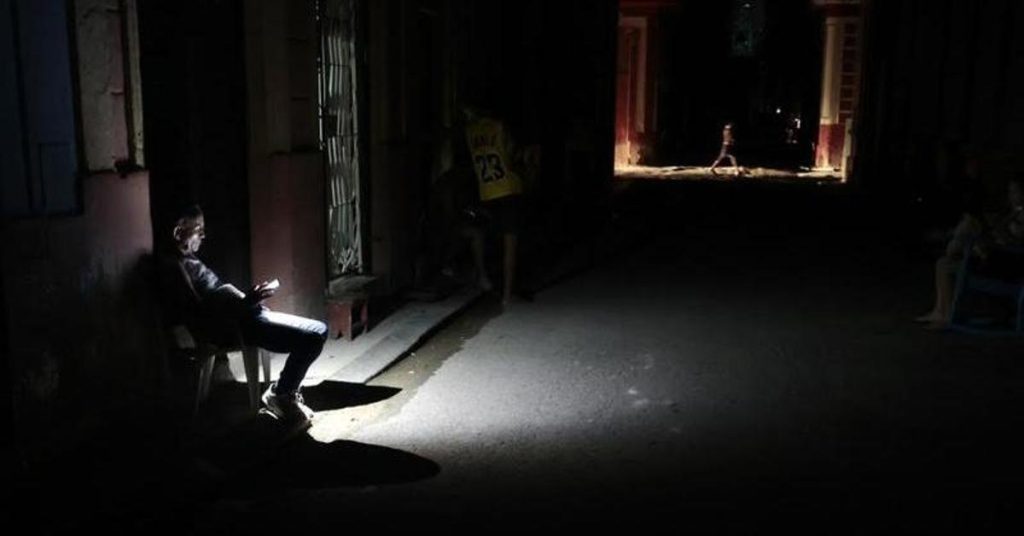
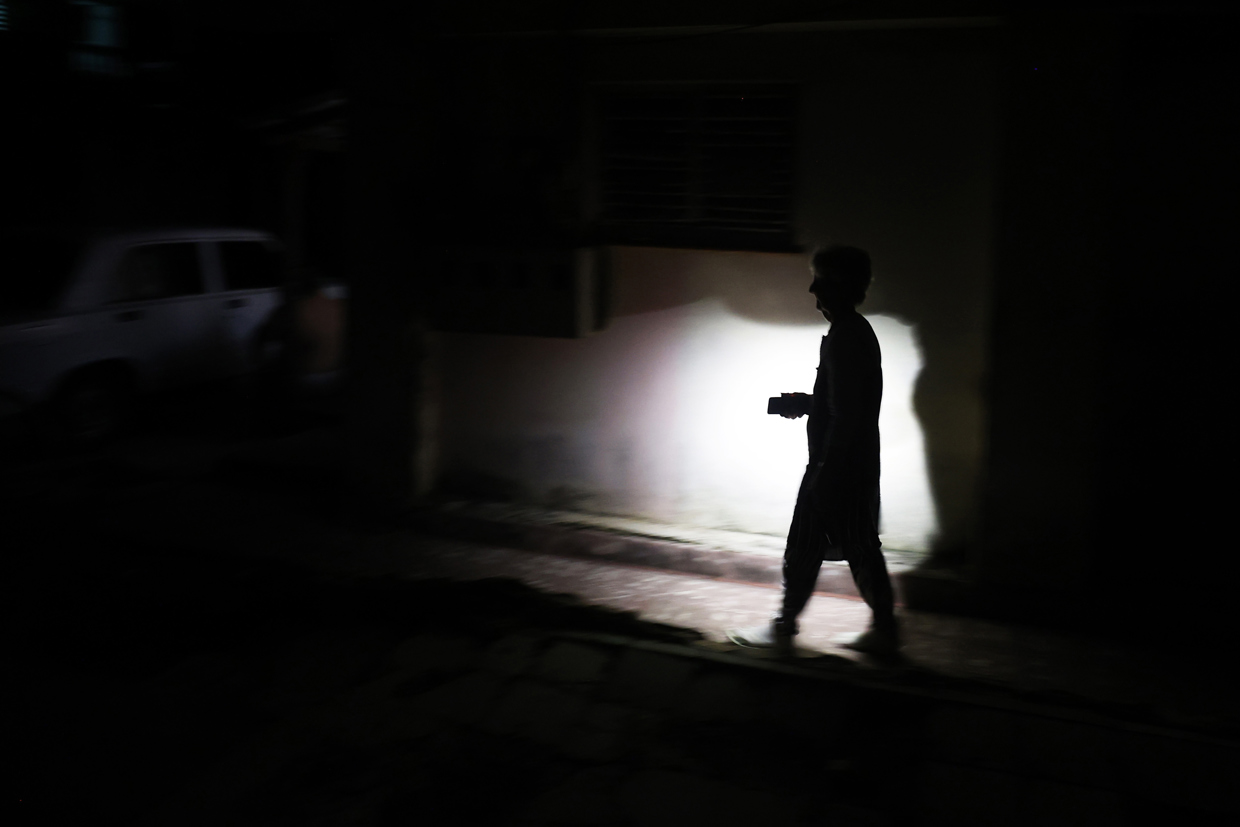
As a result of the constant generation deficit, the blackouts are ravaging the island. Cities and localities from all over the country are suffering electric cuts of more than 20 and even more than 24 consecutive hours in the last two days and for the first time in Havana, suspensions of the service of at least six hours have been scheduled.
Cuba has been suffering the current energy crisis for several years, although it has been aggravated since the last quarter of 2024, when three national blackouts were recorded. One was attributed to the roof of Hurricane Rafael, but two of them were due to unforeseen events that, in a limit operational situation, collapsed the SEN, a scenario that the government attributes to the US sanctions that prevent the purchase of supplies.
According to various independent calculations, Cuba would specify between 8 thousand and 10 billion dollars to refloat the national electrical system, an investment out of reach. And any solution would be possible only in the long term, it evaluated EFE.
The frequent blackouts have the Cuban economy, which contracted 1.9 % in 2023 and did not grow last year, according to estimates of the government itself. According to these figures, the GDP of the island remains below the 2019 levels and will not exceed this 2025, for which the Executive provides for a 1 %advance.
In parallel, the endless blackouts have raised criticism and social discontent, and have been one of the catalysts of the anti -government protests that occurred in recent years in different locations of the island, and also of the constant migratory wave that the country suffers.