The leak of an alleged plan that the Administration of donald trump which would involve a blockade naval to oil supplies to Cuba, has generated the reaction of the island’s Government through its Ministry of Foreign Affairs (Minrex).
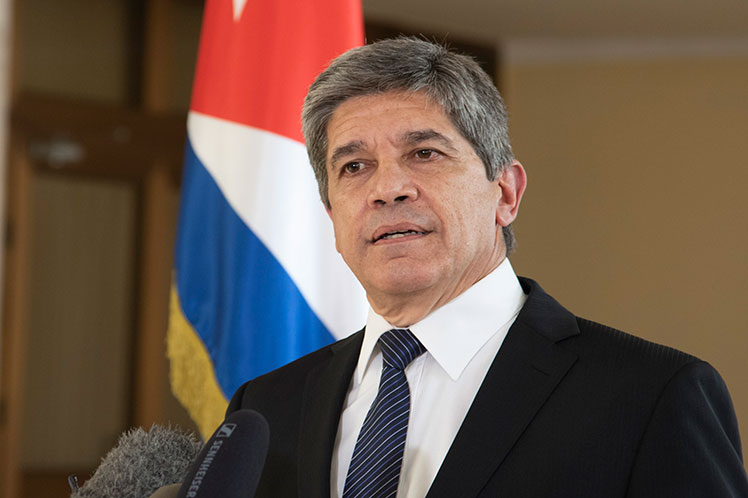
Carlos Fernández de Cossío, vice head of that portfolio, described this claim from his profile in X as “a brutal assault against a peaceful nation that does not represent any threat to the United States.”
A brutal assault against a nation that doesn’t threaten the US and a peaceful people that is not hostile to any nation. A proof that Cuban economic hardships are mainly made in the USA. Why fear the possibility of Cuba solving its own problems free of US interference? https://t.co/sTffe4gI5B
— Carlos F. de Cossio (@CarlosFdeCossio) January 23, 2026
Last Friday, the magazine Political revealed that the White House would be considering new measures to promote regime change in Cuba.
According to the publication, among the variants analyzed, three sources familiar with the issue pointed out the possibility of imposing a total blockade on the entry of its oil imports to the island.
In that sense, the Cuban diplomat considered this step as “irrefutable proof that the economic shortcomings faced by the Cuban people are mainly caused and designed by Washington.”
According to Politico, the initiative on the table would be promoted by critics of the regime within the administration and has the support of Secretary of State Marco Rubio.
The US would be considering a total oil blockade of Cuba in 2026, according to Politico
In 2019, Rubio himself and former advisor John Bolton tried to convince Trump to carry out a similar action, but on that occasion it was stopped by national security agencies that considered an option that would trigger an unjustifiable confrontation to be irresponsible and dangerous.
The new threat comes in the midst of the complex situation that the island faces for the acquisition of fuel, which has worsened after the United States military action in Venezuela that ended with the arrest and transfer to New York of President Nicolás Maduro and Cilia Flores.
Until very recently, the South American nation functioned as the largest supplier of oil to Cuba, which paid for shipments with services, mainly those of its medical brigades.
According to estimates, Cuba needs about 110 thousand barrels per day for the functioning of its economy and the generation of electrical energy normally, but it only produces approximately 40 thousand, so it depends largely on the crude oil it receives from abroad.
Trump warns the Cuban Government that it will not receive more oil or money from Venezuela
Hours after Maduro’s capture, Trump himself warned the Cuban Government that it would no longer receive any more money or oil from Venezuela, and predicted that this situation would trigger his downfall.
Experts within the US administration who oppose the oil blockade point out that it could cause a humanitarian crisis that is difficult to manage, by further aggravating the shortage of food and basic goods.