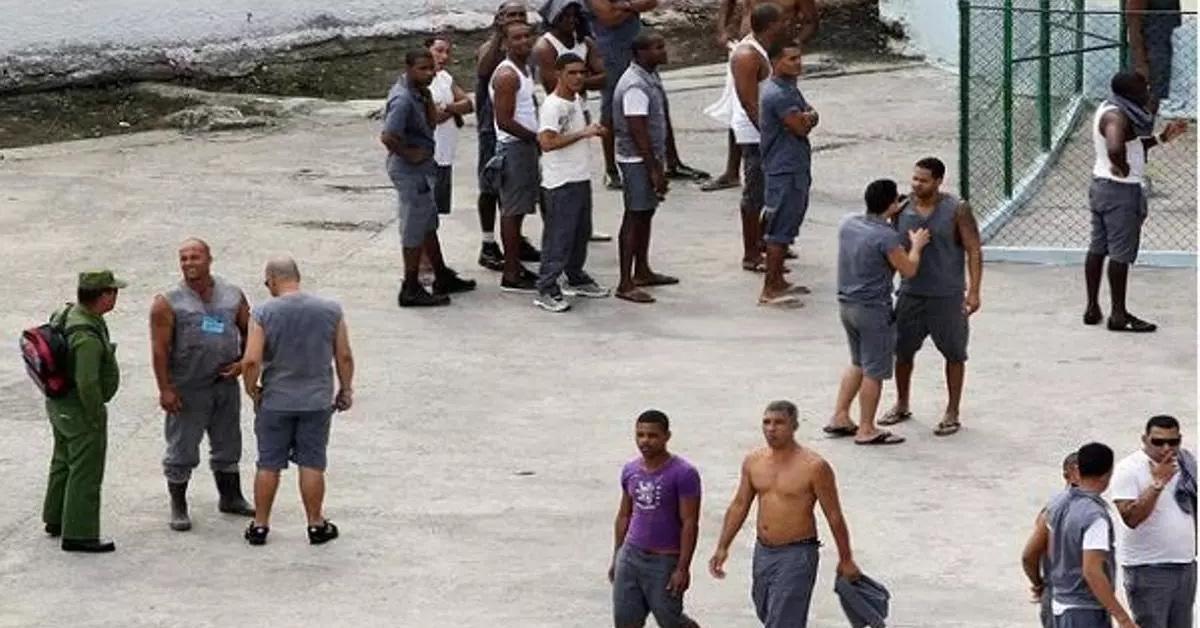
Havana/Cuba closed November with 1,192 political prisonersthe highest figure recorded by Prisoners Defenders. In your report Published this Tuesday, December 9, the organization denounces that repression is the only policy used by the Cuban regime to survive in the midst of the country’s economic, social and humanitarian collapse.
The NGO, established in Madrid to protect human rights on the Island and in other totalitarian regimes, documents 19 new arbitrary arrests that occurred in that same month with repeating patterns. Arrests without a court order, forced disappearances, solitary confinement and criminal offenses as vague as “disobedience”, “contempt” or “public disorder”, used to punish opinions on social networks and verbal expressions, as well as protests over the lack of basic services and food, confirm a “state terrorism” aimed at silencing any gesture of dissent.
Repression is the policy used by the Cuban regime to survive in the midst of the country’s collapse.
Among the new cases is that of Dr. Pedro Bauta Gómez, a renowned psychiatrist from Holguín, who was arrested after saying in the street that there is no transportation for the sick but there is for the Party. Since then his whereabouts have been unknown and he has not been allowed a lawyer or contact with his family.
They also highlight that of William Sosa Marrero, arrested for critical posts on Facebook and accused of “pre-criminal criminal disobedience”, a figure in the new Penal Code that replaces the old “social danger”, and keeps intact the preventive persecution against citizens without any crime.
The organization denounces the criminalization of simple residents of Las Tunas arrested for shouting slogans or painting critical graffiti, or of Bayamo protesters captured for peacefully protesting against the lack of government response, while families live in terror and do not even dare to complain for fear of reprisals.
Among the most worrying issues are incarcerated minors. The report recalls that 33 adolescents have been convicted for political reasons between 2021 and 2025, of which 10 are locked up in adult prisons or penitentiary centers called “schools”, and 23 are under police surveillance and constant threats. Many were arrested during the social outbreak of July 11, 2021, tortured and subjected to conditions of extreme overcrowding and violence, which directly violate the Convention on the Rights of the Child.
11J continues to be the most important repressive moment, 409 protesters remain imprisoned
In 2025, this pattern continues, with cases such as that of Eliane Martín, detained at the age of 16 and pregnant, without knowing where she is or what her state of health is; or Leroy Hernández Escalona, imprisoned after participating in a peaceful protest, in what his relatives describe as a “torture center” in Las Tunas, show that neither childhood nor pregnancy are limits for political punishment in Cuba.
He 11J It remains the most important repressive moment. Since then, 409 protesters remain imprisoned and 334 are serving sentences outside prison under threats. Even those who are no longer behind bars live under a regime of harassment and fear, as shown by multiple cases included in the report.
In total, 743 Cubans remain punished for that day that marked the largest citizen protest in more than six decades, among them 13 women, mothers and workers who are harshly punished to demobilize independent female leadership. Among them, Lizandra Góngoraimprisoned in Los Colonos prison and separated from her five children due to a 14-year sentence for demanding basic freedoms; or María Cristina Garrido, a poet imprisoned and subjected to constant harassment for having raised her voice against the Government.
The regime is also cruel to artists. Eleven remain in prison and have accumulated more than 137 years of sanctions for making music, poetry or critical art, among them the rapper Maykel Castillo Osorbotwo-time Latin Grammy winner for Homeland and Lifewho has gone through numerous punishment cells and threats of transfer away from his family, and the visual artist Luis Manuel Otero Alcántara, who is in Guanajay prison and has suffered from chikungunya, with fever and diarrhea without medical attention. He recently began a voluntary fast to demand the freedom of all prisoners of conscience.
The country’s health crisis, increased inside the prisonsworsens the situation. Currently, 461 political prisoners suffer from serious illnesses without treatment and 41 have mental disorders without psychiatric care, figures that show that physical and psychological deterioration is a deliberate component of repression.
For its part, the Cuban Observatory for Human Rights (OCDH) denounced at least 225 repressive actions on the island in the month of November, of which 18 were arbitrary detentions and 207 were other abuses.
Among the violations most committed by the Cuban regime last month are illegal detentions in homes, abuses against political prisoners, threats and police summonses. Most of the repressive acts took place in the provinces of Havana, Holguín, Guantánamo and Sancti Spíritus.
The country’s health crisis, increased within prisons, worsens the situation of political prisoners
“The regime maintains repression in a context of aggravated social crisis, without medicine or food to alleviate the health situation resulting from several simultaneous epidemics. The authorities do not provide solutions and at the same time continue to repress any political or citizen initiative,” states the OCDH in the report published this Monday.
The repression in November once again exceeded the borders of the Island, by directly threatening, with names and surnames, 18 journalists and collaborators of the digital media. The Touchbased outside the country.
“We see with concern the growing use of blacklists to threaten exiled activists in several countries. We hold the Cuban regime responsible for any situation that these people may face,” added the OCDH.
This year, at least 2,883 repressive actions have been recorded, including 651 illegal detentions in homes and 508 arbitrary detentions.
Prisoners Defenders highlighted other infamous records of Cuba in 2025, when the Island has become the first country in the world for cases of arbitrary detention, according to the UN Working Group on that issue; the second country in the world by prison population rate and the fourth worldwide by number of urgent actions by the UN Committee on Forced Disappearances.