On a day in which blackouts will affect 53% of the national territory during peak hours, Washington’s oil siege on Cuba turns one month old this Sunday, with a humanitarian crisis brewing inexorably on the island, absolute uncertainty, contradictory political signals and a growing rumor of bilateral contacts in the shadows.
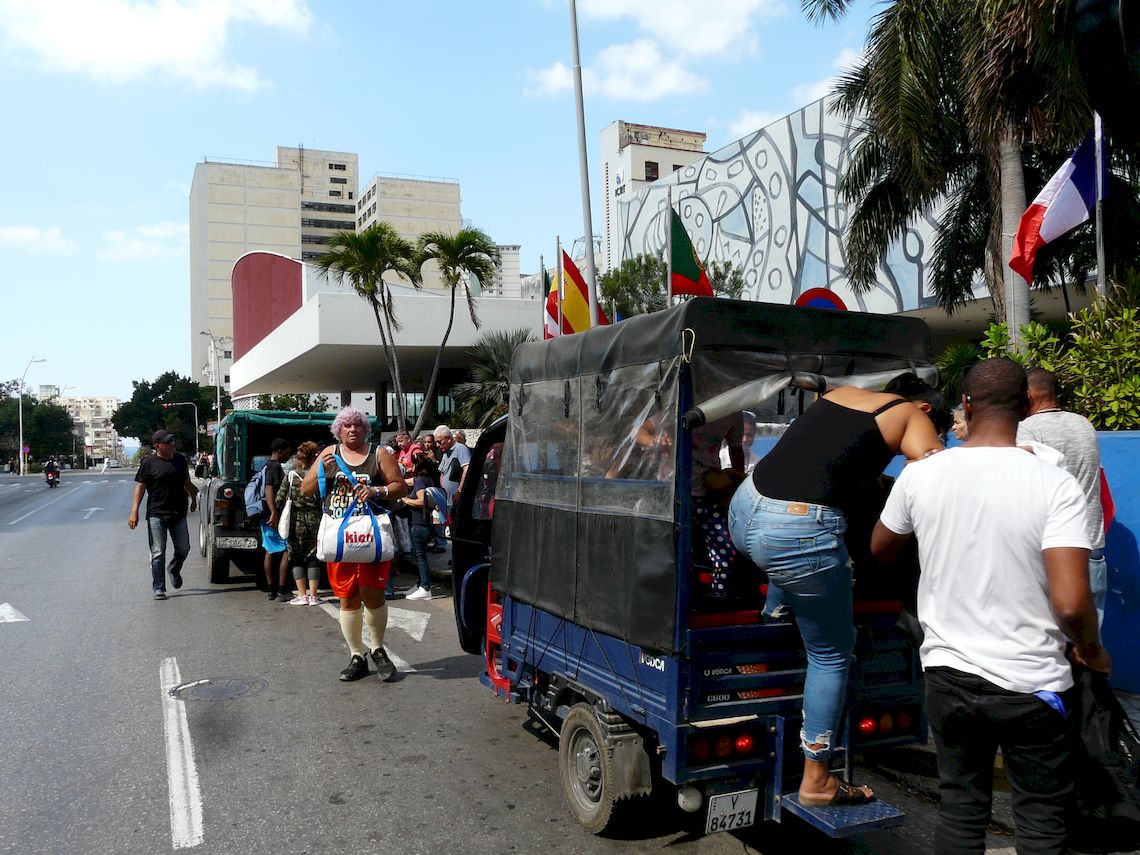
Gas stations are out of stock. Hospitals, without medicines and suspending basic treatments and operations. Public transportation, gone. Food prices skyrocketed. Universities and public offices, in remote mode, as in the pandemic. The Army, called on an emergency basis to collect mountains of garbage from the streets, although in recent days in Havana a reactivation of communal services has been confirmed.
The United Nations Resident Coordinator in Cuba, Francisco Pichón, warned this week of the risk of a “humanitarian crisis” on the island and the UN high commissioner for human rights, Völker Turk, assured that this blockade, which his department described as contrary to international law, is “pushing the country to the brink of collapse.”
Meliá plans to close more hotels in Cuba temporarily, but will remain on the island
Hotels and minerals freeze
The paralysis affects all sectors. Large hotel companies, such as the Spanish Meliá and Iberostar, have closed facilities and the Canadian mining company Sherritt, the main foreign investment on the island, has stopped its nickel and cobalt extraction operations due to lack of fuel.
A survey by the Cuban business services firm AUGE estimates that one month after the start of the oil siege, 78% of Cuban small and medium-sized private companies “report drops in sales.” “The impact is systemic.”
Cuban expert Jorge Piñón, from the Energy Institute of the University of Texas, explained to EFE that if more oil did not enter Cuba, the island would exhaust its strategic reserves this March and would enter a “serious crisis.” Since then, only one tanker from abroad has arrived in Cuban ports.
Faced with this situation, several countries have begun to send humanitarian aid to the island, with Mexico in the lead, which this Saturday delivered its second shipment of 1,200 tons of food in Havana. Others that have shown solidarity are Canada, Chile and Spain.
Two Mexican ships arrive in Havana with a second shipment of humanitarian aid
In parallel, the US took a couple of measures this week that open a way for the entry of fuel, although in small quantities and only for the private sector, which alleviates but does not solve the crisis.
Cuba barely produces oil to satisfy a third of its energy needs. This national crude oil, however, is not refined and is only useful for thermoelectric plants, not for generating sets or distributed generation, which are paralyzed with a capacity of 1000 MW, now idle, due to lack of diesel and fuel oil.
This scenario coincided with some significant statements by Marco Rubio, who spoke of the “path forward” regarding Cuba in the framework of the 50th Ordinary Meeting of the Conference of Heads of Government of the Caribbean Community (CARICOM).
“Yeah [las autoridades cubanas] “They want to carry out those drastic reforms that open the space for economic and, finally, political freedom for the Cuban people, obviously the United States would love to see that,” added the head of US diplomacy.
“The Trump administration wants to encourage the Cuban government to make changes that will allow private businesses to flourish, said a senior U.S. official who spoke on condition of anonymity to discuss sensitive diplomatic matters,” referredfor its part, The New York Times.
“Although the initial shipments of oil to Cuba are modest, experts assure that the Trump administration is sending a message to the island’s government that cooperation with the United States will be necessary to overcome the country’s economic hardship,” added the Times.
The most influential newspaper in the United States quoted Ricardo Herrero, executive director of the Cuba Study Group, a nonpartisan political and advocacy organization in Washington. “The strategy is to show Cubans and the world that the only lifeline that Cuba has left is the United States. That does not mean drowning them. It means making it clear that they have become a de facto dependence on the United States.”
As confirmed EFEthe first isotanks with diesel from abroad —mainly from Miami (USA), but also from Mexico and Colombia— have already arrived on the island or are on the way, imported by small Cuban private capital companies.
Armed incident
In this context, the Cuban Border Guard Troops killed four people last Wednesday who had entered the island’s territorial waters with a speedboat and who opened fire on the officers when they stopped them to identify them. It was, according to Havana, an “infiltration attempt for terrorist purposes.”
The boat, with Florida registration (USA), was transporting ten Cuban-Americans (the other six were injured in the exchange of gunfire), according to the Cuban authorities, who assured that on the boat they found 14 assault rifles, 11 pistols and nearly 13 thousand bullets, in addition to other military equipment.
Despite the incident’s destabilizing potential, the US administration has responded with restraint and has indicated that it wishes to independently clarify the incident, something highlighted by several international analysts.
Contacts and diplomacy. The crisis and its actors move at various levels and channels
The last few weeks have also been marked by exclusive information in the American media Axios and Miami Herald about contacts between Rubio and a grandson of former Cuban President Raúl Castro, Raúl Guillermo Rodríguez Castro, in which they talk about contacts rather than negotiations, conversations about the future, possible gradual economic reforms on the island and a phased withdrawal of sanctions.
This would confirm the repeated statements by US President Donald Trump about negotiations with the island’s authorities, despite the fact that the Cuban Government has never confirmed the contacts (and on several occasions has denied them).
Several analysts consulted by EFE They favor the veracity of these exchanges, although others doubt that this grandson of Raúl Castro, in charge of his grandfather’s personal security, is in charge of representing the Cuban Government despite not having any institutional position.
Bruno Rodríguez meets with the Pope and condemns the attacks by Israel and the US on Iran
Meanwhile, on Saturday Pope Leo XIV received in audience the Minister of Foreign Affairs of Cuba, Bruno Rodríguez, who also spoke separately with the Secretary of State of the Holy See, Pietro Parolin.
The diligent efforts and contributions of the Vatican are known, especially during the papacy of Francis, in the “thaw” between Havana and Washington during the Obama administration.
On this occasion, the Bishop of Rome referred to the seriousness of this situation, and invited all leaders to “promote a sincere and effective dialogue, on sovereign equality and mutual respect to avoid violence and any action that could increase the suffering of the beloved Cuban people.”
Just on Saturday, the head of the United States diplomatic mission in Havana, Mike Hammer, met with Parolin in the Vatican, in a meeting in which Brian Burch, American ambassador to the Holy See, also participated.
The simultaneity of both meetings places the Vatican as one of the axes of diplomatic interactions between Washington and Havana.
The possibility of contacts, however, does not have to mean that the US and Cuba launch a formal negotiating table and reach an agreement that softens pressure from Washington. It does not even completely banish the military option on the island, as the cases of Venezuela and Iran demonstrate, the agency noted. EFE in his office.
EFE/OnCuba