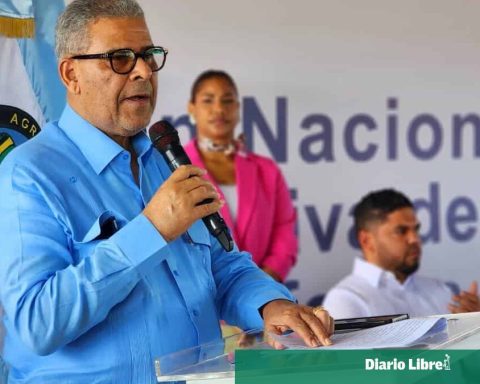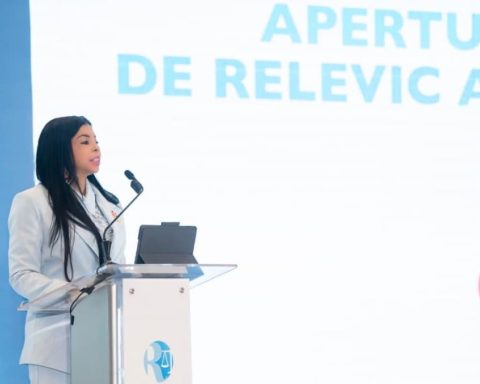
The legal consultant of the Executive Branch, Antoliano Peraltawarned this Friday that the country could face “legal consequences very serious” if the National Congress does not approve the reform to the Criminal Procedure Codewhich was already sanctioned in the first reading in the Senate.
After participating in the opening of the XI Congress of the Legal Academies of Ibero-America, Peralta explained that the Constitutional Court declared unconstitutional Law 10-15, of the Criminal Procedure Codefor procedural reasons, but gave Congress a deadline that expires in December to correct the formal defect through new approval.
If he Congress does not act Within that period, as he warned, the Criminal Procedure Code will be incomplete and “unbalanced”, which could generate serious effects on justice, since the piece has many important provisions for justice that would not be in force.
The official indicated that, although all human work is susceptible to being improved, the urgent thing at this moment is to approve the legislative initiative to prevent the penal system from operating with regulatory gaps.
Peralta considered it “normal” that a law of such importance generates debates and differences of opinion, but insisted that, beyond discussions about their content, Congress must approve these provisions as soon as possible.
If not, he reiterated, the country will face a legal vacuum with direct repercussions in the criminal proceedings.
“The Criminal Procedure Code, as you will remember, was somehow mutilated by the Constitutional Court. If these provisions are not approved, very serious legal consequences occur for criminal procedure”Legal consultant to the Executive Branch
Finjus is optimistic
For his part, the executive vice president of the Institutionality and Justice Foundation (Finjus), Servio Tulio Castaños Guzmánexpressed optimism regarding the work carried out by the Justice Commission of the Senate about the reforms to Criminal Procedure Code.
Castaños Guzmán appreciated that the Senate has forwarded the project to the commission after approving it in first reading, which made it possible to correct several aspects that had generated concern in different sectors of society.
“I think that the Senate“Having sent the project back to the Justice Commission, those concerns that had been raised by society, I believe, have been corrected,” he stated.
He maintained that among the points that were adjusted are those related to the analogythe cassational interest, the interpretation and the procedural deadlines. In his opinion, the result will be a text “more attached to the Constitution and to the principles of due process”.
“He Senate reacted positively to those claims, then whatever the Senate of the Republic on this occasion is going to adjust to what the Constitution establishes, which was the fear we had,” added the jurist.
Castaños Guzmán highlighted that, if necessary, the Chamber of Deputies you can enter new fixes when you receive the project, which reinforces the expectation that the final text is aligned with the Constitution.
Finjus warned days ago that articles of the project, such as 25, would violate the Constitution if they were approved as they were sent to the plenary session of the Senate.
He article 25 of the project is what regulates the interpretation of the procedural rules. In its current wording, the project introduces the possibility of applying the “analogy“and the”extensive interpretation“to favor not only the accused, but also other parties in the process.
The first paragraph of the aforementioned article establishes that “the analogy and the extensive interpretation “are allowed to favor the freedom of the accused, as well as the exercise of the rights and powers conferred on the parties to the process.”
The complaint of jurists was that the article, if approved as drafted, will benefit both the Public Prosecutor’s Office and the accused, when the purpose of the ruling is to benefit only those accused in proceedings.
Time against
After a ruling issued in December 2024, Congress is racing against the clock because it currently only has one month to approve a new Criminal Procedure Code. The one that the Constitutional Court annulled was approved in 2015 and was rejected by procedural errors in its approval.