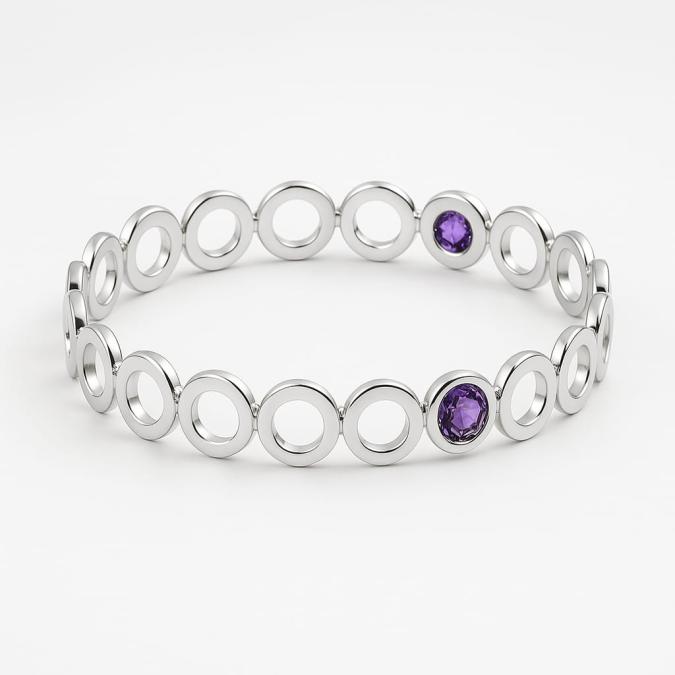
Jewelry: Original Raquel Couzet design
The images are generated with Matrix Gold
For them of El duty and the Private University of Santa Cruz de la Sierra (UPSA), through their fashion design and management career they have an innovative alliance that seeks to democratize access to creative education and raise the professional level of entrepreneurs in the fashion sector in Bolivia.
The new free jewelry design courses, lingerie design and figurine with molds combine theory and practice with the support of the UPSA. Registrations are free and are carried out by WhatsApp 78141416, where readers can contact Mabel Pantoja, coordinator of the training for them.
How to follow the courses?
Each course has been designed to provide tools designed for emerging designers, creative, fashion students and entrepreneurs who want to take their projects to another level.
In the first course design of jewelry, today in its fourth lesson, the methodology combines: the six publications printed on the pages of them of El duty and also the classes per zoom on Thursdays and Fridays at 7:00 p.m.
The training culminates with the delivery of university certification endorsed by the UPSA, which grants academic prestige and greater professional projection.
The followers of remote training must meet the requirements for class assistance per zoom and also present their collection of lessons published on Wednesdays for them.
Step 1. Design and Creativity
We talk about the language of forms. Jewelry is not just ornament or luxury: it is a miniature design. Each piece combines materials, shapes and meanings in a small space, where each decision weighs. A ring, a necklace or a slope transmit unit, contrast or surprise depending on how its elements are related.
Step 2. The language of forms
The jeweler design is supported in universal visual principles.
The similarity generates cohesion: an identical pearl necklace transmits continuity. The proximity joins what is close: three diamonds aligned in a ring are read as a single gesture. The superposition establishes hierarchy: an engasted stone stands out on the hoop.
Penetration and union produce lightness and movement, as in a draft medallion or an intertwined chain. The coincidence, when two forms fit exactly, communicates purity and precision.
Step 3. Asymmetric Design
To this order is added the anomaly, the rupture that attracts the look: a different color gem in the middle of the sequence, an unexpected texture or an asymmetric design. The unexpected makes the jewel unique.
Step 4. Texture, balance, rhythm and proportion
Other resources reinforce creativity: the texture, which is felt and seen (polished, mate, hammered, recorded); the balance, symmetrical or asymmetric, which ensures aesthetics and comfort; the rhythm, repetition that gives cadence; and the proportion, which adjusts the scale to the human body.
Step 5. Tradition and innovation
The true jewel creativity is not born from chance, but to consciously rearrange these principles. Sometimes unity is privileged; Others, surprise. Inspired by nature, culture or personal memory, jewelry combines tradition and innovation to speak in an intimate and universal language.