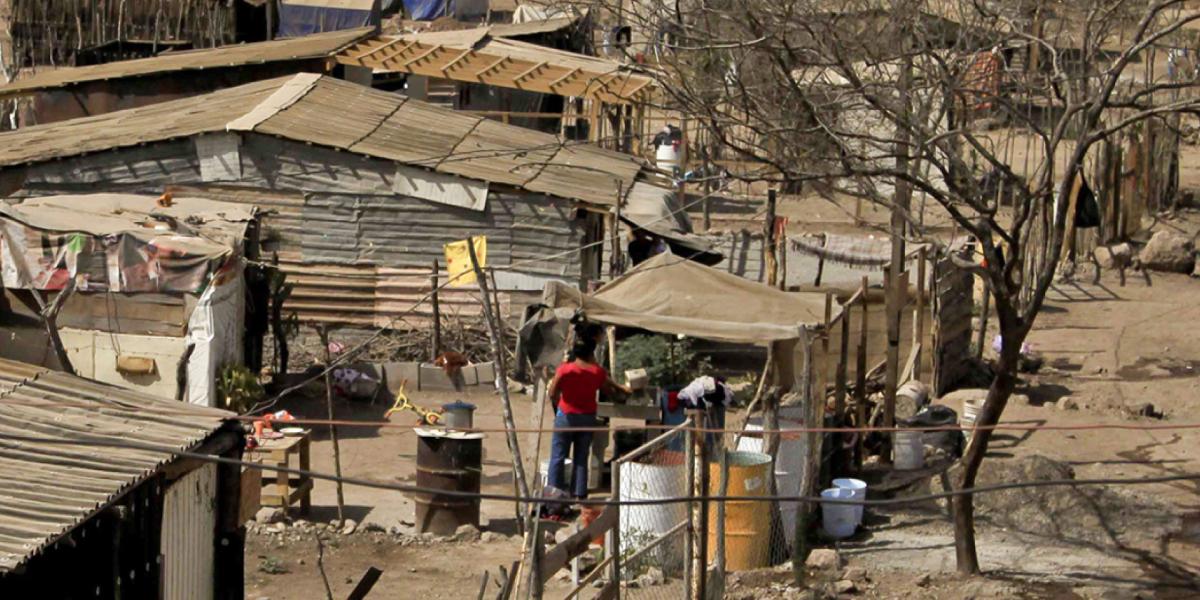
The country’s employer sector recognized poverty reduction data in Mexico, however, regretted that the vulnerable population in front for Social Security, Health and Education, which generate setbacks in social rights.
The employer confederation of the Mexican Republic (Coparmex) warned that Mexico faces deficiencies such as Social Security, which affects 48.2% of the population and has grown in entities such as San Luis Potosí, Colima, Guerrero and Puebla.
While access to health services affects 34.2% of the population. “Although (access to this service) dropped 4.9 points since 2022, increased 18.6 percentage points with respect to 2016, which is equivalent to about 26 million more people without coverage. The change of the health care model for population without social security, has been the key factor in this setback,” warned the business sector.
According to him National Institute of Statistics and Geography (INEGI), the educational lag has grown for girls, boys and young people of school age; There are 1.5 million more population between 3 and 21 years old that does not attend school and does not have mandatory education.
In Mexico, poverty has been reduced significantly in recent years. According to him INEGI With data at 2024, 38.5 million people – 29.5% of the population – live in different types of poverty. Although it is still alarming, there are 13.7 million less than in 2016.
“Although poverty decreased, vulnerability due to social deficiencies grew. In 2024, 41.9 million people – 32.2%of the population – faced at least one lack. The most common is the lack of social security (48.2%), followed by access to health services (34.2%) and nutritional and quality food (14.4%),” said the private body.
Therefore, the Coparmex chaired by Juan José Sierra stated that the next budget of expenditures are prioritized education and health. “Both are fundamental pillars to ensure social mobility and well -being. We must guarantee not only access, but also the quality of the services received by Mexican homes, so that no citizen lags behind for lack of opportunities in these essential areas.”
He said that only private health expenditure grew 40% in 2024 with respect to 2016, affecting lower income households, which shows the urgency of correcting the course of government policies.
The patron sector of the country has promoted the gradual and responsible increase in the minimum wage. In 2016, it barely reached 73.04 pesos a day and covered only 74% of the individual poverty line.
Under this context, the Coparmex He proposed the new salary culture with a first goal: that no formal worker remained in poverty for his salary. This goal was achieved for 2019 fixation, when the National Commission of Minimum Wages (Conasami), in a tripartite way, he approved a historical increase of 16.21%, he recalled.