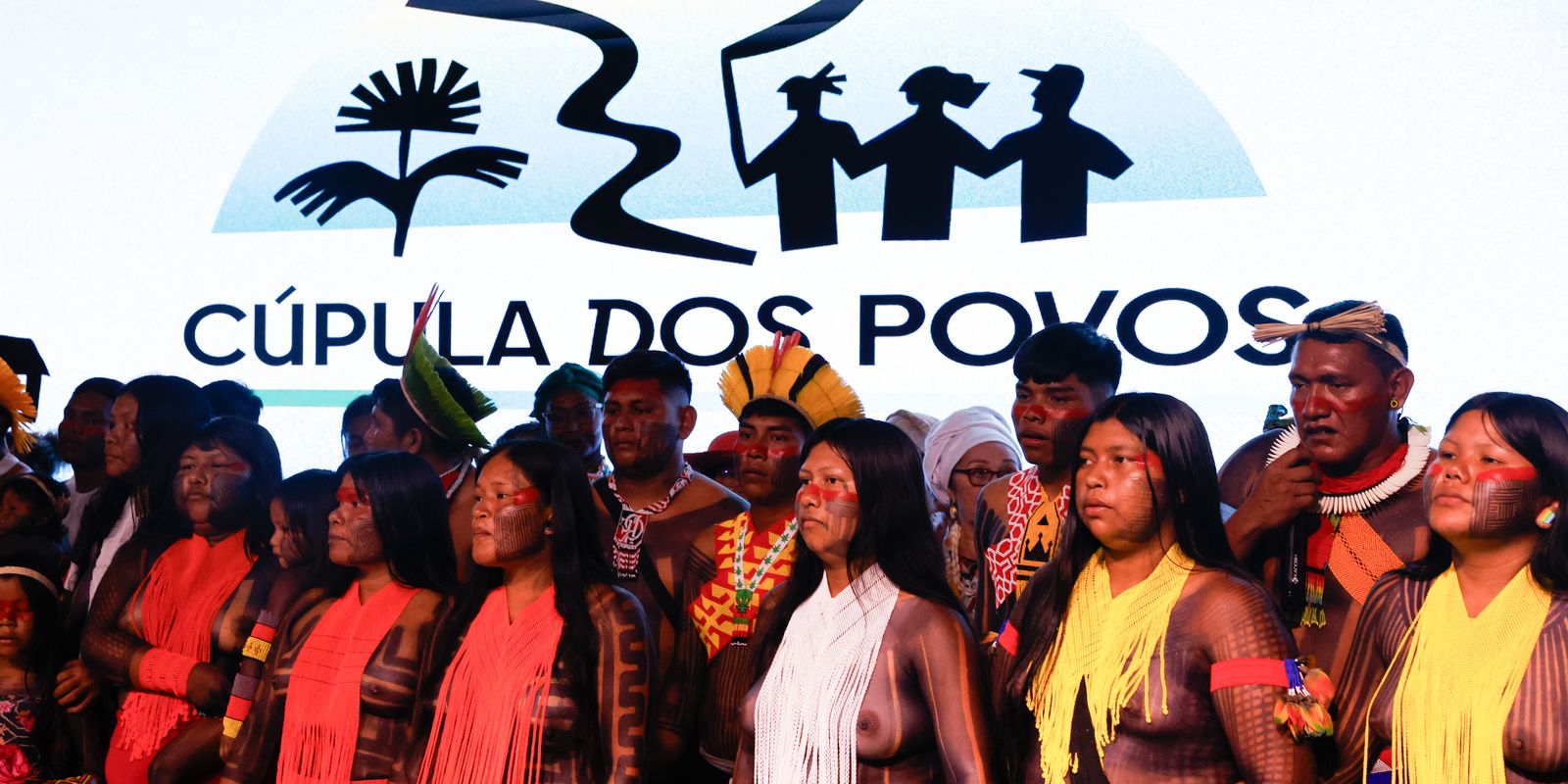
The Peoples’ Summit officially opened this Wednesday (12) with speeches criticizing the lack of greater popular participation in the 30th United Nations Conference on Climate Change (COP30) and in defense of Palestine. For organizations and movements, countries and decision-makers have been omitted or presented absolutely inefficient solutions, putting the Paris Agreement’s 1.5°C target at risk. 
The event brings together around 1,300 social movements, networks and popular organizations from around the world and runs until November 16th, at the Federal University of Pará, on the banks of the Guamá River, in Belém (PA).
“We decided more than two years ago, when we heard that COP30 would take place here in our country and more specifically here in the state of Pará, to say that, given the challenges posed by the COP, we should build one of the biggest uprisings of the working class in our country by mobilizing the working class of the world”, said Ayala Ferreira, one of the members of the Summit’s organizing committee and member of the Landless Workers’ Movement (MST).
The expectation is that more than 30 thousand people will attend the Summit, built as a concrete response from the people to what they call the COP’s inertia and lack of commitment. In the opinion of the summit’s leaders, despite reaching its thirtieth edition, the COP has shown few practical results and, in addition, has left the population on the sidelines of the decisions taken during the event.
“We were also mobilizing other allies, of other nationalities, at the university, in other movements and we were expanding and creating a movement with more than 1,300 representatives from all over the world. Today we are very proud of this. The 2025 people’s summit is the summit of the people of the popular camp to confront and embarrass COP 30 at times. It is made by many hands and many voices of men and women from all over the world”, reiterated Ayala during the opening act.
Before the opening, hundreds of people paraded with flags in defense of the waters, against the exploitation of mining companies and fossil fuels. Flags of riverside movements, landless people, quilombolas, coconut breakers, those affected by dams, people with disabilities and women roamed the university spaces showing the diversity of participation. Palestinian flags also flew everywhere, echoing cries of “Free Palestine”.
“From Palestine to the Amazon, crimes against humanity continue and people’s resistance continues. In Palestine, the genocide has already completed two years and has not yet stopped, even with the agreement [firmado entre Israel e Hamas há dois meses]Israel’s crimes continue to happen”, said Palestinian activist Jamal Juma.
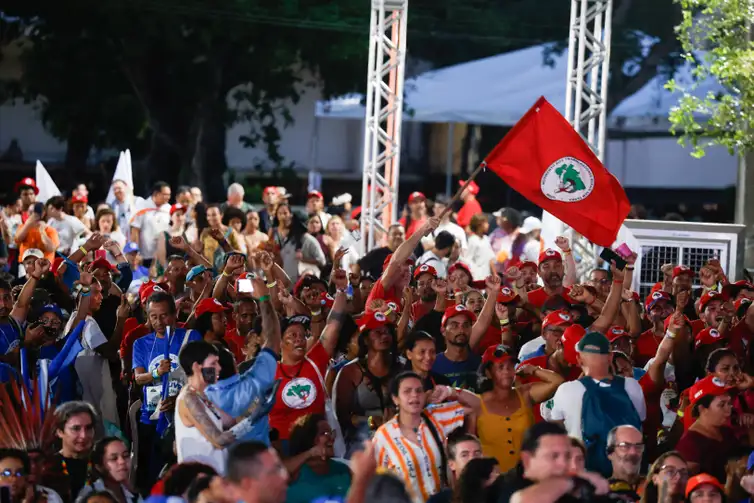
Opening of the People’s Summit at COP 30, in Belém, at the Federal University of Pará (UFPA). Photo: Tânia Rêgo/Agência Brasil.
Throughout the program, debates are planned on territories and food sovereignty, historical reparation and environmental racism, fair energy transition, confronting fossil extractivism, participatory governance, democracy and internationalism of people, fair cities and living peripheries, and popular feminism and women’s resistance.
The idea, according to the organizers, is to “strengthen popular construction and converge agendas of unity: socio-environmental, anti-patriarchal, anti-capitalist, anti-colonialist, anti-racist and rights, respecting their diversities and specificities, united by a future of good living”, as foreseen in the manifesto of the Peoples’ Summit, another act of climate resistance launched by the movement.
The member of the summit organization, and member of the Trade Union Confederation of Workers of the Americas (CSA-TUCA), Ivan González highlighted the efforts of the organizations to participate in the debates and try to influence the decisions taken at the COP.
“This effort that we have built [para estar na cúpula] It’s going well, with great difficulty, but well. Especially, because ordinary people do not have the capacity to mobilize millions in money to influence government decisions, particularly at the COP and in other governance spaces”, he said. “We are here because we want to demonstrate that the people, or rather, the people, defend our planet, especially against this capitalism that feeds on bodies, work and nature”, said Gonzalez, expressing solidarity with the struggles in Burkina Faso, Congo, Nepal, Palestine and Latin America and the Caribbean.
Solutions
One of the highlights of the People’s Summit, based on the topics discussed, is the observation that decision-making countries have been omitted or presented absolutely inefficient solutions to face the climate crisis. They point out that extreme weather, droughts, floods, landslides and “false climate solutions” end up deepening inequality and environmental and climate injustices, especially in territories and affecting the most vulnerable populations.
The member of the Homeless Workers Movement (MTST) recalled that the movements have developed supportive technological solutions to deal with problems arising from the climate crisis and others and cited as an example the solidarity kitchens, created during the Covid-19 pandemic to serve the population.
“Solidarity kitchens were a popular technology created by social movements in the context of the pandemic, in the context of the Bolsonaro government, which have been serving to build the alliance in defense of agroecology, urban rural movements, indigenous movements, to think beyond, to think that when there is, for example, an extreme weather event that leaves thousands of homeless people, as happened in Rio Grande do Sul, it is the emergency solidarity kitchens that appear as the most immediate popular response”, he argued.
“And it is from this process of building popular technologies from the territories that we believe that the answer to tackling the climate crisis that we are experiencing today will emerge”, he added.
In addition to the debates, there will also be a vast cultural program that includes the People’s Fair, the House of Ancestral Wisdom and many presentations by artists and popular groups from the Amazon and other regions of Brazil.