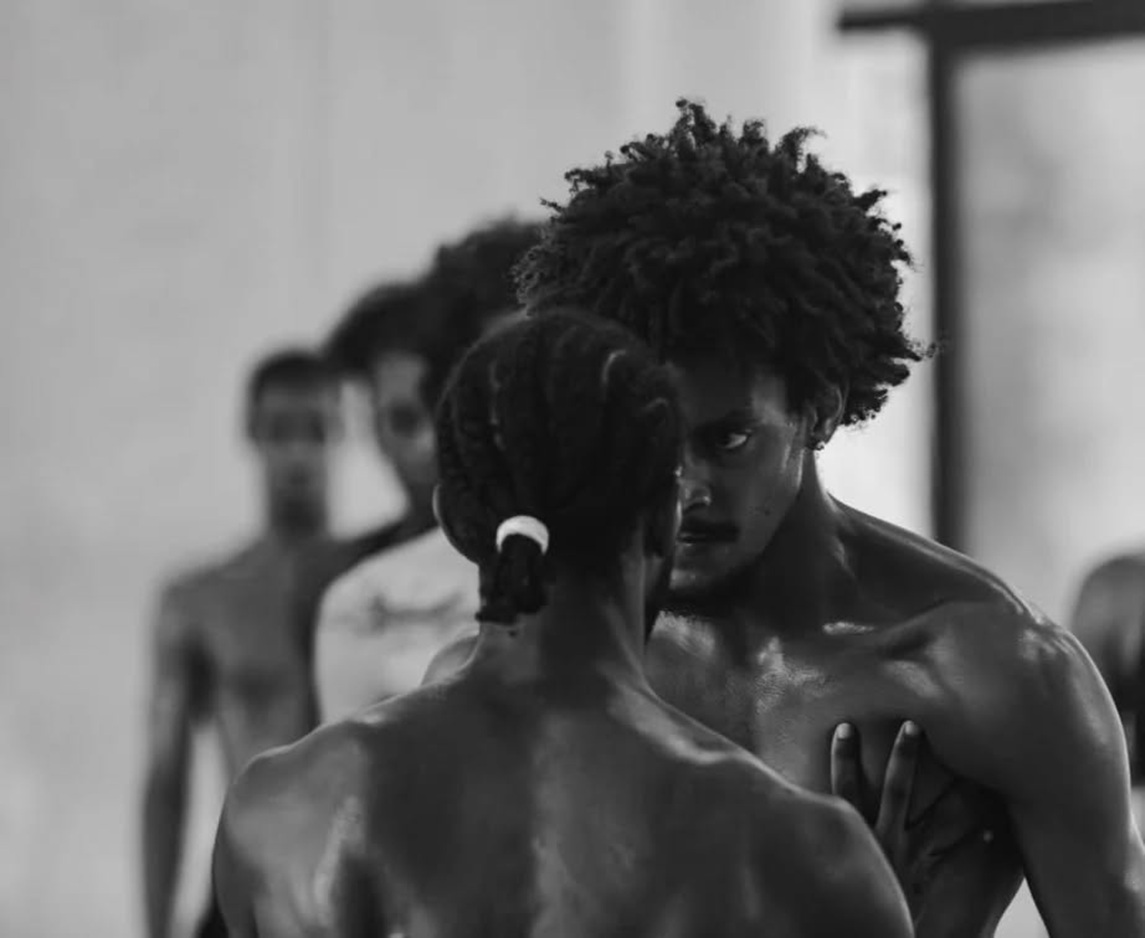
Inviting the viewer to make “catharsis” in the face of the complex Cuban crisis is the essence of the work that the company Contemporary Dance of Cuba (DCC) premieres this Friday as the main course of its program to celebrate the 66 years of artistic experience.
“It is a reflection of our reality: there is no light (electric), the water comes when you want, prices are at the Devil’s house and all that leads you to make catharsis,” said the director of DCC, Miguel Iglesias, at the company’s headquarters in the National Theater.
Created by the Cuban choreographer George Céspedes, the piece “Katharsis Morphé” expresses through a sober staging the difficult context of blackouts, high prices and difficult access to medicines and foods that mark the deep crisis suffered by the country.
“It uses the gestures of the dancers, the white costumes to illuminate the stage and music of Cuban composers such as Carlos Varela, X Alfonso or Santiago Feliú who have marked generations of Cubans to transmit strong emotions about what we are living today,” added Iglesias, who directs the cast since 1984.
With a very young cast, DCC also stages this Friday, Saturday and Sunday at the National Theater the replacement of the “Sulkary” piece, by the Cuban choreographer Eduardo Rivero, and “‘Los Murdudo fools’, of the Italian Mauro de Candia, which premiered last February.
Iglesias -National Dance Premium (2018) -explains that the program has been conceived as “a surprise trip for the viewer in which each piece represents different rhythms and styles”.
“We go from laughter to crying and reflection, through the classics that everyone expects to see of contemporary dance. We have a social satire with European influence (purple fools), then ‘Sulkary’ with the African drum, the blackness that is what the public expects; and in the end the premiere of ‘Katharsis Morphé’, which leads to reflection,” he said.
The selection to celebrate more than six decades is, according to the Cuban teacher and choreographer, “a tribute to the creative diversity that has characterized contemporary dance by merging different styles in the same scenario.”
Styles fusion
Considered by critics as a pioneer of contemporary dance on the island, the company arose in the heat of the 1959 revolutionary triumph, under the national name of dance and the hand of Cuban choreographer, writer and researcher Ramiro Guerra (1922-2019).
Its purpose was to create a dance style that expressed Cuban cultural identity in a proposal that unmarked the borders between the European classic ballet, the modern dances that came from the United States and the rich African heritage in the Cuban rhythms.
It is precisely the “Sulkary” piece, which has defined the aesthetics of DCC so it is considered by critics as “a peak work” within the modern Cuban dance.
“It is a work by the teacher Eduardo Rivero (1936-2012), considered a pillar of the modern Cuban dance, in which an ancestral ceremony of a tribe of Senegal is recreated,” says Iglesias.
“What you will see is a rite to fertility, sexuality and sensuality between kings and African queens. The sticks that men support are the falles with which they seek to seduce these women,” he explains about this classic work of the company.
Iglesias, a key figure within the cast, adds that “to make these boys here and now they could dance it as premiered in 1971 has been an arduous job part of the choreography assistant who also danced it at that time.”
This connection with the traditions and rhythms of Afro -Cuban roots has marked other montages within DCC as “Yoruba Suite”, also conceived by Master Guerra.
Author: Laura Bécquer.