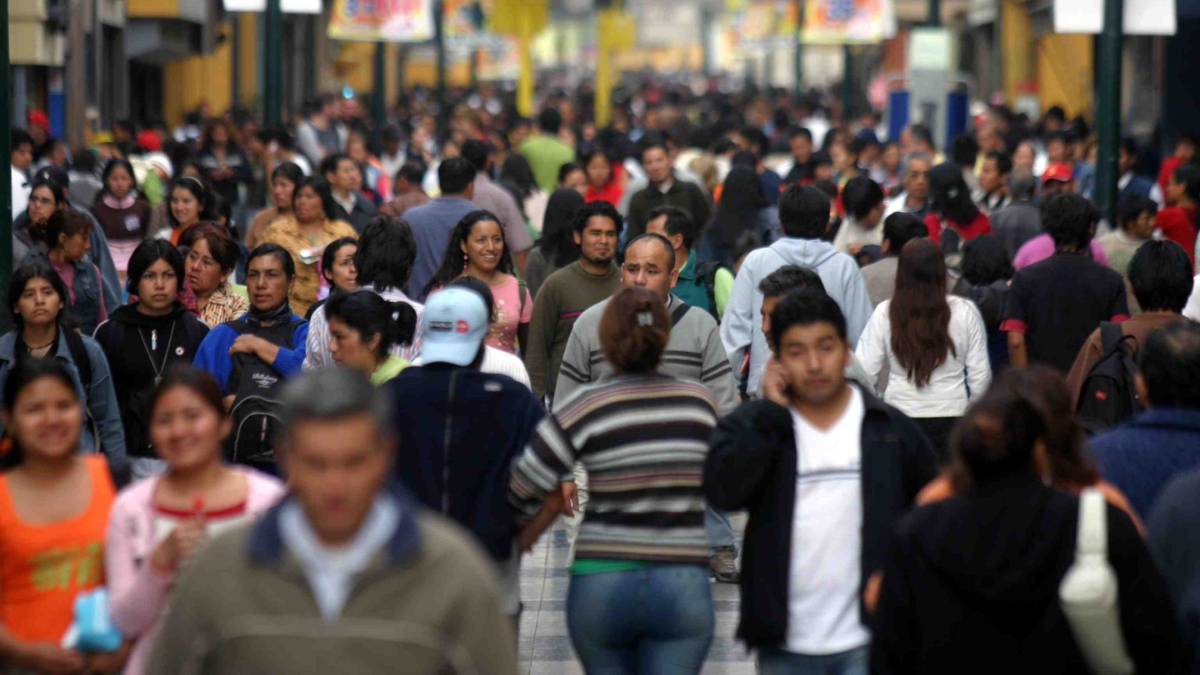
The sustained growth of formal private employment and real wages have gradually begun to be reflected in public opinion. In the last two years, the population’s perception that the country is going backwards has been reduced from 75% to 52%, according to the latest national survey on perception of progress. Consulting Supportcommissioned from Ipsos Peru, in December 2025.
Despite this, the country’s perception of progress does not improve. According to the study, what stands out in the population is a feeling of stabilization. That is to say, although the country stops deteriorating, it still cannot convince the majority that it is moving forward.
“Only 9% of Peruvians consider that the country is progressing, a level that, although it is higher than the minimum observed two years ago (3%), is still low in historical perspective,” the report stated.
For José Carlos Saavedra, partner and main economist at Apoyo Consultoría, this problem that overshadows progress in economic matters is due to the deterioration of factors that, like the economy, are relevant to the well-being of the population.
This is how he referred to the citizen security crisis and the quality of public services. He argued that the root of both problems is a dysfunctional political system that ignores citizen demands.
“2025 has been marked by a contrast. On the one hand, the improvement in the purchasing power of the population, thanks to the increase in real wages and employment; and on the other, a marked deterioration of ‘the public’, reflected in citizen insecurity, paralyzed public works and the advance of illegal economies, among other factors,” commented the economist.
According to the Apoyo Consultoría report, the main challenge going forward will be to convert economic improvement—which is perceived more clearly at the family level—into a more widespread sense of collective progress. For which, he argued, it will not only be necessary to sustain economic growth, but also advance greater political predictability, strengthen institutions, reduce citizen insecurity and tangible improvements in public services.
Economic evaluation
According to the study, there are clear advances in the evaluations of the economic situation.
He detailed that, since June 2025, for the first time since before the pandemic, the percentage of families that consider that their economic situation is better than twelve months ago exceeds that of those that perceive a deterioration. In parallel, since 2023 there has been a sustained, although more gradual, increase in the proportion of people who consider that the country’s economy has improved.
Furthermore, currently, about a third of households perceive an improvement in their economic situation, while only 12% consider that the country is in a better situation. He concluded that this difference between the perception of the family economy and the national economy, present before the pandemic and widened after the economic shocks of 2023, begins to reduce as the economic improvement becomes more widespread.
The study maintained that even economic expectations for the next twelve months show clearer signs of recovery. Households’ perspectives on their future situation remain at high levels, while, at the country level, expectations have changed trend.
This change constitutes a turning point in economic expectations and suggests that the recovery of activity is also beginning to translate into collective perception, despite the persistence of political and social problems.
Receive your Perú21 by email or WhatsApp. Subscribe to our enriched digital newspaper. Take advantage of the discounts here.