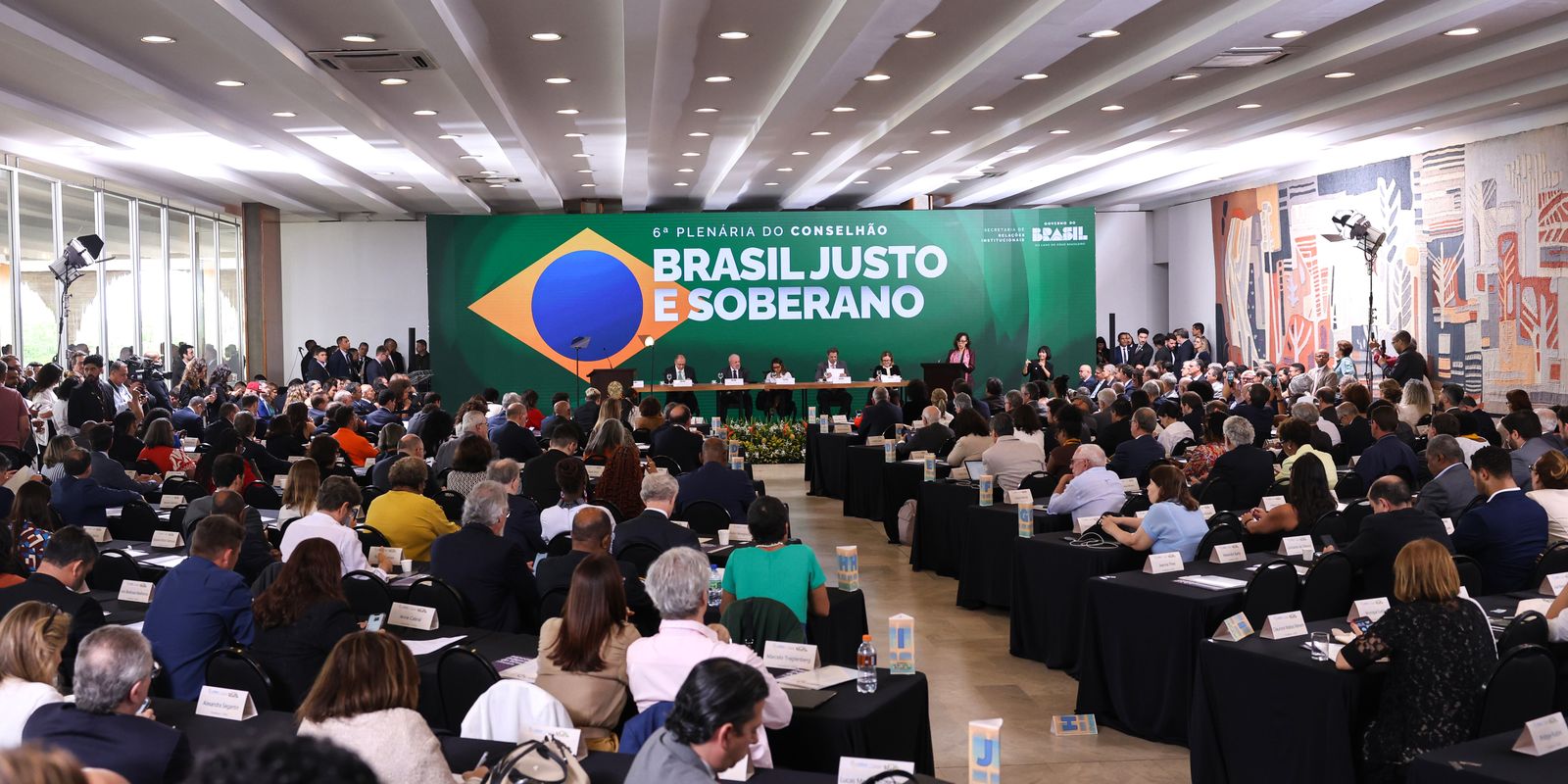
The 6th Plenary Meeting of the Council for Sustainable Economic and Social Development (CDESS), known as the Council, held this Thursday (4), brought together representatives from the federal government, organized civil society and Brazilian business, at the Itamaraty Palace, in Brasília.
Created in 2003, during the first term of President Luiz Inácio Lula da Silva; extinguished in 2019 by the government of former president Jair Bolsonaro; and reactivated, in 2023, under the current Lula government, the social participation body aims to serve as an instrument of plural dialogue for the formulation of public policies and guidelines for the economic, social and sustainable development of Brazil.
The Minister of Education, Camilo Santana, celebrated the resumption of institutional dialogue with civil society.
“Government policies are built to meet the demands of society. So, this listening is fundamental. This council is a democratic way of listening to society, its priorities, its demands”, he told Brazil Agency.
Strategic goals
Representatives of the collegiate hand over the document to President Lula Pillars of a Nation Projectwhich brings together goals considered strategic for the country’s development.
The proposals were created based on discussions held in recent months, in the thematic committees of the Council for Sustainable Economic and Social Development.
The document was created based on the Brazil 2050 Strategy, coordinated by the Ministry of Planning and Budget, with proposed goals for a decade and more concrete actions for the next five years.
“In the commissions, the councilors answered the guiding question: ‘Where will Brazil be in ten years’, about aging, jobs in the interior, the profile of new technologies affecting employability. It was a profound debate”, explained the Council’s executive secretary, Olavo Noleto.
He stated that the contributions will be significant for the future of the country, based on diversity. “The different ones are here [no Conselhão]which is a wealth. Because, in Brazil where differences are disputed, here we are proving that differences are possible”, reflected Olavo Noleto.
Public debates
Currently, the Council has a staff of 289 advisors. In agriculture, soybean and cotton producer Eraí Maggi recognized measures taken by the federal government that benefited the sector, such as the development of biotechnology, standards for the use of safe agricultural pesticides for producers, field workers and consumers.
He highlighted the expansion of access to bank credit for rural producers, based on rules for bank financing that benefited the entire nation.
“There was long-term financing – 17 years, with a three-year grace period – for the silo, tractor and harvester, for the sprayer, for everything. Then, Brazil became what it became, with millions of tons of production, generating jobs and exporting.”
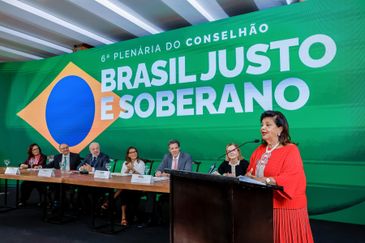
Businesswoman Luiza Trajano celebrated advances and criticized the rise in interest rates Photo: Ricardo Stuckert/PR
Businesswoman Luiza Trajano celebrated two advances made by the federal government: the reduction in the unemployment rate lowest level in the historical series (5.4%) and the recent regulation of bets.
“Let’s stop talking bad about Brazil. Let’s highlight what’s good about us and value what’s ours. And I defend and deeply believe in Brazil, we have absolutely everything to build a stronger, fairer and more sovereign 2026.”
However, Luiza Trajano criticized the rise in interest rates, which according to her hinders economic activity. The businesswoman also called on businesspeople in Brazil to create a broad education movement to combat violence against women.
Finance Minister Fernando Haddad said that Brazil has reasons to be positive, without forgetting the challenges and bottlenecks in the economy.
The minister made a comparison with the “chainsaw” adopted by Argentina as a symbol for fiscal adjustment and spending cuts in the platinum country.
“We don’t need an electric saw to correct our imbalances. But we need a screwdriver. If they take away the screwdriver, it will be difficult to screw with our hands. But, with dialogue, we will continue to prosper”, said Haddad.
The minister also brought to the meeting figures on the employment rate, the reduction in the informality rate, the increase in the average salary, a record reduction in income inequality and commented on Brazil’s exit from the Hunger Map, accompanied by the reduction in the poverty rate. Haddad predicts that inflation will be the lowest in history.

Nina da Hora defended Brazil’s technological digital sovereignty Photo: Ricardo Stuckert/PR
Computer scientist and Artificial Intelligence (AI) researcher Nina da Hora defended Brazil’s technological digital sovereignty, with investments in national software and innovative solutions developed in the country, as well as in public universities to generate jobs in the country. “It’s not about isolationism, nor about technophobia. It’s about our national sovereignty also being strengthened through solutions.”
Another counselor, the vice-president of the ABC Metalworkers Union (SP), Mônica Veloso, recalled workers’ achievements, such as the permanent policy of increasing the minimum wage and the correction of the Income Tax table that expands tax exemption for those who earn up to R$5,000 per month.
“We are talking about savings of around 83% of a salary, which is practically a 14th salary more. There will be 28 billion more resources in the hands of workers. This means income, consumption and more jobs.”
With this, the union leader lists that, in the last three years, policies to combat social inequalities have resulted in the reduction of poverty and inequalities in Brazil and in the country’s official exit, for the second time, from the United Nations Hunger Map.
“Combating inequalities means removing the immense majority of black people from our peripheral communities from social invisibility, from subsistence and exclusion, giving them the conditions to return to hope, dream and live the Brazil that needs to belong to all of us.”
Despite highlighting the achievements, Mônica Veloso, demanded that public authorities focus on retirees in 2026. Likewise, he demanded the generation of good quality jobs and that Brazil put an end to the 6×1 scale. “Free time boosts the economy.”
The co-founder of the global president of Central Única das Favelas (Cufa), Preto Zezé, understands that the government will have to renew the repertoire of discussions on urban issues in Brazil, mainly public security.
“We cannot let the debate be reduced to just effective ammunition, police and vehicles. We need to introduce integrated interventions within urban territories”, he told Brazil Agency.
The activist defends the economic debate, which I think is extremely important.
“We live in a precarious state of work. The favela produces an economy of R$312 billion, which bypasses the State. When the State comes close to this deregulated economic environment, it often gets in the way or is seen as an enemy, when in fact people need public policies in these territories”, emphasizes Preto Zezé.
The young activist in the anti-ableism struggle (in defense of people with disabilities and their inclusion in society) and digital inclusion influencer, Ivan Baron, listed the agendas he took to the Council. “We want to place people with disabilities within the public budget, something that I have been debating about the BPC [Benefício de Prestação Continuada] and we want to avoid cuts in the Ministry of Social Development [MDS – Ministério do Desenvolvimento e Assistência Social, Família e Combate à Fome].”
Other deliveries
The representatives of the collegiate handed President Lula a copy of the project Move World, which brought together people of different ages and territories from Brazil and the world, to take messages and proposals from the Amazonian scientific community to global leaders at the United Nations Framework Convention on Climate Change (COP30), which ended in November, in Belém.
During the 6th Council Meeting, the Positive Agenda for Agriculture 2025 was also sent to the Presidency of the Republic: a set of practices and technologies already adopted by companies, research institutions, governments and international organizations to strengthen sustainable production and innovation in the Brazilian agricultural sector.
Another presentation was the Portfolio of Investments Aimed at Ecological Transformation in Brazil, organized by the Ministry of Finance, which details a set of data on public and private projects and financial applications focused on projects and companies with a positive environmental impact, such as those related to the bioeconomy, renewable energy and nature-based solutions.
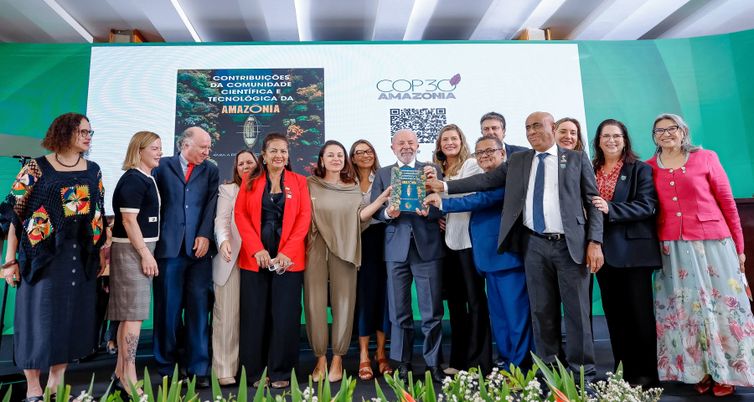
Conselhão gives Lula contributions from the scientific and technological community in the Amazon. Photo: Ricardo Stuckert/PR