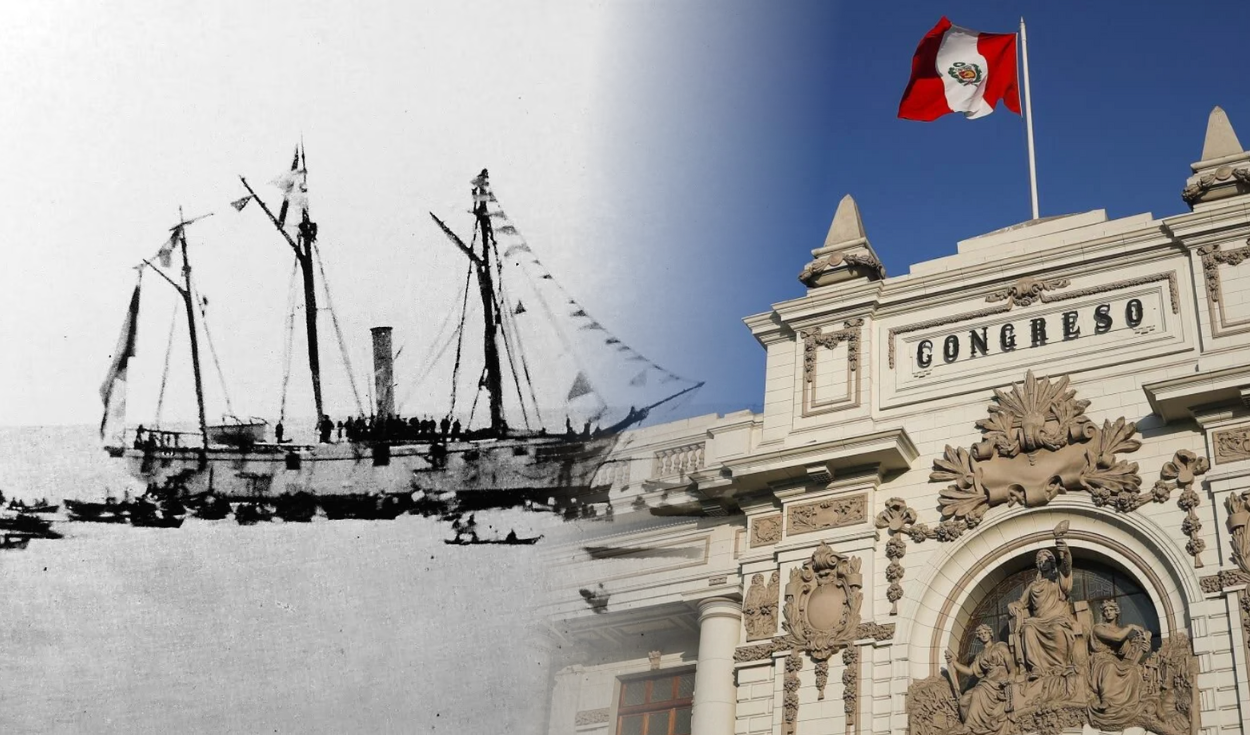
HeCongress of the Republicapproved the opinion that declares the recovery and restoration of theCovadonga shipsunk off the coast ofChancaymore than a century ago. The proposal obtained 71 votes in favor, 3 against and 13 abstentions, and seeks to “preserve the historical memory” of the country. The decision, however, has raised questions because it occurred at a time when insecurity and violence are the main problems facing citizens.
The approved text provides that theMinistry of Culturealong with theMinistry of DefenseheRegional Government of Limaand theMunicipality of Chancaycoordinate actions to evaluate the recovery of the historic ship. According to the opinion, the rescue will be carried out only “as long as its state of conservation allows it,” leaving open the possibility that the initiative remains in the realm of the symbolic.
YOU CAN SEE: The Judiciary declares the impeachment of Congress against Salvador del Solar null and void
For the promoters of the project, the measure represents an act of historical vindication. Theschooner CovadongaIt was sunk by Peruvian patriots on September 13, 1880 during thePacific Warin an operation that temporarily weakened the invading army. After the event, the city of Chancay suffered reprisals and looting by Chilean troops. The rescue, its defenders maintain, seeks to pay tribute to that resistance.
However, the political and social context in which the approval is given has attracted attention. As the country goes through a deep crisis of representation and a wave of citizen insecurityhe Congress is questioned again for his legislative priorities. Instead of debating effective measures against crime or corruption, the parliamentary majority has focused the agenda on an initiative of high symbolic value, but of dubious urgency.
YOU CAN SEE: Plenary session of Congress prepares re-election of rectors of public universities
A decision more symbolic than practical
The proposal on Covadonga ship It was presented as an action of historical memory, but it does not include details about the budget, deadlines or those directly responsible for its execution. It also does not specify which entity will determine the technical viability of the rescue or how the project will be financed.
The text emphasizes that the recovery “will strengthen national identity,” although it does not establish specific mechanisms to achieve this. On paper, the rule is a declaration with no immediate effects, which will require subsequent coordination between the sectors involved to be implemented.
The approval of the project on the Covadonga reinforces the image of a Parliament disconnected from the real concerns of the population. With a country hit by crisis economic and citizen insecuritythe legislative decision seems to respond more to a political gesture than to a specific need.