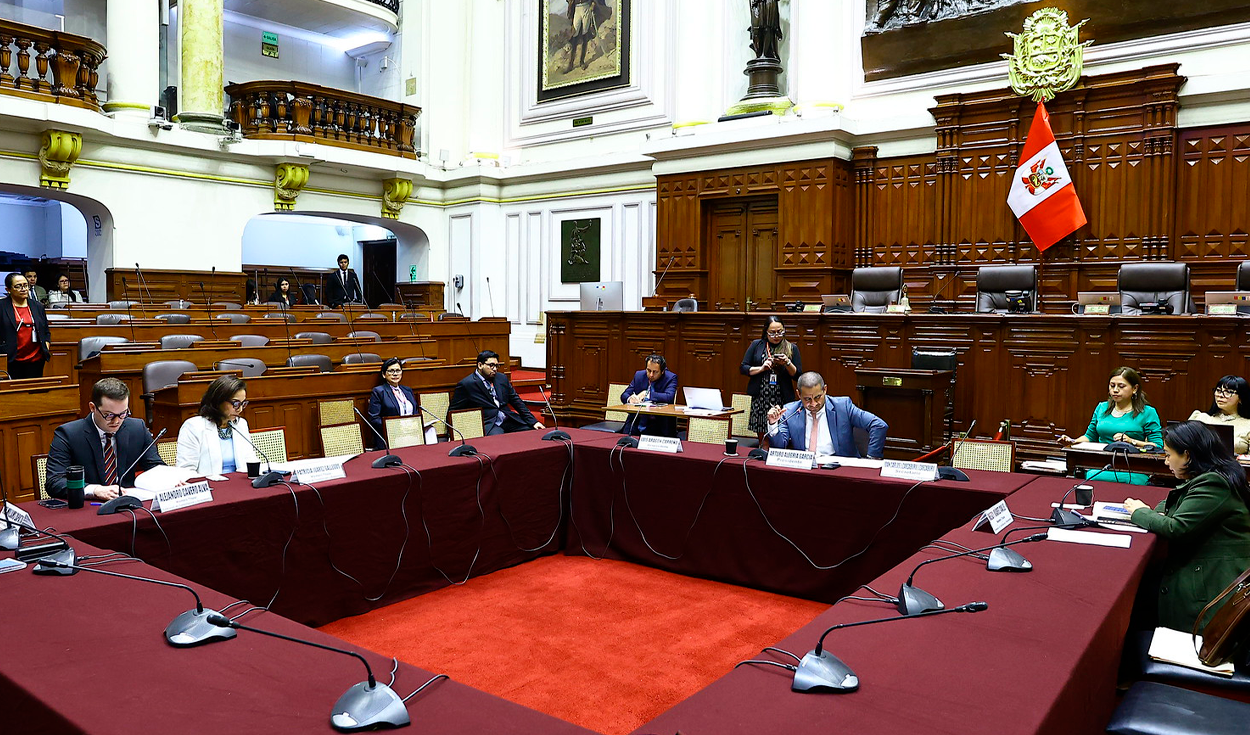
The Constitution and Regulation Commission of the Congress of the Republic approved today, with 19 votes in favor, 2 against and 1 abstention, the opinion that establishes a new procedure for the selection of representatives of Peru before international organizations contemplated in the treaties ratified by the country.
The proposal, based on Law Project 5303/2022-CR, seeks to guarantee a “objective, technical and transparent procedure” for the election of national candidates for positions such as judge, judge ad hoccommissioner and member of bodies of the United Nations Organization (UN), of the Inter-American Human Rights System and other international organizations.
The Role of the Chancellery and the Committee Ad hoc
As approved, the Ministry of Foreign Affairs (Chancellery) It will be the competent body in charge of conducting the entire selection process. For this, a committee ad hoc which will be made up of: a representative of the Foreign Ministry (who will chair it), a representative of the Ministry of Justice and Human Rights and a representative of the Ombudsman’s Office.
The functions of this committee will include preparing and approving the bases of the process, inviting specialized public entities to present proposals, verifying that the applicants meet the required profile and, finally, selecting the candidate who is considered most suitable and in line with the interest of the Peruvian State.
Other Commission agreements
In the same session, the Constitution Commission also approved the Advisory Opinion Report 002-2021-2026-CCR/CR. This report, requested by Congressman Alejandro Muñante (president of the investigative commission of the effective collaboration agreement with Odebrecht), concludes that:
- It is not necessary to issue multiple summonses to apply restraints to a person who is reluctant to appear, as long as he or she has been validly notified of a prior warning.
- The constraints can be imposed on both those appearing and those investigated, without the need for a formal change in their procedural situation.
- The only valid refusals to testify are those that invoke constitutional rights such as professional secrecy, privacy, the right to remain silent or the prohibition of self-incrimination.