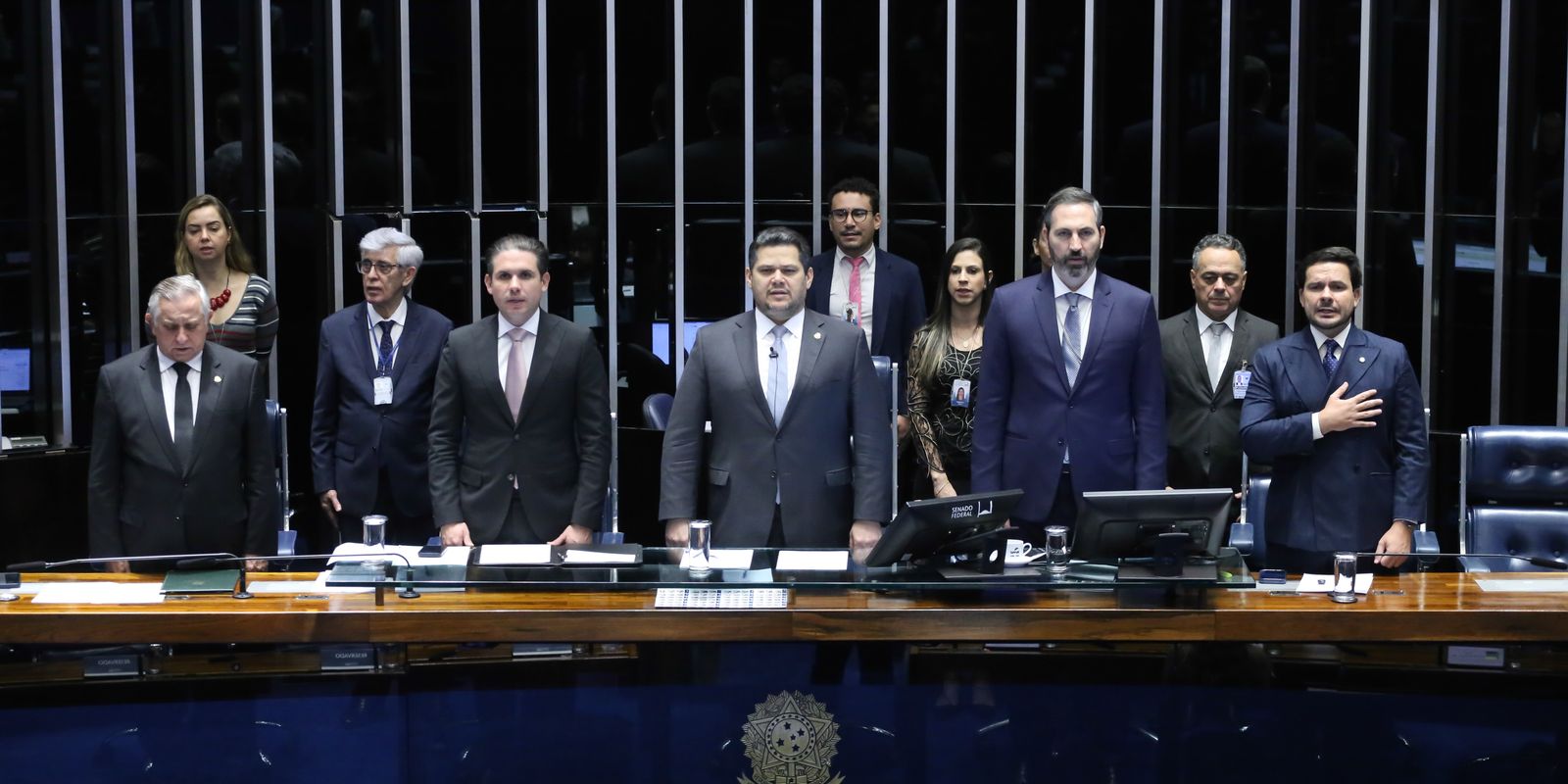
The National Congress approved this Friday (19) the opinion of the rapporteur, deputy Isnaldo Bulhões (MDB-AL), of the 2026 Budget Law Project (PLOA). The preliminary report foresees total expenditure of R$6.5 trillion and a surplus target of R$34.2 billion, which will be met if the deficit is zero or a surplus of R$68.6 billion is reached. The text now goes to President Luiz Inácio Lula da Silva for sanction.
Of the total expenditure, R$6.3 trillion is directed to the fiscal and social security budgets (OFSS) and R$197.9 billion to the investment budget of state-owned companies. The spending limit for ministries and other Powers is now R$2.4 trillion.
The text also highlights that 28% of the OFSS will be allocated exclusively to the payment of interest on public debt, which is equivalent to R$1.82 trillion. This amount involves the amortization of the principal of the contractual or securities debt with resources obtained through new credit operations (issue of securities).
“Deducting debt refinancing, the projected revenue for 2026 is R$4.5 trillion, with R$3.27 trillion (72.6%) coming from current revenue and R$1,237.6 billion (27.4%) from capital revenue”, says the opinion.
The 2026 minimum wage will be R$ 1,621R$10 below the government’s initial estimate. For 2026, there will also be an extra expense with the electoral fund, scheduled at around R$5 billion.
Amendments
The report predicts around R$61 billion in parliamentary amendments. Of this total, around R$37.8 billion will be allocated to mandatory amendments, with mandatory payment. Individual amendments, from deputies and senators, total R$26.6 billion; those for benches, allocated to state benches, received R$ 11.2 billion. Commission amendments, which are not mandatory, total R$12.1 billion.
Another R$11.1 billion is foreseen in the opinion as additional installments, for discretionary expenses and for projects selected in the Growth Acceleration Project (PAC).
In addition to the Budget for next year, another 20 bills were approved that open additional credits in the 2025 Budget.
Among them are PLN 6/2025, which allocates R$8.3 billion to the creation of the Tax Benefits Compensation Fund, provided for in the tax reform; PLN 18/2025, which opens additional credit of R$3 million for Companhia Docas do Ceará.
The resources, resulting from the cancellation of other appropriations, will be used to purchase equipment and for nautical maneuverability and navigability studies necessary for receiving container ships.
Government leader in the Senate, Randolfe Rodrigues (PT-AP) celebrated the approval of the budget later this year and said it is essential to celebrate achievements from 2025 in 2026.
“Brazil is at its lowest unemployment average of its historical average, 5.4%, and reducing it, we are at the lowest inflationary average since the advent of the real plan. The average income of the Brazilian worker reached its best level in history, R$3,800 and in January it improves even further, because from January onwards those who receive up to R$5,000, which corresponds to 90% of Brazilians who pay income tax, will no longer pay income tax due to President Lula’s project approved by the National Congress. Brazilians who receive between R$5,000 and R$7,000 will also have a discount while paying less tax,” he said.
Teachers
In the morning, Congress held a solemn session to promulgate Constitutional Amendment 138, which authorizes the accumulation of public office of teacher with another of any nature, respecting the salary cap and working hours.
Until today, the Constitution only allowed the paid combination of teaching positions with other technical or scientific positions, which allowed for several legal challenges.
The constitution also allows the accumulation of two teaching positions and two public positions for health professionals.