The protection of boys, girls and adolescents in vulnerable situation has taken on greater scope in the Dominican Republic.
The National Council for Children and Adolescents (Conani) currently keeps under guard 1,206 minors through non-profit associationsand others 525 children lodged in 11 transit homes administered directly by the institution, for a total that exceeds 1,700 active cases throughout the country.
Added to this system are 69 residential programsof which 59 receive funds from the national budget.
For next year, Conani manages an increase in the allocation of 186 million pesos aimed at strengthening health services protectionfood, health, education and psychosocial care.
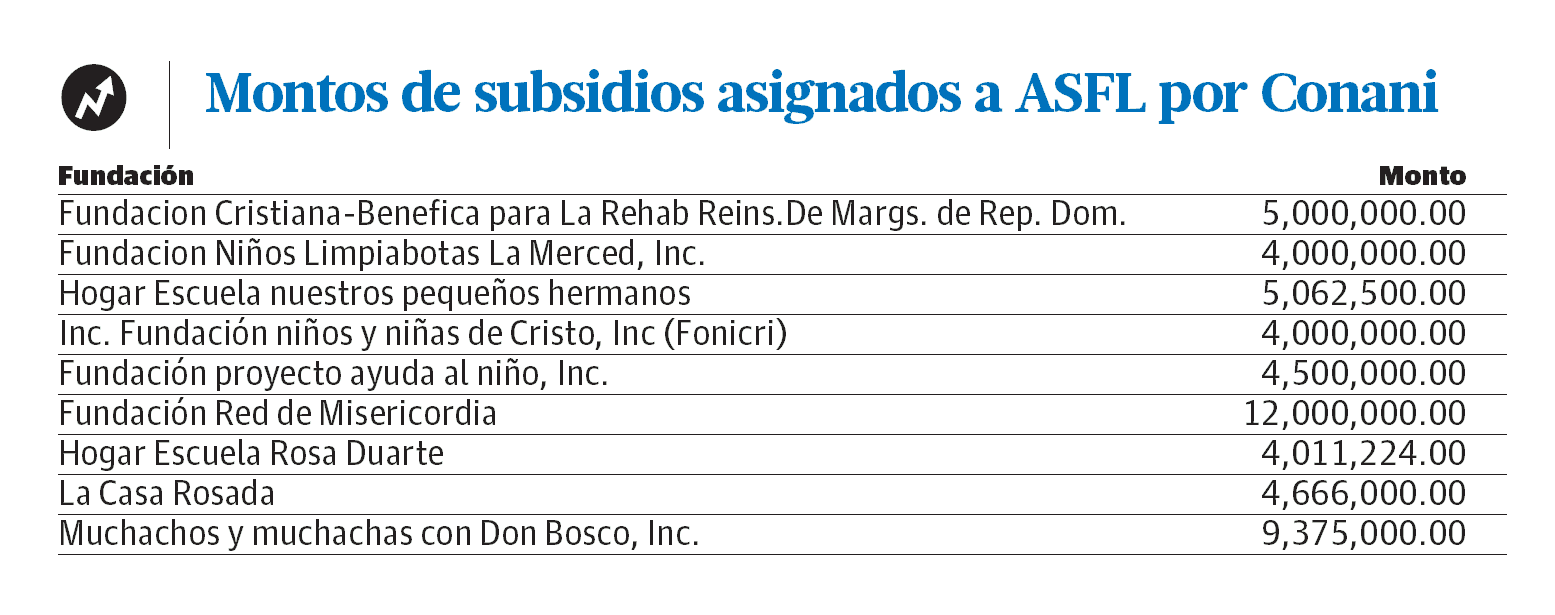
Between January and October of this year, the institution has made an investment of 166,792,371.00 pesos for the subsidy of non-profit associationswhich operate as key support in the national network of child protectionthus consolidating the response mechanisms in cases of greatest social risk.
With a range of subsidies which ranges between 3,750,000 and 12,000,000 pesos, the Conani provides financial support to various non-profit associations (ASFL) that are part of its national protection network.
Among the entities that receive the highest levels of financing are the Christian-Charitable Foundation for the Rehabilitation and Reintegration of Marginalized People in the Dominican Republic, the Children’s Clean Boots La Merced Foundation, Inc., the Home School Our Little BrothersInc., the Boys and Girls of Christ Foundation, Inc. (Fonicri), the Proyecto Ayuda al Niño Foundation, Inc., the Rosa Duarte School Home, La Casa Rosada, Inc. and Boys and Girls with Don BoscoInc., for its high volume of care and services.
Comprehensive care in four areas
Each child who enters the system is evaluated under a care model comprehensive based on four axes: health, social work, psychology and education.
Within an approximate period of 48 to 72 hoursa complete diagnosis that allows you to design a individual plan of intervention, adjusted to the age, health status and family situation of the minor.
The passing homes They are organized by age range, sex and type of case.
They also have specialized areas to keep siblings together, protect victims of abuse, trafficking or violence, and attend to cases of high vulnerability.
Of the 525 children Housed in these centers, 284 are integrated into the formal educational system, including daycare centers (Caipi), regular education, Prepara modality and special programs of the Ministry of Education.
Others receive academic leveling inside homes, while 13 minors attend programs special education.
From the 14 yearsadolescents receive technical training through agreements with Infotepwith courses in barbershopbaking, computing, cooking, English, art and different technical skills, many of them taught by specialized volunteers.

Judicial control of income and expenses
No child enters or leaves a foster home without an order from the Public Ministry or a decision of the Children’s CourtsGirls and Adolescents.
The institution clarifies that it does not remove minors on a discretionary basis, but rather executes protective measures dictated by the judicial authorities.
The family visits are made every 15 days under supervision of Public Ministry and with psychological support. In addition, weekly video calls are provided to maintain family ties in a safe environment.
When a minor is returned to his or her family, a monitoring plan from the municipal offices of Conaniwith the aim of ensuring its welfare after system exit.
In cases of orphaned childrenits integration into the extended familyprior socio-family evaluation.
Specialized food
The passing homes they have meal plans designed by nutritionistsadapted to specific conditions such as diabetes, kidney diseases, gastric disorders, teenage pregnancies and bedridden minors.
Each home has medical staff24-hour nursing, psychologists, social workers, educators and care staff, with health protocols strict to guarantee the immediate attention in case of any emergency that may arise.
Furthermore, minors participate in sports activities and recreational such as soccer, basketball, volleyball, theatersummer camps, equine therapy, educational fairs and visits to interactive farms, in coordination with private institutions and volunteer networks.
According to testimonies collected by the protection system itself, some trained adolescents in barbershop Today they generate income from their homes, while others, trained in baking, have started small businesses or ventures.
There are also children who managed to resume their studies and plan to do university courses.