Retail sales grew 0.5% in October, compared to September. The result is the biggest increase between consecutive months since March 2025, when it had grown 0.7%.
Compared to October 2024, Brazilian trade increased 1.1%. In the last 12 months, the sector grew 1.7%, the lowest level since December 2024, when it reached 4.1% expansion.
The data is part of the Monthly Trade Survey, released this Thursday (11) by Brazilian Institute of Geography and Statistics (IBGE).
See the behavior of sales in commerce in recent months:
- March: 0.7%
- April: -0.3%
- May: -0.4%
- June: -0.1%
- July: -0.2%
- August: 0.1%
- September: -0.2%
- October: 0.5%
With data from October, trade is 0.5% below the highest level ever recorded, in March 2025. The IBGE historical series begins in 2000. The sector is 9.6% above the pre-covid-19 pandemic level (February 2020).
Seven of the eight activities with high
From September to October, seven of the eight activities surveyed showed progress:
- office, IT and communication equipment and supplies: 3.2%
- fuels and lubricants: 1.4%
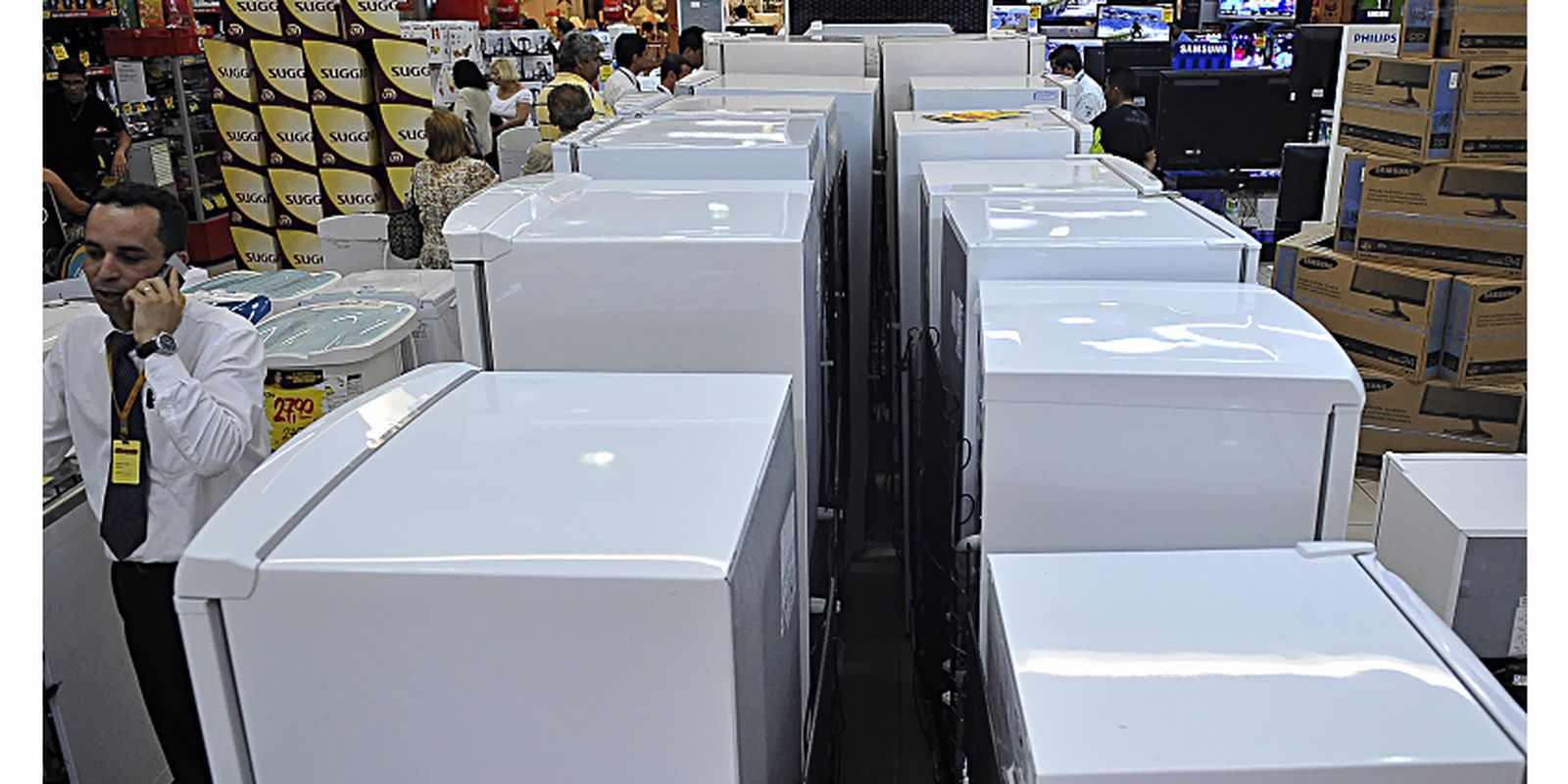
- furniture and appliances: 1.0%
- books, newspapers, magazines and stationery: 0.6%
- other articles for personal and domestic use: 0.4%
- pharmaceutical, medical, orthopedic and perfumery articles: 0.3%
- hyper, supermarkets, food products, drinks and tobacco: 0.1%
- fabrics, clothing and footwear: -0.3%
According to the research manager, Cristiano Santos, the sale of computers, cell phones and household appliances were an important driver of sales in the month.
“Companies took advantage of the depreciation [desvalorização] of the dollar and performed better, also due to promotions”, he mentions. The fall of the dollar against the real makes imported products more affordable in the country.
Combination of factors
The analyst adds that there were “coincidences of factors” to stimulate consumption. “Among them, inflation subsided”, says Santos, remembering that there was deflation, with a drop in the price of food at home, furniture and household appliances.
Other factors were the heated job market and credit to individuals, which grew 2.1% in October.
Santos highlights that credit to individuals has not felt much of the impact of the basic interest rate, the Selic, at 15% per year, which tends to reflect on the increase in prices throughout the credit chain..
Selic is maintained at this level as a Central Bank strategy to contain inflation, which was 13 months above the government’s target.
In expanded retail trade, which includes wholesale activities ─ vehicles, motorcycles, parts and pieces; building material; and food products, beverages and tobacco ─ the indicator increased 1.1% from September to October and remains stable (0%) in the 12-month period.
According to the research manager, Cristiano Santos, the expanded retail performance in October “was greatly influenced by vehicles, motorcycles, parts and pieces, and by wholesale activity specializing in food, beverages and tobacco products”.