In Mexico, talking about justice for indigenous peoples is to face a paradox. The Constitution recognizes the existence of its normative systems, but everyday reality reflects that millions of indigenous people remain excluded from effective access to courts. Structural discrimination, linguistic barriers, lack of representation and geographical distance are some of the factors that explain why, in the 21st century, justice still does not reach the corners where indigenous communities live.
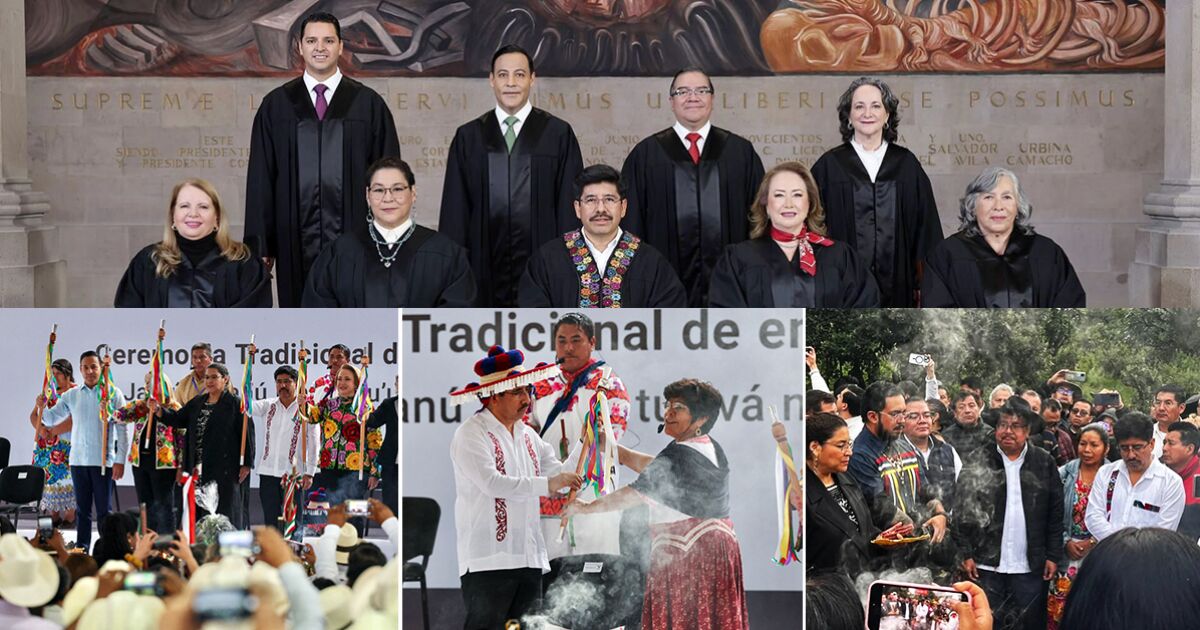
The Supreme Court is chaired for the first time in more than a century and a half by an indigenous jurist, Hugo Aguilar Ortiz. His appointment inevitably evokes the memory of Benito Juárez, also indigenous, who headed the Court in the nineteenth century. The question is inevitable: how far this symbolic change can go and what real impact can have on the access to justice of the original peoples?
Aguilar’s arrival to the Presidency of the Court is an event with an unquestionable symbolic weight. In a country where more than 23 million people identify themselves as indigenous, seeing an indigenous presiding over the Supreme Court is not a minor detail. It means recognition, visibility and the possibility of promoting an agenda that placed intercultural justice in the center of the national legal debate. The risk, however, is clear: that representation and symbols remain on the surface and do not translate into real policies, programs and transformations for people.
For example, thousands of indigenous people face criminal proceedings without a translator, which constitutes a direct violation of due process. Bringing justice to the indigenous means guaranteeing interpreters in all indigenous languages, the inclusion of cultural experts and the mandatory training of judges, magistrates and public defenders regarding interculturality. The president of the Court has the opportunity to promote national protocols that make this an institutional obligation and not a voluntary option.
Justice cannot continue to concentrate on the main populations of the country. Community courts and digital platforms in indigenous languages are required so that the farthest communities have real access. The Supreme Court can mark a guideline with jurisprudence that forces local judicial powers to implement these mechanisms. The native peoples are practically invisible in the judicial structure. Aguilar’s leadership can be a catalyst to open those doors.
But if access to justice of indigenous peoples is a historical debt, it is not the only sector at a disadvantage. Women, people with disabilities, the LGBTIQ+population, people deprived of liberty and migrants face similar barriers: discrimination, stigmatization, lack of translators, procedural costs and absence of trained defenders. This September 1 is lived a day full of symbolisms, but the true transformation of the judicial system must consider all these sectors.
If justice only opens to the native peoples, it will continue to be a privilege, attenuated, but not a universal right. The challenge of the new president of the Court is to understand that the inclusion of the indigenous must be spearhead of a broader movement of equal access to justice for all historically marginalized populations.