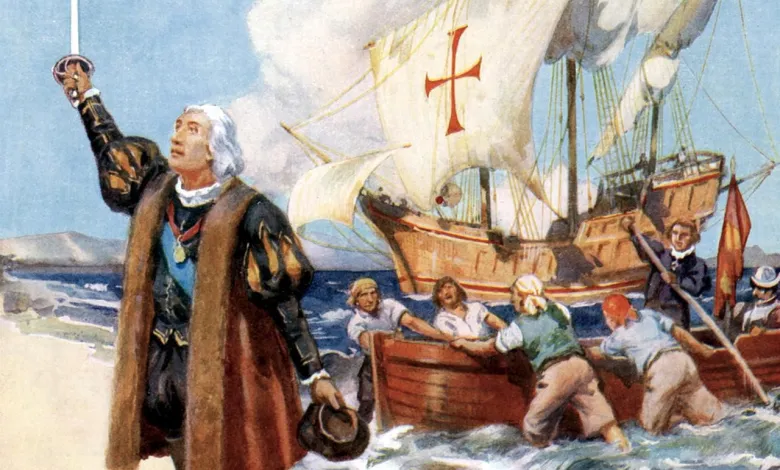
Santo Domingo. – Each October 12 It is commemorated in various Latin American countries. Columbus Daya date that marks the arrival of Christopher Colon to the American continent in 1492.
However, what began as a celebration of “discovery of America” has evolved over time into a day of reflection about the meeting of civilizations, the impact of colonization and the cultural diversity that defines the nations of the continent today.
An event that changed history
On October 12 but 1492, three Spanish caravels (vessels); the Niña, the Pinta and the Santa María, arrived in what we know today as America. This event, led by the Genoese navigator Christopher Columbus at the service of the Catholic kings of Spain, marked the beginning of a new stage in the history of the world: contact between Europe and America, which had profound political consequencessocial and cultural.
Originally celebrated as the Columbus dayand later called Columbus Day In many Latin American countries, the date sought to highlight the union between indigenous peoples of the continent and the European colonizers, especially the Spanish-speaking ones.
However, with the passage of time, the critical view on the effects of colonization has transformed the meaning of this commemoration.
One day, multiple meanings
Today, October 12 does not have a single name or a single interpretation. In countries like Mexico, the Dominican Republic, Colombia or Venezuela it is still recognized as Columbus Dayalthough with approaches increasingly focused on diversity and cultural identity.
On the other hand, other countries have chosen to rename it to emphasize the resistance of indigenous peoples, such as Bolivia who celebrates it as the Decolonization Day.
Likewise, in Nicaragua and Venezuela the date is now known as the Day of Indigenous, Black and Popular Resistance.
While, Argentina modified it to Day of Respect for Cultural Diversity in 2010.
These changes reflect a historical review deeper into what colonization represented, not only an encounter, but also a conquest processcultural imposition and suffering for the continent’s native peoples.