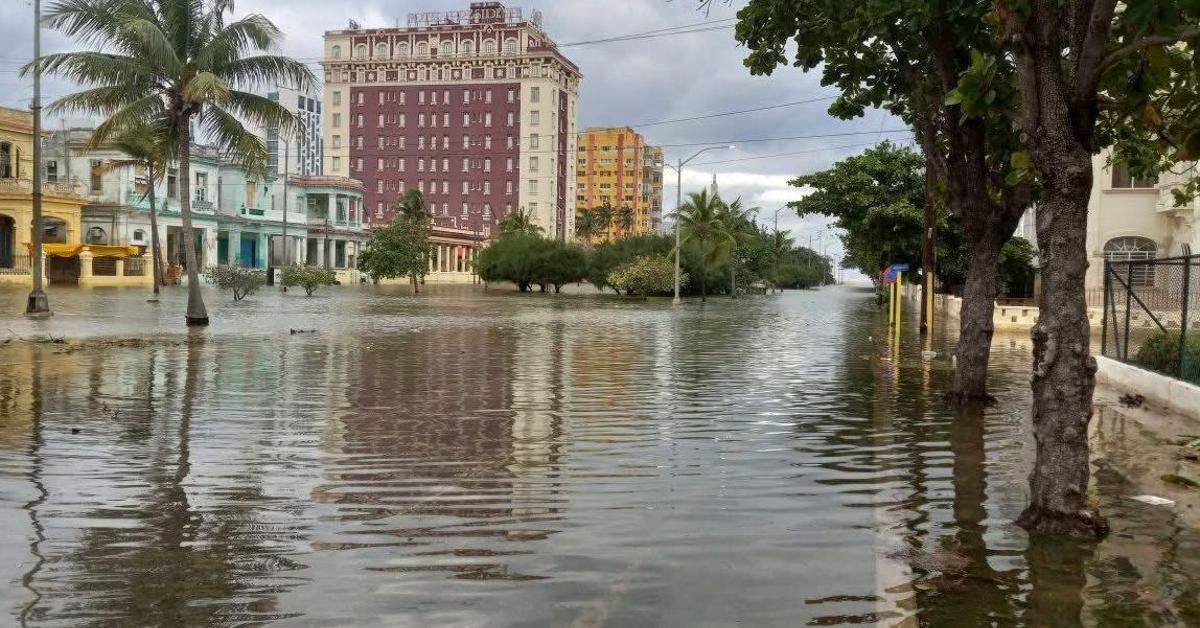
Havana/Western Cuba woke up this Sunday under an unusual meteorological scenario for an island that boasts of living in an “eternal summer.” The arrival of the eighth cold front of the current winter season has left sea penetrations, strong waves and several flooded streets in Havana.
The phenomenon is accompanied by a notable drop in temperatures. In the afternoon, thermometers will barely reach between 15 and 18 degrees Celsius in the west and center of the country, and between 18 and 21 degrees in the eastern region. At night, the atmosphere will be even colder, since minimum temperatures of between 11 and 14 degrees are expected in the west and center, and up to 16 degrees in the east, with lower values in some locations in the center of the Island.
These conditions aggravate the daily precariousness that thousands of Cubans face. In neighborhoods where domestic gas is scarce and blackouts are the norm, the cold translates into difficult nights, especially for the elderly, children and people who live in homes with deteriorated roofs. Also for those who are forced to cook with firewood or charcoal, a practice that is increasingly widespread in the midst of the energy crisis.
Added to this are the strong winds, with sustained speeds between 15 and 30 kilometers per hour and gusts that can exceed 35 km/h on the north coast, which reinforces the thermal sensation. During the night, the wind will rotate to the north, maintaining similar intensities and stronger gusts on the coast.
Floods represent another test of resistance, especially for those who live in low-lying areas.
For many Havana residents, floods represent another test of resistance, especially for those who live in low-lying areas. But those whose homes have old leaks and cracked walls, where the wind sneaks in without asking permission, do not escape either. Many improvise cardboard, nylon or old sheets to cover holes; Others resort to borrowed coats or several layers of overlapping clothing to sleep. In the poorest neighborhoods, humidity settles in mattresses and furniture, aggravating respiratory problems and rheumatism that rarely find relief in an undersupplied health system.
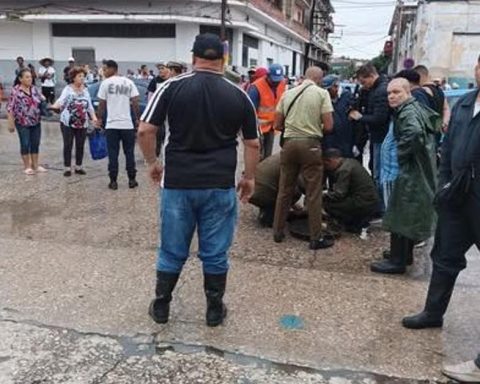
Among the risks that accompany these weather conditions are flooded basements, contamination of drinking water cisterns and uncovered sewers, invisible traps that have already proven lethal in previous floods. The day is also complicated for those who depend on informal work or daily transportation to survive. The rains and flooded streets reduce the circulation of buses and almendrones, make transportation more expensive and force many to walk long distances in the downpour, with the consequent loss of time and income.
For many, however, the greatest fear is not in the hours of rain or wind, but in the following days, when the sun returns and the accumulated humidity begins to come out of aging walls that no longer resist decades of abandonment and lack of maintenance. In Havana, the subsequent heat acts as a silent trigger that softens walls, opens cracks and accelerates the deterioration of structures that have been pushed to the limit for years. Partial or total collapses usually occur then, far from the drama of the storm, but with more serious and long-lasting consequences.
This permanent risk turns each cold front into a deferred threat for thousands of families who live in propped-up buildings, lots and quarters. Many sleep with the fear of not hearing the creak of a wall or the fall of a balcony in time. In a city where construction collapse has become normalized, the greatest threat does not come from outside, but lives within the walls themselves.