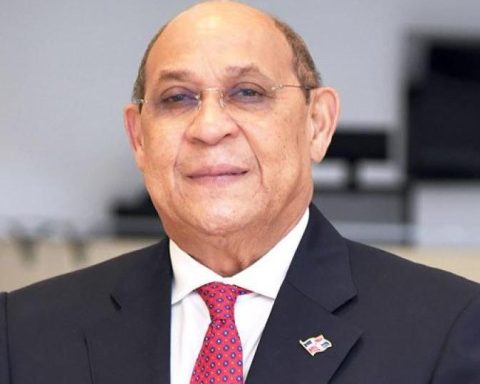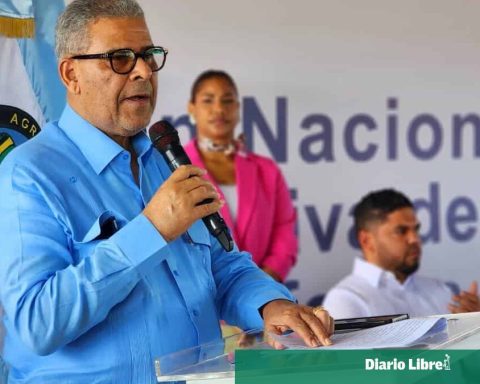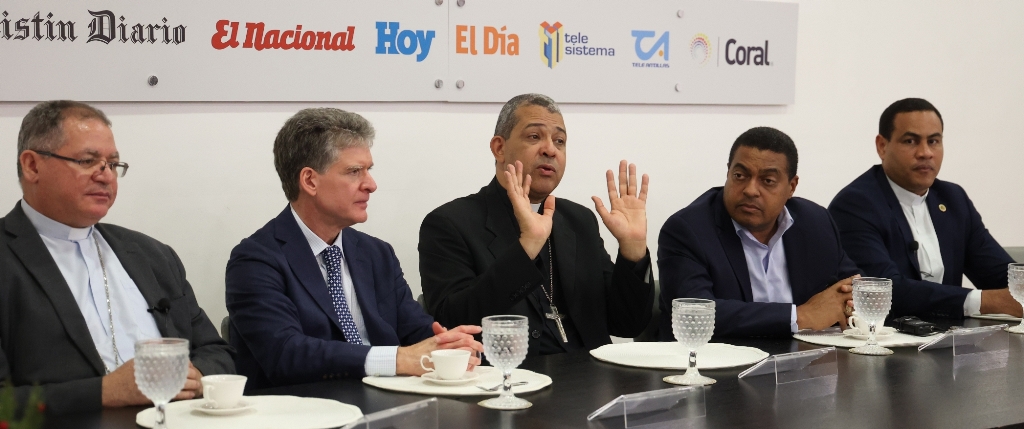
Santo Domingo.-The Catholic Church faces new and complex pastoral challenges, marked by urban growth, social changes, labor mobility and the impact of social networks, as stated by the coadjutor archbishop of Santo Domingo, Monsignor Carlos Tomás Morel Diplán.
During his participation in the Weekly Lunch of the Corripio Communications Group, Morel Diplán, who has been in the Archdiocese of Santo Domingo for just two months, explained that he is in a stage of recognition and deep knowledge of the archdiocesan reality, after serving as auxiliary bishop of Santiago and bishop of La Vega.
Extensive archdiocese
He highlighted that the archdiocese has about 160 parishes, distributed in four territorial vicariates, in addition to a large body of priests, men and women religious.
He indicated that it has been fully integrated into the already existing pastoral and administrative plan, with the purpose of enhancing the work that has been carried out.
One of the priority axes, he said, will be the close accompaniment of priests, whom he defined as fundamental to achieving harmonious evangelizing work.
“Priests also need our part. Our first mission is to accompany them so that together we can better respond to the task of evangelization,” he expressed.
Vocations and families
Monsignor Morel Diplán pointed out that, although the archdiocese currently has about 230 priests, there is real concern about generational change, since the number of seminarians has decreased compared to previous years, going from 60 to only 40 and 30 candidates.
He stressed that vocational promotion must begin in the family, warning that without solid families there will be no priestly, religious or professional vocations committed to service.
“For us, family formation is a priority, because without family, not only will we not have vocations, we will not have good citizens,” he stated.
Monsignor José Amable Durán, auxiliary bishop of Santo Domingo and apostolic administrator of the Diocese of La Vega, said that through the Samuel project they have meetings with young people for vocational promotion.
He also highlighted the importance of strengthening the educational sector for the mission of training people from Christian principles and values.
Urban pastoral, a challenge
In another order, he explained that the migration from the countryside to the city, the vertical growth of housing and the new labor dynamics have profoundly transformed the way of evangelizing.
He reflected that today a tower can house more than a hundred families, while questioning how they access those spaces to evangelize, since today’s reality is not that of the 70s or 80s.
He insisted on the need to develop an urban pastoral with clear and differentiated proposals, adapted to the realities of each territory, considering the use of social networks, different work schedules and new digital environments.
Durán highlighted the value of parish communities organized by sectors and the use of digital media as key tools for the evangelizing mission.
He pointed out that broadcasts on social networks allow us to reach the sick and people who cannot attend in person, expanding the pastoral reach of the Church.
Father José Luis de la Cruz, rector of the Catholic University of Santo Domingo (UCSD), stated that the Church has become aware of the accelerated changes in society and has begun to develop new evangelization strategies, especially in urban and digital environments.
Relationship with Ozoria
Monsignor Morel Diplán clarified that he maintains a harmonious and collaborative relationship with the metropolitan archbishop of Santo Domingo, Monsignor Francisco Ozoria, denying any perception of conflict.
He said that his role as coadjutor archbishop, with the right of succession, responds to a pastoral disposition of the Church to guarantee continuity in the archdiocesan government.
State support
Morel clarified that the Catholic Church is not supported by the Government, but rather receives limited and regulated economic collaboration, similar to that received by other non-profit institutions.
He explained that each diocese in the country receives approximately 500 thousand pesos per month, resources that are allocated to social, educational and community projects.