The second edition of the Unified National Public Competition (CPNU 2) applied, this Sunday (7), the discursive test of the exam that offers 3,652 vacancies for 32 public bodies. The competition was held in 228 municipalities for 42 thousand candidates.
Of the total number of registrants, 80% attended the tests, with 20% completely abstaining from CNPU 2, that is, 8.5 thousand candidates who passed the first test did not attend the speech.. In the first stage of the competition, in September, absence was 42.8%.
The preliminary results with the correction mirror of today’s test will be published on January 23rd, with candidates being able to submit appeals between January 26th and 27th.
The list of those approved is scheduled to be published on February 20th. Check out all the upcoming CPNU 2 deadlines at the end of this report.
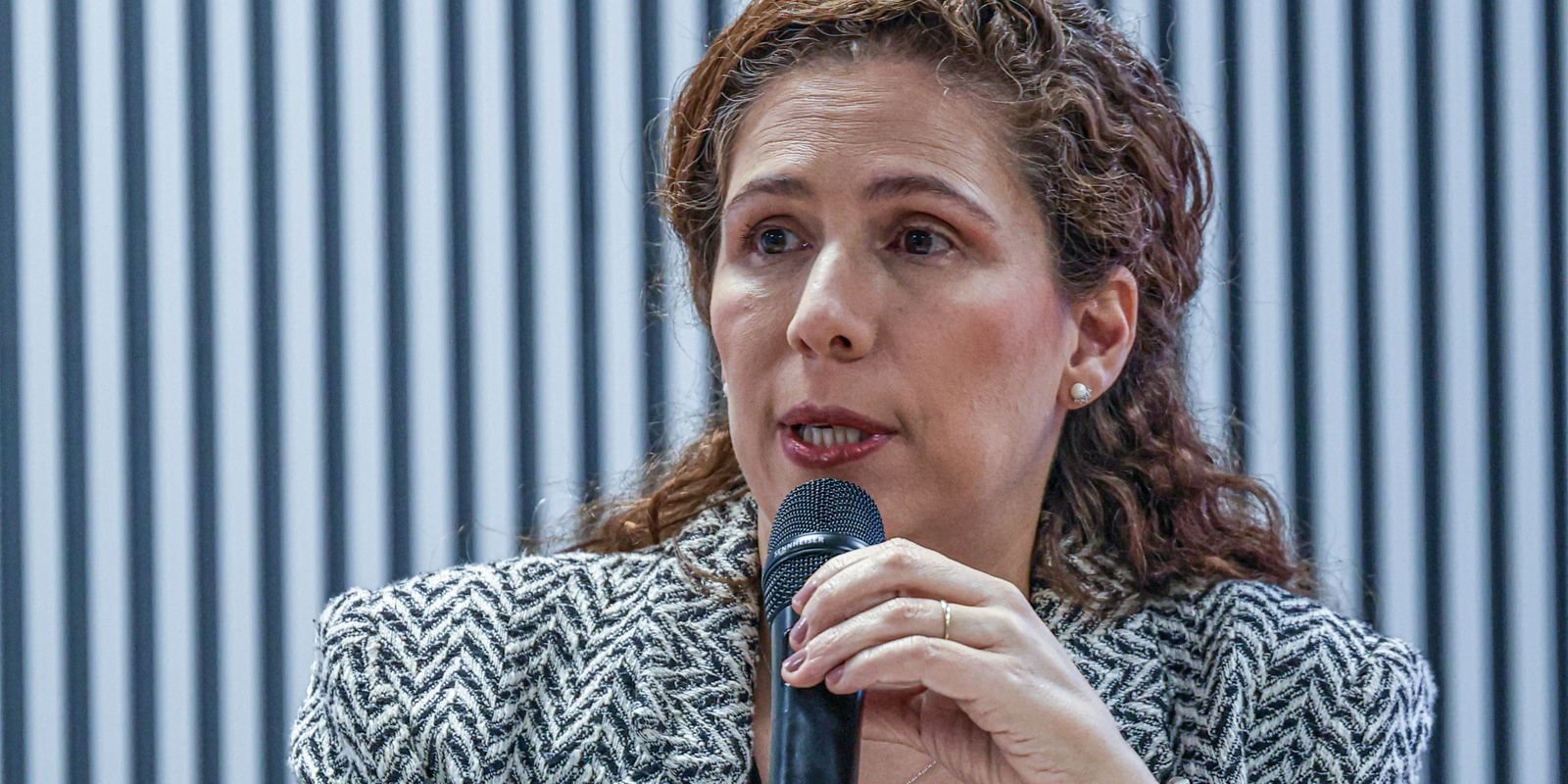
In a press conference, after the end of the test in Brasília, the Minister of Management and Innovation (MGI), Esther Dweck, celebrated the success in administering the exam.
“The evidence arrived at the locations without any complications. Everything went very smoothly. And we will be able to start the correction soon. The tranquility is precisely the result of planning”, said Esther.
The highest abstentions were recorded in Acre (27%), Amazonas (26%), Espírito Santo (26%), Rondônia (26%) and Santa Catarina (26%). The states with the lowest level of abstention were the Federal District (15%), Piauí (17%) and Rio Grande do Sul (17%).
“This prediction [de abstenção] It is as expected for a contest that has two tests. It was much lower abstention than in CPNU 1 and well below the average for competitions in general. So, we were very happy because this reinforces the consolidation of a competition model”, added the minister.
In total, between 2023 and 2026, the federal government will have recruited 22 thousand people to the public administration, excluding universities and federal institutes, which have vacancies renewed by the Ministry of Education (MEC).
Minister Esther Dweck acknowledged that the total number of calls during this third term of President Luiz Inácio Lula da Silva is below what is necessary since, in ten years, around 180 thousand civil servants left public service.
Even so, Dweck considered that the 22 thousand vacancies filled by the current government strengthen the sector.
“When President Lula returned for his third term, we observed a certain inability of the Brazilian State to make public policies. Not only [por causa] the lack of people, but the lack of instruments and political will in conducting public policies. We are resuming this. The Ministry was created with the aim of recovering the capabilities of the Brazilian State”, he explained.
The MGI estimates that, over the next 10 years, the Union will lose 180,000 employees who will retire. Esther assessed that the ideal would be a Unified National Public Tender every two years.
“Since we thought [o CPNU]it should be at least every two years. I always see the Itamaraty model as ideal, which involves a few people joining every year. It is very good for public administration to have some predictability. New people are always coming in, there is no discontinuity”, he commented.
Women
The majority of those classified for this 2nd stage of the CPNU were women, who represented 57.1% of the total applicants, 42% of whom were men. Minister Esther Dweck stated that this difference occurred because of the gender equality policy between the 1st and 2nd phase of the contest.
Equalization requires that, whenever there is a greater number of men for a given test, the MGI invites more women to equalize the number of candidates of both genders.
“If there was no equality, instead of 57% women and 42.9% men, we would have had 50% men and 49% women. So, the proportion would be very different”, he commented.
Upcoming CNPU 2 deadlines
From December 8th to 17th – period for characterizing disability and confirming and verifying vacancies for black, indigenous and quilombola people.
January 8 – preliminary result of bond evaluation.
January 9th to 12th – Appeal deadline for title evaluation
January 15th – preliminary results of the self-declaration assessment boards for black, indigenous and quilombola people.
January 16th to 19th – Deadline for appealing the assessment of black, indigenous and quilombola people and the characterization of a person with a disability.
January 23rd – preliminary grade for the discursive test and publication of the correction mirror.
January 26th and 27th – Deadline for appeals of the discursive test.
February 20th – publication of the list of those approved for immediate vacancies and the waiting list. Start of the three-call process.
March 16th – final date after the three calls and start of calls for training courses or for inauguration.