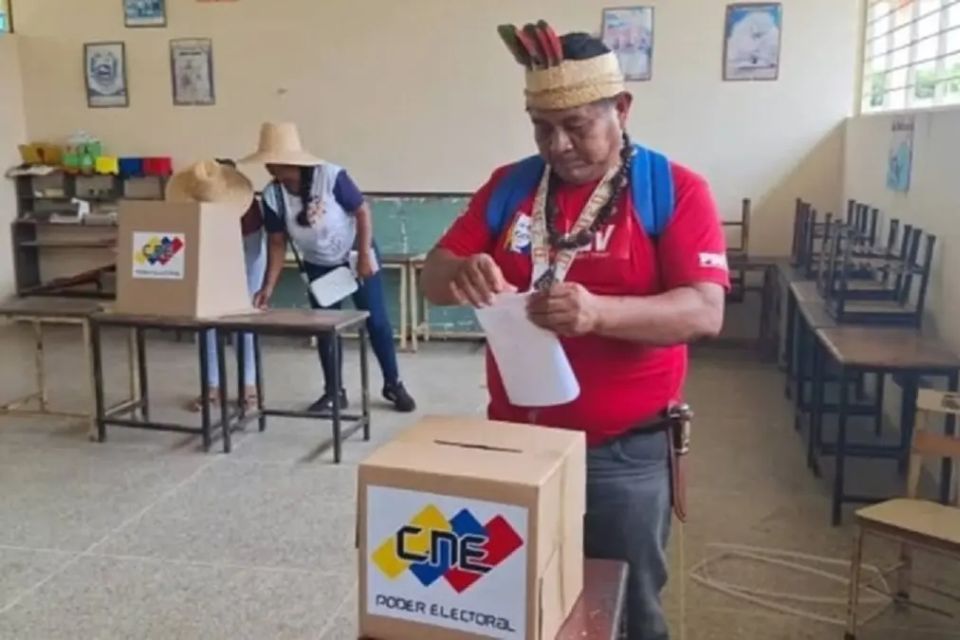
The list released by the CNE contemplates the 69 main councilors and their substitutes in the Amazonas states, Anzoátegui, Apure, Bolívar, Delta Amacuro, Monagas, Sucre and Zulia. According to the vice president of the agency, Carlos Quintero, the Guaicaipuro Chair Party obtained 40 positions, representing 58.82% of the total to award
The National Electoral Council released on Monday, August 4, the list of indigenous councilors elected in the municipal elections. Like the document on mayors, the number of votes or the percentage for which these representatives were elected were not indicated.
In Your account In the Telegram messaging network, where the list was published, the CNE indicated that elected councilors and councilors must appear at 10:00 am on Monday before the Electoral Municipal Boards. “Punctual assistance is indispensable to begin the process of awarding, proclamation and accreditation of charges, as established in current electoral regulations.”
The list includes the 69 main indigenous councilors and their substitutes in the Amazonas, Anzoátegui, Apure, Bolívar, Delta Amacuro, Monagas, Sucre and Zulia states. According to the vice president of the agency, Carlos Quintero, the Guaicaipuro Chair Party obtained 40 positions, representing 58.82% of the total to be awarded.
*Also read: CNE Disseminates municipal results without data on votes or percentages
The Choice of indigenous representation Before the municipal councils, after a change of legislation in 2021, it is second; That is, these people are chosen through assemblies where only the spokesmen of each community vote.
For this, 6,598 spokesmen and spokespersons were designated, chosen in 4,061 community assemblies in the eight states where indigenous representation is chosen. Rector Quintero indicated that the participation of the spokesmen was 92.97% in these elections.
*Journalism in Venezuela is exercised in a hostile environment for the press with dozens of legal instruments arranged for the punishment of the word, especially the laws “against hatred”, “against fascism” and “against blockade.” This content was written taking into consideration the threats and limits that, consequently, have been imposed on the dissemination of information from within the country.
Post views: 204