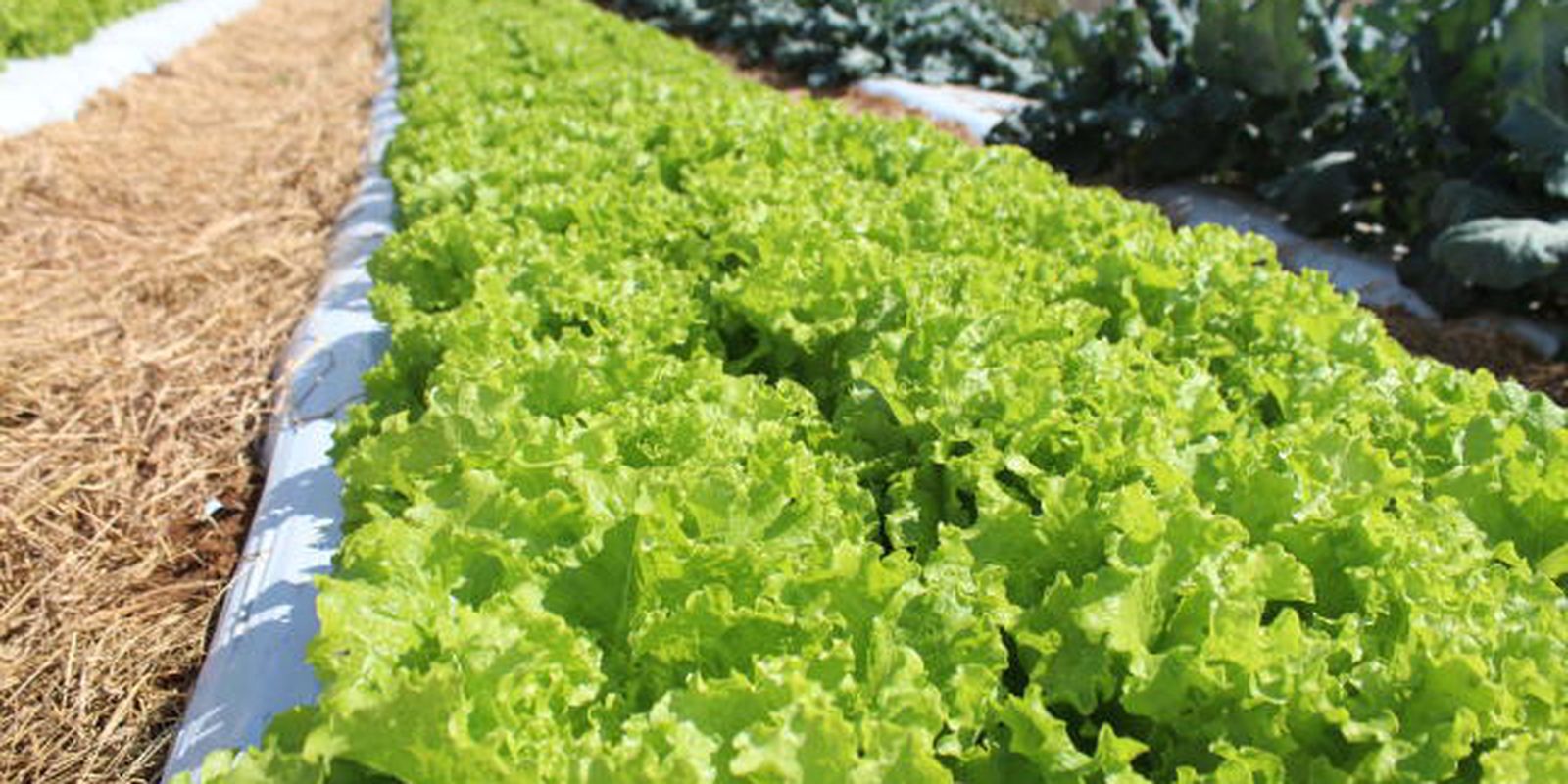
Increased temperature caused by climate change can make lettuce cultivation in open fields unfeasible in the country during the summer in about 50 years. The warning is in a study by the Brazilian Agricultural Research Company (Embrapa), linked to the Ministry of Agriculture and Livestock.
According to researchers, In an optimistic scenario of global warming, in the last 30 years of this century, 97% of the Brazilian territory will have high or very high climate risk to cultivate lettuce in the open field during the summer.
To reach the conclusion, Embrapa technicians have analyzed how various climate change scenarios can affect vegetable cultivation, considered vulnerable to high temperatures.
Agronomist Fábio Suinaga, a researcher in genetic improvement at Embrapa vegetables, explains that from the evolutionary point of view, Lettuce depends on mild temperature and good humidity to develop fully.
“The projected numbers are worrying because the adaptation of the species to the high temperatures is minimal, especially if it is considered that lettuce seeds require temperatures less than 22 ° C for germination,” he says.
>> Follow the channel of Brazil agency on WhatsApp
Optimistic and pessimistic scenarios
The researchers crossed climate projected information from the National Institute for Space Research (INPE), linked to the Ministry of Science, Technology and Innovations, and the Intergovernmental Panel on Climate Change (IPCC), an organ of the United Nations.
The survey considered two scenarios, one optimistic (RCP 4.5) and a pessimist (RCP 8.5), regarding the temperature will rise in comparison with the climate of the historical period from 1961 to 1990.
- Optimistic projection: There is a control of greenhouse gas emissions, causing global warming. This would result in an increase in planet temperature between 2 ° Celsius (C) and 3 ° C, in the 2071 to 2100 window.
- Pessimistic projection: Gas emissions continue to grow up to 2100, resulting in an increase of up to 4.3 ° C at the planet’s temperature.
The technicians used models that project minimum, medium and maximum temperatures for all times of the year. The most critical season is summer, when the temperature can exceed 40 ° C in much of the country, a level considered well above the ideal for the development of lettuce, which requires mild climate and balanced moisture.
- Optimistic scenario: Between 2071 and 2100, temperature range during the summer of 23.4 ° C to 41.2 ° C. Thus, 79.6% of the national territory will have a high climate risk; and 17.4%, very high.
- Pessimistic scenario: temperature in summer from 25.4 ° C to 45 ° C, leaving 11.8% of the territory at high risk; and 87.7%, very high.
In both cases, virtually the entire territory will approach the unfeasible level to cultivate lettuce in the open field in summerand, in the pessimistic scenario, the proportion of “very high” is much larger than that of “tall”.
Currently, most lettuce cultivation in Brazil occurs in open fields, and the smallest part is done in so -called protected or controlled environments, such as greenhouses.
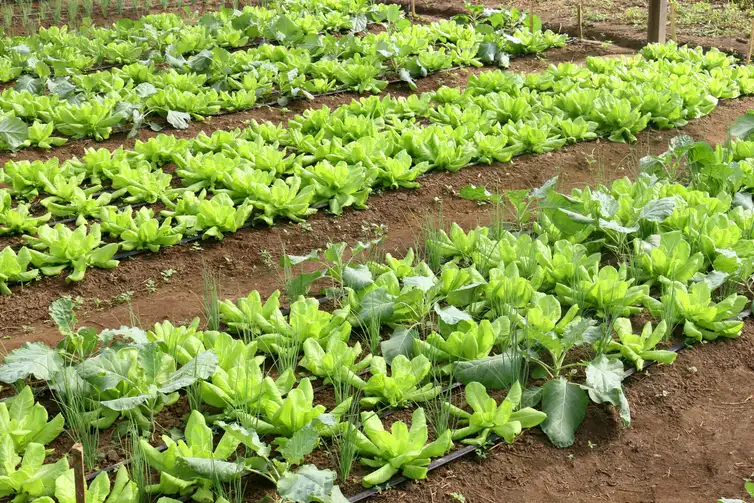
Vegetables depend on mild climate to develop better – EMBRAPA/DISCLOSURE
Heat effect
One of the effects caused by heat on lettuce is the burn of edge, also known as tipburna disorder related to calcium mineral deficiency in the leaves.
Embrapa explains that, under unfavorable weather conditions, such as high temperatures and excess moisture, as in summer crops, the leaves grow rapidly, and calcium displacement in the plant is compromised, which causes dark spots on the edge of the leaves.
Average temperatures above 25º also cause flowering (sinning) early. With this, lettuce loses quality and commercial pattern, as there is stretching of the stem, the reduction of the number of leaves and greater production of latex, which gives the bitter taste to vegetable.
The environmental engineer Carlos Eduardo Pacheco, researcher in global climate change from Embrapa, emphasizes that Understanding how climate change can affect lettuce production is essential to develop adaptation strategies.
“This allows you to anticipate impacts and avoid damage,” he says. “Maps show the urgency of thinking about climate -adapted production systems, especially for vegetables, which are more sensitive than large cultures such as corn or soy,” he adds.
Maps resulting from the study illustrate that, from the best to the worst scenario, all regions of Brazil have a high climate risk, except for a small area in the south of the country, with moderate risk. In the worst scenario, the Brazilian territory is all taken by the very high risk, and only the coastal strip has a high risk.
“Maps make it easier to view the impact of temperature on lettuce culture and highlight the urgency of thinking no longer about mitigation, but about adapting vegetable productive systems to climate change,” says Pacheco.
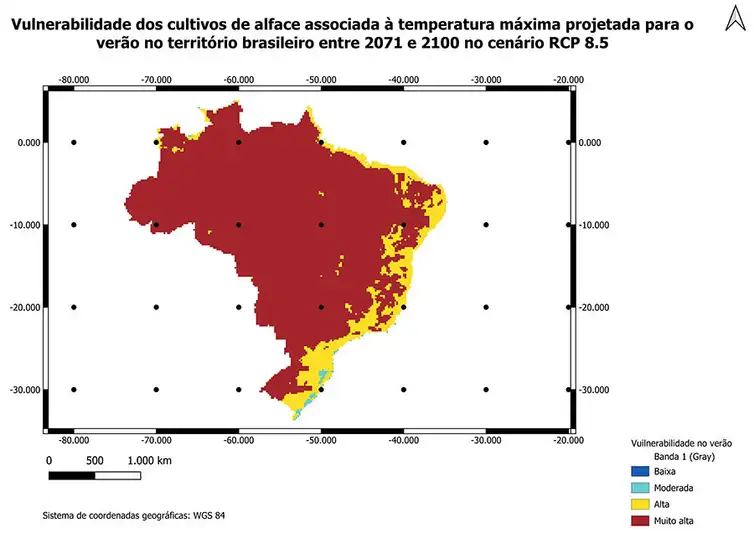
Map produced by Embrapa shows very high risk to cultivate lettuce in a pessimistic scenario of global warming EMBRAPA/DISCLOSURE
How to adapt
Embrapa was created in the 1970s to develop agricultural solutions and provide greater productivity to the Brazilian field. One of the lines of research is the development of lettuce types with greater heat tolerance and production systems to ensure the sustainability of cultivation in the face of adverse conditions. Research prioritizes more heat tolerant genetic materials.
“We currently have, in our portfolio, cultivars with different mechanisms to better resist heat, such as the Mediterranean BRS lettuce that, because it is earlier, is less days in the field until a commercial pattern, becoming less exposed to temperature fluctuations,” says the agronomist Fabio Siginaga.
The company also works in the development of species with vigorous root system (roots), capable of harnessing better water and nutrients from the soil.
In addition to observing how heat affects lettuce cultivation, researchers plan to expand studies to other vegetables such as tomatoes, potatoes and carrots. Technicians adopt the use of artificial intelligence (IA) to automate the process of generating climate risk maps and achieving higher scale and agility in the development of surveys.
Lettuce production
According to the latest Agricultural Census, held by the Brazilian Institute of Geography and Statistics (IBGE) in 2017, Brazil had annual production of 671.5 thousand tons of lettuce. The main producer was São Paulo, with 268.1 thousand tons, followed by Rio de Janeiro (98.3 thousand), Paraná (51.7 thousand) and Minas Gerais (49.8 thousand).
The National Supply Company (CONAB), linked to the Ministry of Agrarian Development and Family Farming (MDA), has more recent data, but relative only to production that reaches the supply centers (Ceasa).
According to the Hortigranjeiro Bulletin August 2025, The 11 Ceasas that have integrated systems with Conab have sold 4,600 tons of lettucebeing the main volumes in São Paulo (2,200), Curitiba (870.7 thousand) and Fortaleza (558.6 thousand).