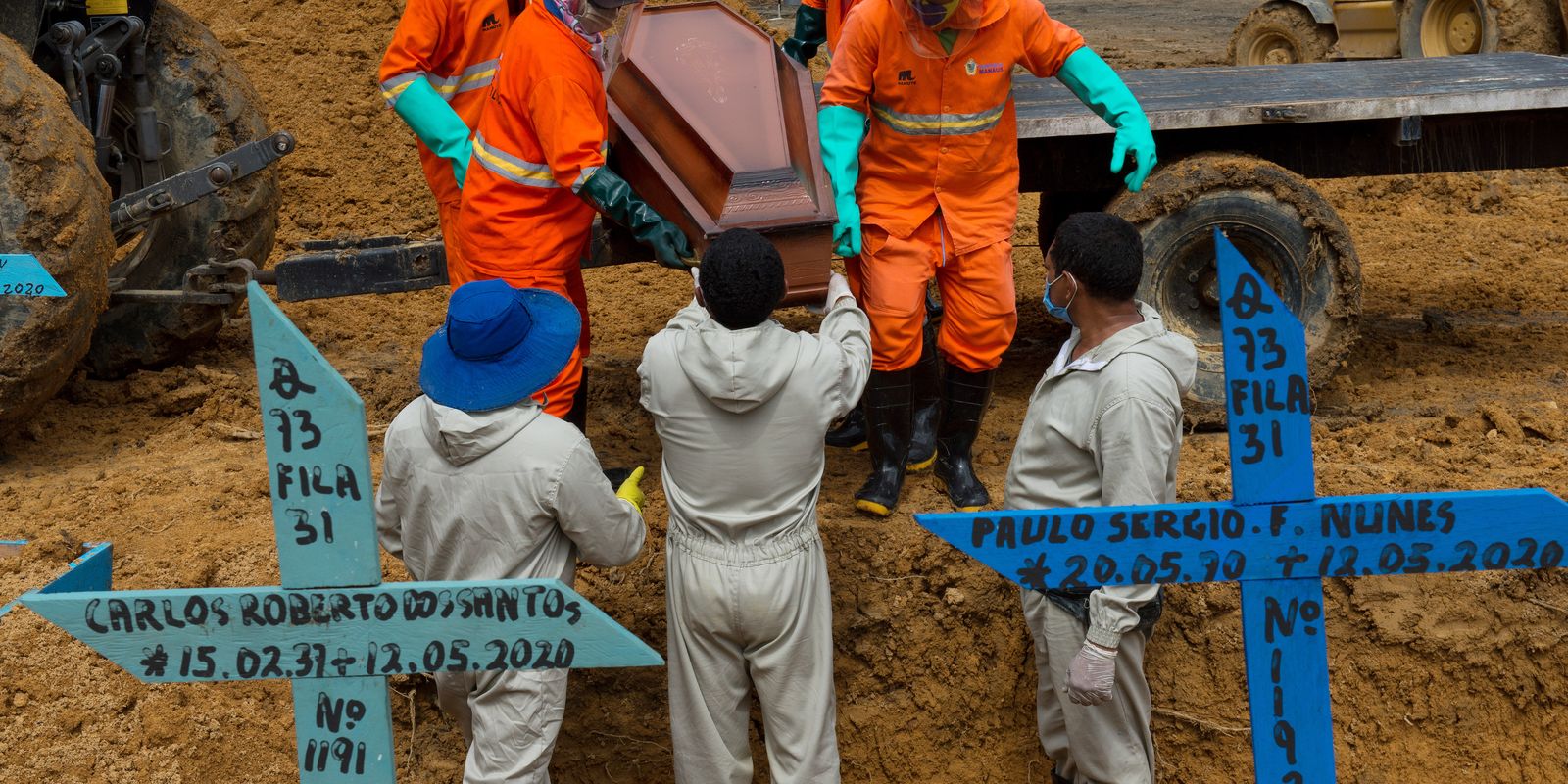
In 2021, Paola Falceta’s mother became one of more than 700,000 fatal victims of Covid-19 in Brazil. The pain and anger became fuel for the social worker to found the Association of Victims and Families of Victims of Covid-19 (Avico), in partnership with a friend, with the aim of seeking justice and reparation, considering all the deaths that could have been avoided. From the beginning, Paola knew that some of these family members needed representatives even more: 
“I thought a lot about children and teenagers, especially those whose father was informal, who had a precarious job or whose mother was single, whose children were with their grandmother.”
“I’m a class C worker. If I lose my job now, I’ll go hungry, I’ll lose my house, because I live on rent. Imagine if, in this condition, I had two small children and I died. What would the children be like? And children can’t speak publicly, they can’t give interviews, they can’t claim for themselves. So, they suffer a shocking invisibility”, argues the current vice-president of Avico.
A study that has just been published shows the scale of the problem. The researchers estimated that about 284 thousand Brazilian children and adolescents lost their parents or an older family memberdirectly responsible for your care, throughout 2020 and 2021, due to covid-19.
Paola and the researchers point out that, To date, there is no national assistance or care policy for these orphansexcept in some locations. One of them is the state of Ceará, where children and adolescents who lost their father or mother to Covid-19 can request assistance of R$500 per month. At the federal level, Paola has already knocked on many doors in the Executive and Legislative branches, where projects are moving at a slow pace.
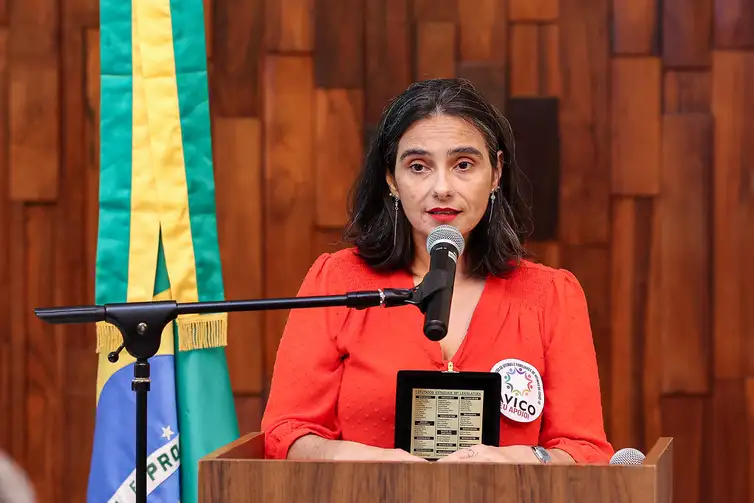
Vice-president of the Association of Victims and Families of Victims of Covid-19 (Avico) Paola Falceta. Photo: Lucas Kloss/Legislative Assembly of Rio Grande do Sul
In the Senate, the Bill 2,180 of 2021 creates a fund and support program for orphans. Presented in the second year of the pandemic, it is still being processed by committees. The Ministry of Human Rights began discussing, in 2023, protection measures for these children and adolescents that have not yet been implemented. Questioned by the report, he recommended that the Ministry of Development and Social Assistance, Families and Fight Against Hunger be contacted. The folder did not respond.
In parallel, Avico has had strong legal action since June 2021when he opened a criminal case against the then president Jair Bolsonaro, for the political conduct of the country during the pandemic, which, in Paola’s opinion, is one of the main reasons for the excess deaths ─ and orphans ─ due to covid-19 in Brazil. This action was shelved, “but, at the same time, it opened a door for huge people, and we started to have huge national visibility”, ponders the founder of the association.
The great hope in the judiciary is a public civil action filed by the Federal Public Ministry in Brasília, which asks for compensation for the families of the victims. Opened in 2021, the action asks that each family be compensated with at least R$100,000, and that the families of survivors with serious or persistent sequelae receive R$50,000.
Furthermore, the MPF claimed R$1 billion for the Federal Fund for Diffuse Rights, as a way of repairing collective moral damage. Paola believes in victory, she just doesn’t know when it will come.
“The prosecutor, at the time, asked us to collaborate, and we gathered 139 witnesses, family members of victims who are part of the initial process. We also helped to prepare all the scientific justification, because we have a lot of contact with researchers who were studying the effects of the pandemic. After four years of this fight, now the evidence instruction phase will begin”, says Paola.
State Responsibility
The tragedy of orphanhood caused by Covid-19 also mobilized pedagogue and researcher Milton Alves Santos, who is now executive coordinator of the Orphanhood and Rights Coalition. The organization works on the issue of orphanhood in general, but has focused a lot on the tragedy caused by Covid-19, due to its extension in recent years.
“We form a network of reparation, truth and justice for the pandemic, because this is an agenda that the Brazilian State needs to fulfill, involving the Legislative, the Judiciary, and the Executive, at all levels of government, because we had public health crimes in city halls, in state governments and in the federal government. So, we have to hold the State responsible for the damage it caused to the biography and integral development of these children”, he emphasizes.
According to Milton, The financial impact caused by orphanhood is serious, and needs to be remedied immediately, so that the child does not suffer material losses that threaten their health, safety and quality of life. Added to this is the psychological impact, which was aggravating in the case of Covid-19:
“The child didn’t even see the wake, the burial. Some, when they were born, the father was already dead, or the mother died during childbirth, and this child had no contact with her. She has to deal with this story of death, and should receive emotional support, to have a functional mourning”, argues the pedagogue.
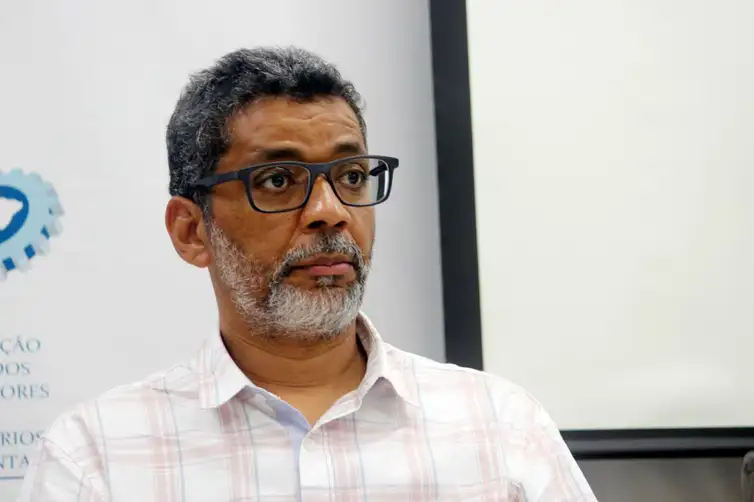
Executive coordinator of the Orphanhood and Rights Coalition, Milton Alves. Photo: Norian Segatto/Disclosure
For the vice-president of Avico, financial reparation actions may face obstacles precisely because of the size of the problem. If all 284,000 children and adolescents who lost their guardians are covered by compensation and pensions, the figures could be enormous. But, for Milton, while this financial justice is not done, the State must and can contribute with much more accessible policies.
“The most important thing would be national guidance for the entire system of guarantees of rights, various services in various ministries, determining how orphanhood should be made visible in public policies, for example, housing, assistance, health, income transfer, education. This would already have a huge effect”, he says.
“In the Unified Social Assistance System (Suas), we have guidance so that monitoring services for families in early childhood prioritize children who have been orphaned by Covid and feminicide. We have also requested this from the National Health Council, the National Children’s Council, who guide their networks to care for these children.”
‘If he were here’
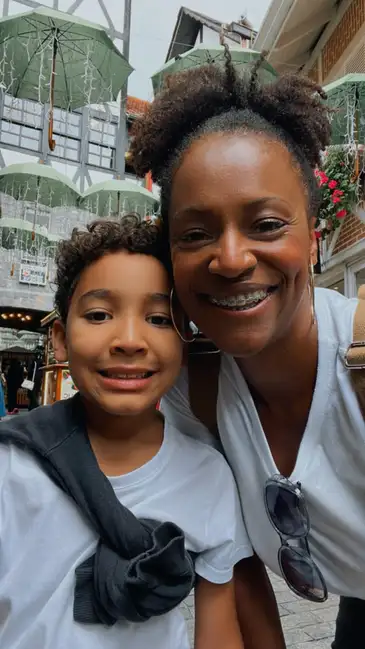
Ana Lucia and her son, Bento. Ana Lucia/Personal Archive
One of these thousands of orphans is Bento, just 8 years old, son of photographer Claudio da Silva, who died in 2021 from Covid-19. Bento’s widow and mother, Ana Lúcia Lopes, even managed to organize herself financially, with the help of the death pension left by Cláudio, but she still suffers from the lack of her partner.
“I think about him every day, and I always wonder what Cláudio would do in different situations. He took great care of me when I was pregnant. After Bento was born, he took great care of Bento too.”
“Today, Bento swims, does judo, and I always think that, if he were here, he would feel very proud of these things and would make a point of following along. Cláudio really liked to travel. He was a very happy person, who always wanted to go out, do something different. I miss that a lot. And I think he would also want to do these things with Bento, which would be really cool”, says Ana Lucia.
Like Paola and Milton, she believes that some reparation is necessary, due to the crimes committed by the State, which led to the illness and death of so many Brazilians.
“I’m very angry, because a month after Cláudio passed away, I went to get the vaccine, and we were the same age, so he was going to get it at the same time. And it’s very revolting to think that, that he didn’t have that opportunity. These days, I went to research the vaccination against Covid-19 in Brazil to remember, and I saw the articles about the emails sent by the laboratories offering the vaccines months before they were purchased. And the government let it go, He didn’t do anything.”
Milton Alves Santos, from the Orphanhood and Rights Coalition, emphasizes that reparation for orphans is also a way of keeping the memory of the pandemic alive: “Without memory there is no truth, and without truth, there is no justice”.
The vice-president of Avico promises that she will not give up. “If nothing works here, we’ll go to the International Criminal Court. There’s still a long way to go. Maria da Penha is there to teach us.”