The Civil Defense does not accompany the decision with a verifiable balance of repaired homes, total restoration of water and electricity, recovered schools and hospitals or pending works.
MIAMI, United States. – The National Civil Defense General Staff decided this Tuesday to move the province of Santiago de Cuba to the “normality phase”, almost two months after the impact of Hurricane Melissa, which touched Santiago territory on October 29 as a category 3 cyclone.
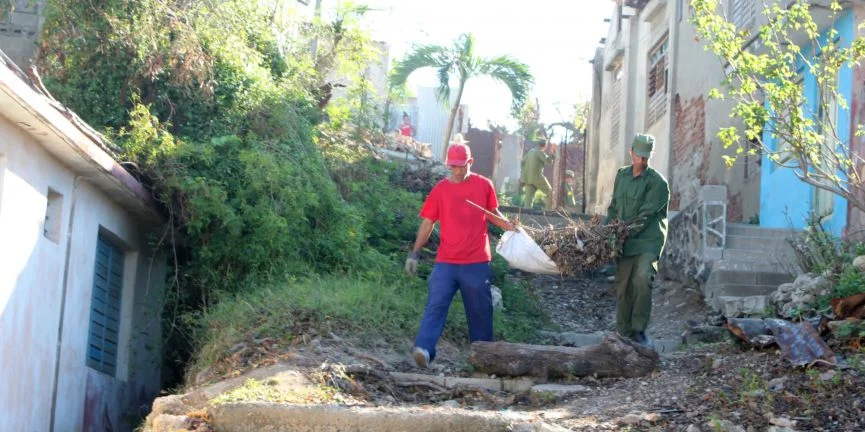
The decision, broadcast by state mediamaintains that the “work carried out” allowed “the rehabilitation of vital services” and that, from now on, the reconstruction tasks will continue “with the structures of the administration and local organizations”, that is, outside the exceptional management scheme that accompanies the operational phases of the Civil Defense.
The official note, however, does not offer basic data to measure the real scope of this “normality”: it does not specify how many homes were damaged or destroyed, what infrastructure has not yet been recovered, how many people remain with sustained effects, nor what specific goals are declared met to justify the change in phase. In practice, the statement recognizes that “continue[a] “recovery” and that “reconstruction activities” remain, but avoids quantifying the balance of the disaster in the hardest hit province in the east, according to the state’s own account.
The note from the General Staff of the Civil Defense assures that the transition to normality was decided “in light of the recovery work carried out by its residents and leaders to heal the consequences” of the hurricane, and admits that “the amount of damage” in Santiago de Cuba has been greater than in other territories, which had already returned to that same operational category before.
On December 1, the Civil Defense reported that Holguín, Granma and Guantánamo were returning to normal because “the rehabilitation of vital services” was advancing “in a large part” of the impacted territories, while Santiago de Cuba would then continue to recover under the direction of the defense councils. This Tuesday’s decision completes, at least formally, the return of the eastern provinces to the normality phase after Melissa.
The “normality phase” is an administrative category within disaster management: it does not mean that reconstruction has ended, but rather that the territory leaves behind the operational phases most linked to the emergency and continues recovery with ordinary government mechanisms. In fact, the statement itself from the National Civil Defense General Staff emphasizes that the actions will continue, but now “with the structures of the administration and local organizations.”
However, the main blind spot of the announcement is the lack of accountability. The National Civil Defense General Staff does not accompany the decision with a verifiable balance, with schedules or with public indicators (homes repaired, total restoration of water and electricity by municipalities, schools and hospitals recovered, agricultural damage, pending works).
In this way, the lack of information limits the possibility of evaluating whether the change in phase responds to an effective recovery or, rather, to a political need to “close” the emergency in the discourse, transferring the weight of what is pending to the daily management of institutions that, for years, have operated with minimal resources.














