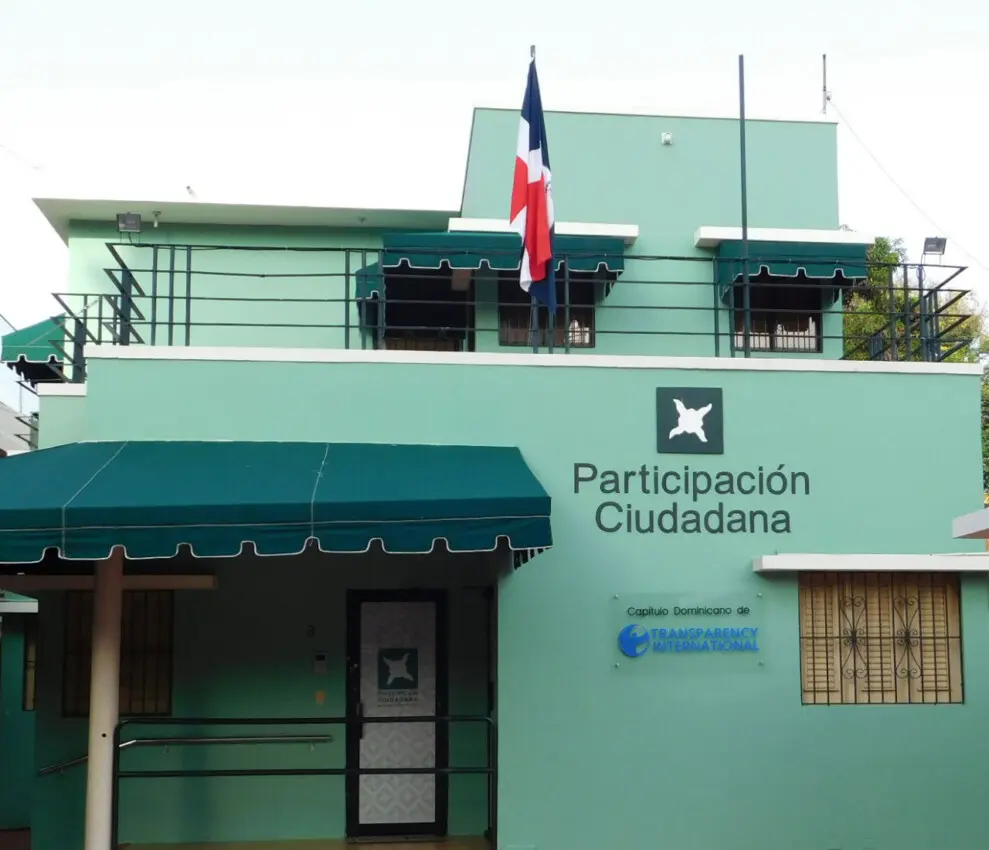
Santo Domingo.- The civic movement Citizen Participation stated that the justice Dominican Republic continues to face challenge of the delay in processes for administrative corruptiondespite the reduction of judicial delays by 80% announced yesterday by the president of the Supreme Court of Justice, Luis Henry Molina.
PC maintains that One of the greatest challenges of the Judiciary is to end the lethargy in corruption cases in the Dominican courtsmany of whom are over four years old, a situation that continues to be a central concern of the population.
“Those of us who fight against corruption know that the cases that are being heard in the courts of the Dominican Republic, many are more than four years old,” said the entity’s coordinator, Leidy Blanco.
The organization deplored that the president of the SCJ did not address in his speech the slowness that persists in the processes of administrative corruptionmany of which have been without a final decision for more than four years.
The recent reforms to criminal justice represent a great challenge, but also an opportunity that must be taken advantage of to make the system more efficient and humane. In particular, to improve the deadlines of the criminal process that are not yet met, which affects the victims and those deprived of liberty.
Supreme Court
The Citizen Participation executive spoke when participating in the solemn hearing that took place yesterday at the Supreme Court of Justice on the occasion of the commemoration of the Day of the Judiciarywhere the president of the high court said that currently In the Supreme Court, 90% of cases are resolved in a year or lesswith more predictable and favorable deadlines for the lives of people and the development of the country.
“Today, with great satisfaction we can affirm that 87% of the courts nationwide are up to date and judicial information is updated online,” Molina added.
He acknowledged that even challenges persist in the most congested departments and in matters such as real estate.
He added that of the 11 judicial departments, only Santo Domingo does not reach 80% of courts per day, which marks our most immediate work priority today.
“Administrative matters were reduced from 49 to 36% of the total cases, which gives judges more space to fulfill their constitutional function of deciding on conflicts. Transforming justice requires a vision of the State, discipline and an unwavering commitment to human dignity and democracy. It is a demanding task, but it has been possible; it is not achieved once and for all, but it was possible to advance in a sustained manner.
He added that these advances have been the result of the country’s growing political maturity, translated into the lasting maintenance of civic consensus.
Relevant events opened a new time for justice: the establishment of the National Council of the Judiciarythe creation of the National School of Judiciary, the criminal procedure reform, the modernization of the real estate registry, the contentious-administrative jurisdiction and the constitutional reform of 2010.
a note
Removal challenges
The coordinator of Citizen Participation stated that one of the main challenges of the changes in the government train is to guarantee transparency and efficiency in the exercise of public function. He pointed out that “institutions that have been accused of acts of administrative corruption have to be monitored and made transparent. He maintained that society expects responses from the authorities in cases of corruption.