The fiscal adjustment that has been achieved, at least until May of this year, has been possible by the cuts reported in the investment, both physical and financial, which could make economic growth difficult, consigned the Center for Economic and Budgetary Research (CIEP).
In an analysis, the civil organization stressed that 70% of this fiscal adjustment, between January and May of this year, has fallen to public investment spending. In this way, the budget deficit (measured through the budget balance) was reduced by 310,583 million pesos, while public investment fell by 217,715 million pesos.
“The above would have effects not only on economic growth, but on future collection, which generates a vicious circle that the Mexican economy has not been able to escape,” said the CIEP.
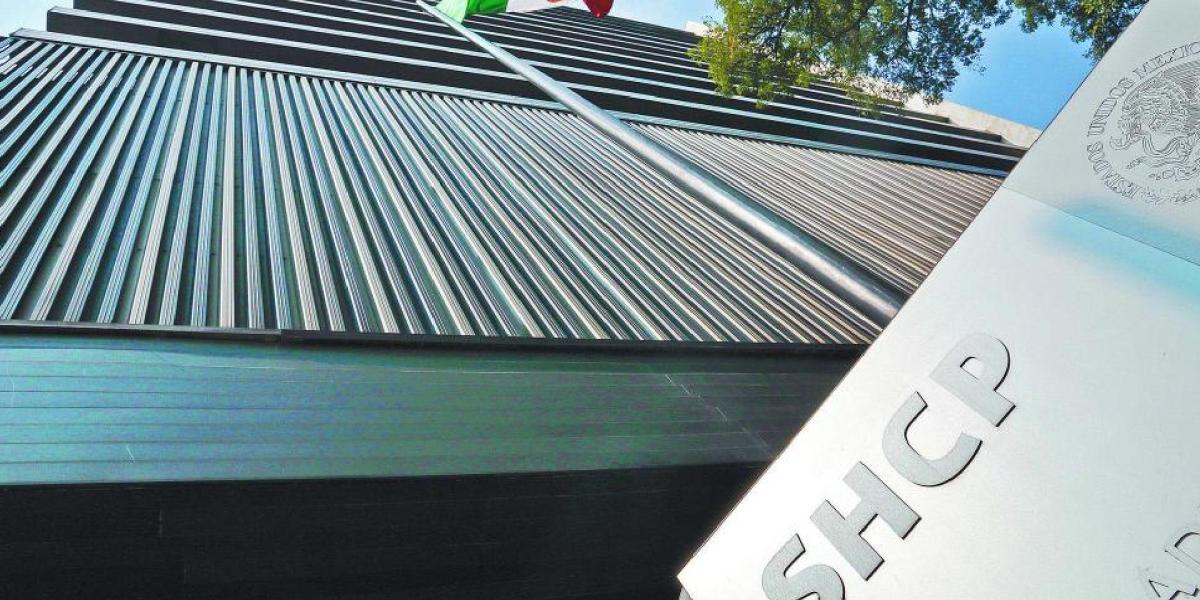
According to the data of the Ministry of Finance and Public Credit (SHCP), between January and May, 347.615 million pesos in physical investment were exercised, which represented an annual drop of 29.1%, while in financial investment 97,483 million pesos were spent, a decrease of 50.8% compared to the same period last year.
In this sense, the CIEP said that with data to the first quarter of this year, it is estimated that the cuts that were to public investment had a negative effect in the economic growth rate of 0.6 percentage points.
Therefore, he added, it is necessary to strengthen public income, as well as design new schemes and strategies that include not only public resources, but also private.
According to the data of the National Institute of Statistics and Geography (INEGI), in the first quarter of the year the Gross Domestic Product (GDP) grew 0.2% quarterly, which managed to jump the technical recession.
However, given the economic uncertainty that is lived by both external and internal factors, various organizations and institutions have indicated that the growth of the Mexican economy this year could be less than 1 percent.
However, the Ministry of Finance maintains its estimate of growth between 1.5 and 2.3% for the first year of the administration of Claudia Sheinbaum.
The same story
Public investment cuts to make tax adjustments is not something new. The CIEP recalled that after the 1982 crisis, various adjustment programs were applied that involved important cuts to public investment, which brought consequences to the economic growth and well -being of the population.
“The cuts to public investment as a policy to reduce the deficit are not recent. It is a situation that has occurred, at least, since the 80s and has been maintained over time,” he explained.
In this sense, the CIEP pointed out that, in the first quarter, the gross public capital formation, as a percentage of GDP, was at a level of 2.2%, that is, 0.5 percentage points less than in 2024, and the lowest since 1993. Meanwhile, private investment was 21% of GDP, which represented 0.7 percentage points less than a year ago.
The CIEP explained that, by decomposing the GDP growth rate on the demand side – both public and private investment, consumption, government expense and net exports – it is seen that the cuts to public investment had a negative effect in the growth rate from 2009 to 2021.
“Subsequently, from 2022 to 2024, the contribution becomes positive, mainly for 2023 when the growth of public investment participated with 0.5 percentage points at the economic growth rate of that year. In the first quarter of 2025, the cut to public investment has had an effect of -0.6 percentage points in the growth rate. It should be noted that these data may change during the next quarter during the next quarter fall observed so far. ”
The lack of reform
The CIEP said that the lack of fiscal reform has made, for decades, tax adjustments are given through public investment cuts and, therefore, ends up affecting the growth of the Mexican economy.
“To the adjustment is added an unfavorable global environment, which raises uncertainty and deteriorates the growth prospects. Although the federal government has promoted the Mexico Plan to face these challenges, tax restrictions, as well as the adverse international context have limited its scope. It is necessary private, mixed, internal and external that allow the country to advance its development. ”