In the case of Cuba, the disease does not come alone: it joins the fragility of an organism punished by malnutrition, stress, lack of sleep …
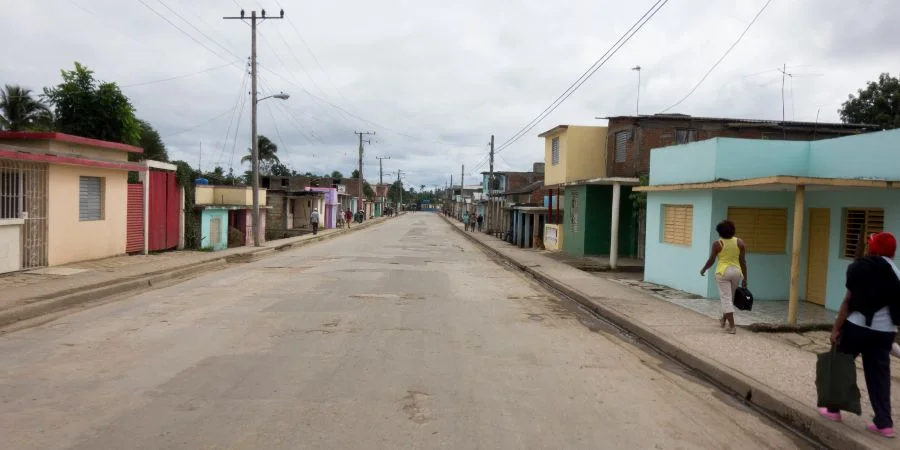
Santiago de Cuba. – On Tuesday, August 12, Dariel Acosta Mora, a child of just three years, began to get sick. In the morning he played as usual, but in the afternoon the fever consumed him and the inappropriateness seized him. He lives in La Maya, Santiago de Cuba, along with his mother and grandmother. That night no one could sleep: every two or three hours the fever reappeared and, without childhood antipyretic, the only alternative was to give it 500 milligrams paracetamol (for adults) and keep it between baths and cold compresses that barely managed to lower the temperature.
The following early morning added more concerns. The little one vomited twice in the middle of the dream, and although he showed no respiratory symptoms, his mother feared the worst. Between Dengue, Oopouche, influenza, Chikungunya, uncertainty became unbearable. To top it off, Yaritza, his mother, dawned with fever, joint pain, a devastating fatigue and the sudden loss of taste and smell, memories of what he had suffered with The COVID-19 in 2021. “I thought I was dying. It was a flashazo of that time. Water knew me bitter, the colony did not smell of anything. I immediately thought of my son and my 65 -year -old mother and hypertensive, more than me,” he recalls.
Between discomfort and shortage
The alleged virus soon reaching the grandmother. On Thursday, the fever did not give truce and, at that point, the few resources had been exhausted: neither medicine, not even enough drinking water. Yaritza had to buy a paracetamol blister in 300 pesos and save it for the highest fever. Three times they injected the child with newly expired dipyrs, saved “for emergencies.” The relief was temporary, but it served. It was then that the family decided to isolate themselves, although outside the neighbors also began with the same symptoms.
On Friday the family dawned with a little more contained fever, but the wear was evident. Dariel had more than 72 hours without trying solid foods – only water and some juice – and his body looked thinner and still declined. Adults were not much better either: the lack of forces was accentuated, aggravated by the lack of basic vitamins and foods. “I only had a piece of chicken saved in the refrigerator and with that I managed to make a broth, which was the only thing that the body asked us,” says Yaritza.
When the fever gave in, the cough appeared. First dry, then productive, and more intense during the nights. Neither the child nor the grandmother could fall asleep. Desperate to relieve them, Yaritza handled home remedies based on honey, onion and lemon, but Dariel vomited him just tried it, not even that assimilated. The lack of water further complicated things: there were hardly any buckets, insufficient even to prepare inhalations.
Sequelae that worry
At the weekend, adults began to show signs of improvement, although the child still had no eating. The weakness and lack of encouragement gave him away, and the mother was discussed between taking him to the polyclinic – with the possibility of ending up being sent to the hospital – or resisting a little more at home. The maternal grandfather also insisted on waiting until Monday, because “on weekends it is more difficult to receive attention and coincide with medical specialists in hospitals.” Yaritza, although with his doubts, accepted. His fear of admission was not unfounded: “I have seen how children enter the hospital with a disease and are complicated with ten more, amid the lack of hygiene and the shortage of medicines. Sometimes in the house we achieved more than there.”
On Monday, against all forecast, Dariel began to improve. But not everyone in that neighborhood ran with the same fate. Olga Tamayo, for example, 64 -year -old neighbor, was with strange sequelae: intense joint pain and muscle weakness that forced her to stay in bed for days. When he tried to walk again, he discovered that his legs did not respond as before. “I never had rheumatous or osteoarthritis problems, and now I can barely walk without limping or stagging. The legs fail me,” he confessed.
In this sense, doctors also have doubts: Dr. Roberto Serrano, consulted by CubanetHe acknowledges that the symptoms are, at first glance, very confused. Some seem like Oroopouche, others from Chikungunya, dengue or even Covid-19.
“The truth is that it is not simple viral processes, which can be taken lightly,” warns the doctor. “It is very difficult to diagnose at the eye, without resources to properly examine patients,” adds Serano, who was from The first that, in 2024, they warned of the epidemiological outbreak later identified as OroPouche (Orov) by the Ministry of Public Health (Minsap).
When the virus hits a weakened country
Meanwhile, the Official speech insists on figures that do not reflect the real magnitude of the problem. The MINSAP recognized active dengue transmission in seven provinces and the propagation of Oopopouche in 11, although consulted residents involve a higher incidence rate. This is not a minor detail: when the virus It was identified in May 2024, barely 74 cases were confirmed in Santiago de Cuba and Cienfuegos, but in a matter of weeks the disease already reached 11 provinces.
By August, the agency itself admitted more than 400 contagios Confirmed, while independent medical estimates spoke of tens of thousands of febrile patients throughout the country, which placed Cuba as one of the most beaten nations in the region.
But in the case of Cuba, the disease does not come alone: it joins the fragility of an organism punished by malnutrition, stress, lack of sleep, alcohol, tobacco and pollution, factors that depress the immune system and convert any infection into a higher risk.
In international protocols, the recommendation to face these arbovirosis is clear: reinforce the diagnosis through laboratory tests, guarantee access to antipyretics, constant hydration and vector control campaigns. None of that is fulfilled in Cuba, where the lack of medications is chronic and where laboratories remain without reagents to perform analysis, even urgently. At the same time, the constant blackouts prevent the use of fans to avoid mosquito bites and lack of fuel limits garbage collection and fumigation campaigns.