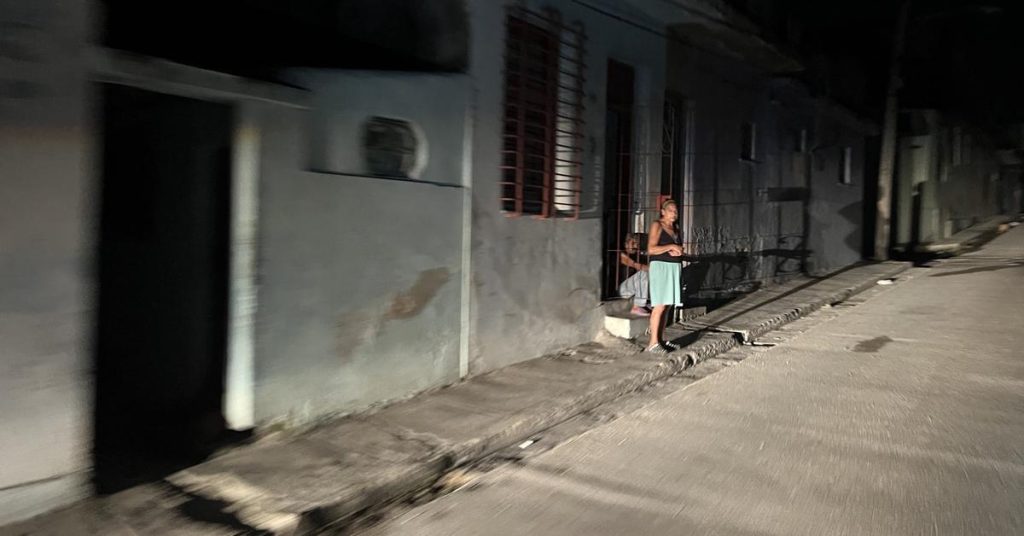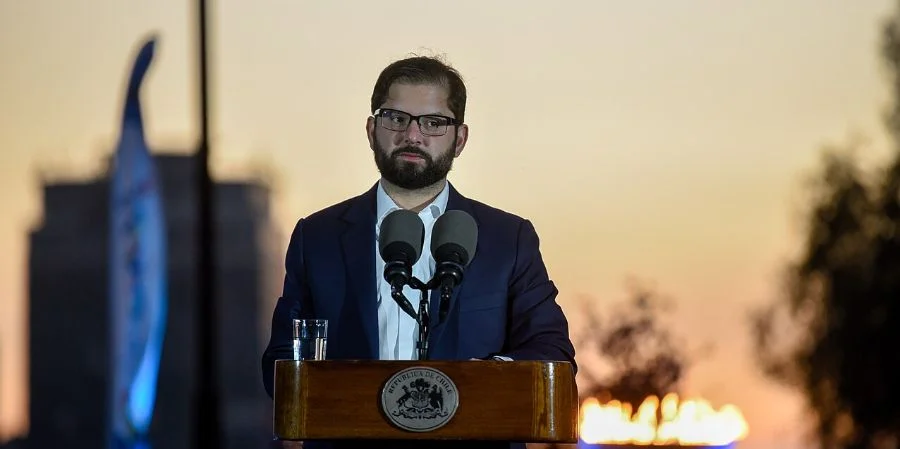
MIAMI, United States. – The Government of Chile announced this Thursday that it will make a contribution to UNICEF to collaborate with the response to the “humanitarian catastrophe” that Cuba is experiencing, and specified that the channel will be the Chile Fund against Hunger and Poverty of the Chilean Agency for International Cooperation for Development (AGCID).
The announcement, made “on instructions” from President Gabriel Boric, generated conflicting reactions within the ruling party and criticism from sectors of the opposition, which questioned the decision due to its eventual political effect and internal budgetary priorities.
In its official statementthe Ministry of Foreign Affairs explained that UNICEF operates on the Island with interventions linked to the provision of water, health care and nutrition with the objective of “ensuring the continuity of essential services” and with “special focus” on children and adolescents.
The Foreign Ministry also maintained that the situation “has been aggravated by the tightening of the economic and energy blockade” and reiterated its rejection of “any unilateral measure or sanction” when it directly affects people’s living conditions.
Although this Thursday’s statement did not detail the amount, Foreign Minister Alberto van Klaveren only confirmed that Chile will allocate 1 million dollars to the Island and stressed that it is assistance channeled by an international organization. “We do not finance dictatorial regimes; we provide assistance through international humanitarian organizations,” declared.
President Boric himself publicly defended the sending of aid and framed the decision as a criticism of the tightening of the US blockade. “The blockade that the United States has imposed on Cuba and that has worsened in recent weeks is criminal and an attack on the human rights of an entire people,” he wrote on his X account.
From the Communist Party, deputy Nathalie Castillo appreciated the announcement and stated: “We hope that this aid materializes in the shortest possible time and that the details of this contribution are also made known.” On the contrary, deputy Eric Aedo (DC) questioned that “what the Government does in relation to humanitarian aid to Cuba is an ambiguous and complex signal” and maintained that, with the measure, “it simply gives more wings and strength to a dictatorial regime.”
On the other hand, Congressman Luis Fernando Sánchez (Republican) described the decision as “a shame” and “unacceptable,” and other parliamentarians insisted on conditioning the aid or prioritizing political pressure on Havana.
In the United States, Cuban-American congressman Carlos A. Giménez (Republican of Florida) publicly criticized the Chilean Government’s announcement through wrote.
After these statements, the Government of Chile avoided entering into a direct controversy with the US legislator. The minister of the Segpres, Álvaro Elizalde, stated that “the Government of Chile is not going to be commenting on the statements of a parliamentarian from another country.”