An official spokesperson and a deputy from the Playa municipality recognize that child begging – without referring to it by name – is not an isolated problem in Havana.
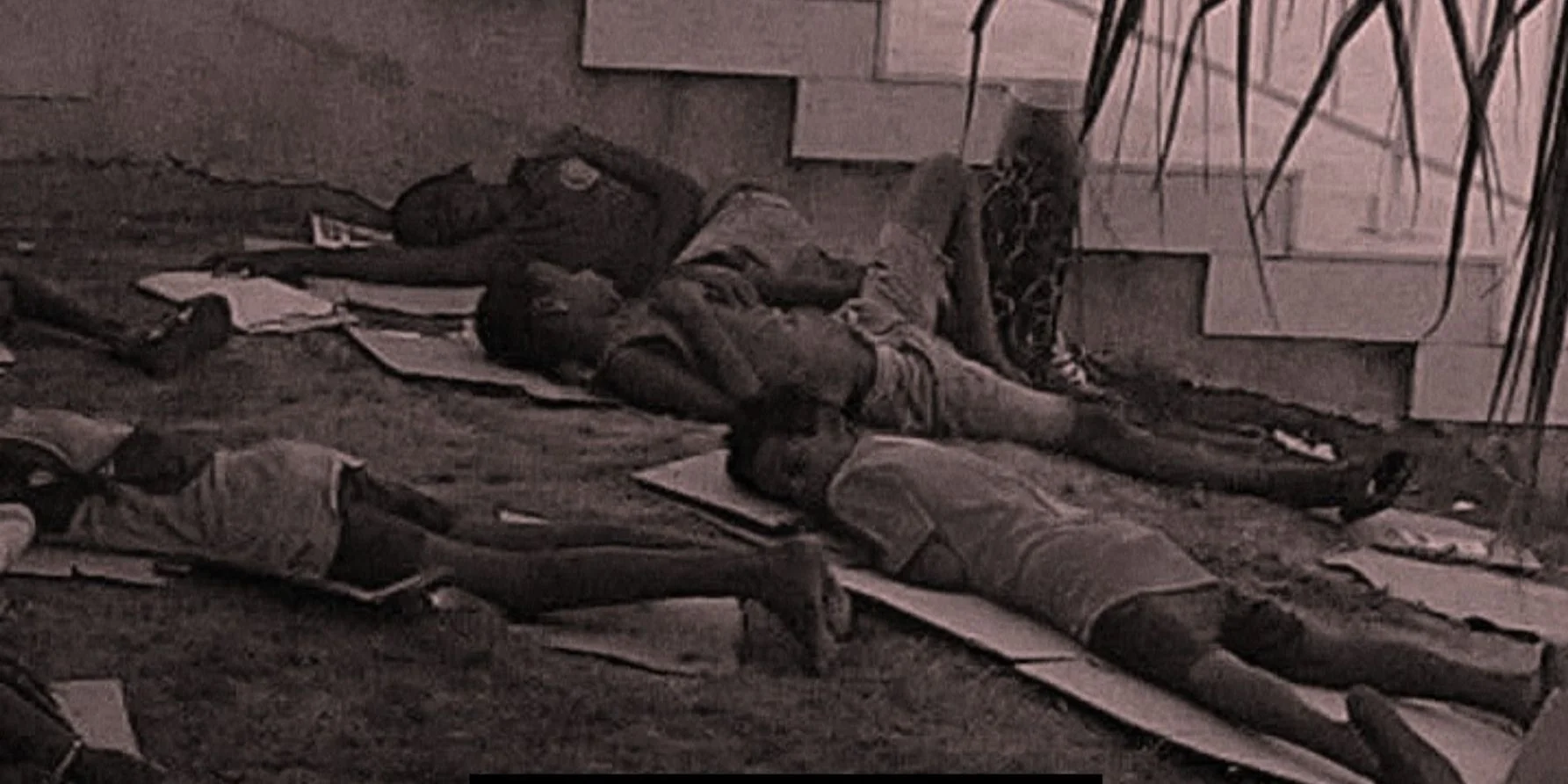
MIAMI, United States. —The official spokesperson Pedro Jorge Velázquez acknowledged in a Facebook post that the viral photo and the complaints about the children sleeping in the gardens of the Muthu hotel, in Playa, were “real” and assured that, after the image was widely disseminated, “a ‘collection’ was made” to take the minors to “their area.”
In the same text, the official spokesperson, a graduate of Journalism at the “Marta Abreu” Central University of Las Villas, added that “the Playa Government is now aware and there is integration with the Minor Care Council of the MININT and other institutions that address the issue.”
According to Velázquez, workers and self-employed workers in the area — “parkers, gardeners, security personnel, vendors and complex workers” — report that the children “have been hanging around that area of 1st and 70th for some time, but in the last month the presence of a group has increased.” He also assures that “this situation has been going on for more than a month” and that, despite repeated warnings, “everything ‘remained the same’” until the photo went viral.
The spokesperson describes that private businesses and currency markets in the area “are an incentive for children to ask for money from foreigners or nationals who go to those spaces, in addition to asking for food or even work in that commercial circuit.” He points out that “the majority of the children are not from that area”, that they come from other municipalities and, when they “take the night,” they remain there “several days.” He adds that “some” of them “are sent by their parents to these areas to ask for money and food,” that they have been seen “in uniform” and “hanging clothes on the stairs to dry.”
Velázquez collects testimonies from private workers who, for “helping them, giving them food or money,” would have been “scolded,” and affirms that now “several custodians are doing everything possible to ensure that children do not walk near their private businesses, which leads to greater exclusion and mistreatment.”
At the same time, employees of the complex of shops and markets “confirm that the children damage the facilities, spit and scratch windows, throw stones,” that they reported it “to government and police authorities on several occasions” and “they had never shown concern, nor had anything changed until now ‘when everyone started running’.”
As “relevant cases,” the spokesperson lists: a girl sleeping repeatedly in the hallways; “two children detained by the store’s security personnel” to whom “the police never arrived,” so “they took them to the station and the next day they had returned”; a “fainting child” who was fed “in the workers’ dining room” before the police picked him up; and minors who “loiter until 4:00 and 5:00 am for days,” visible “behind the stop, in front of the new bank, sleeping in the hallways or on the grass.”
The deputy for the Playa municipality Carlos Miguel Pérez Reyes, who was summoned this Monday by Velázquez, I had already warned on Facebook that “reporting and ‘picking up’ minors” did not, “on its own, resolve the root of the phenomenon” and that institutions must “provide comprehensive treatment to the situation.” “It is necessary to evaluate whether Minors [el Consejo de Atención a Menores del MININT] has the necessary capabilities and how [se] It articulates, effectively, with Labor and Social Security, Public Health and local governments.”
He also noted that “the problem is not isolated” and that, “at least in the capital, it has spread to several points where children ask for money daily, even late into the night, without visible consequences for responsible adults.”
According to the same publication, the deputy prime minister of the Cuban regime Inés María Chapman responded to the ongoing actions: “Yes, a solution has been found and work is being done by the relevant organizations,” the official reportedly assured.
The official recognition of this panorama comes after the complaint released on October 15 by activists and independent media, who documented with testimonies and photos the presence of at least six minors sleeping “for weeks” in the gardens of the Muthu hotel, a few meters from 1st. and 70, without the authorities having intervened.
Journalist Yadira Albet wrote on her Facebook profile: “This situation is unacceptable. I share post by Mayelín Guevara and comments in the post original confirm that, indeed, these children are there.” The publication generated avalanches of comments, among them that of Lisbety Mirabal: “My God, you can see at least six children in the photo. I had never seen that before. Every day everything gets sadder.”
This Monday, Albert’s publication it no longer existed. Nevertheless, CubaNet copied some of the comments generated by the complaint before they disappeared from Facebook. In that forum, Internet user Beatriz Alonso assured that the minors were “from poor neighborhoods” in Marianao and added that some would be “children of imprisoned mothers or fathers who emigrated and left them with grandparents ‘who can’t even handle their souls’.” Another user, Jorge Gabriel Alfonso Font, summarized: “The Cuba they are leaving us is terrible.”
For his part, this Monday Velázquez stressed that “it is not the only place in Havana where there are children asking for money or living on the street” and demanded that “the Cuban public press (…) be responsible for investigating this situation.” The official spokesperson even admitted the magnitude of the problem: “Clearly there are many questions to answer and a big problem to face, this is a first investigative approach to understand part of the phenomenon behind the viral photo.”
UNICEF estimates that 9% of Cuban children suffer from food povertywhile the Cuban Observatory for Human Rights (OCDH) estimates that extreme poverty affects 89% of the island’s population. Independent organizations report that hundreds of minors beg or live on the streets, alone or with their parents, exposed to abuse and without effective protection.