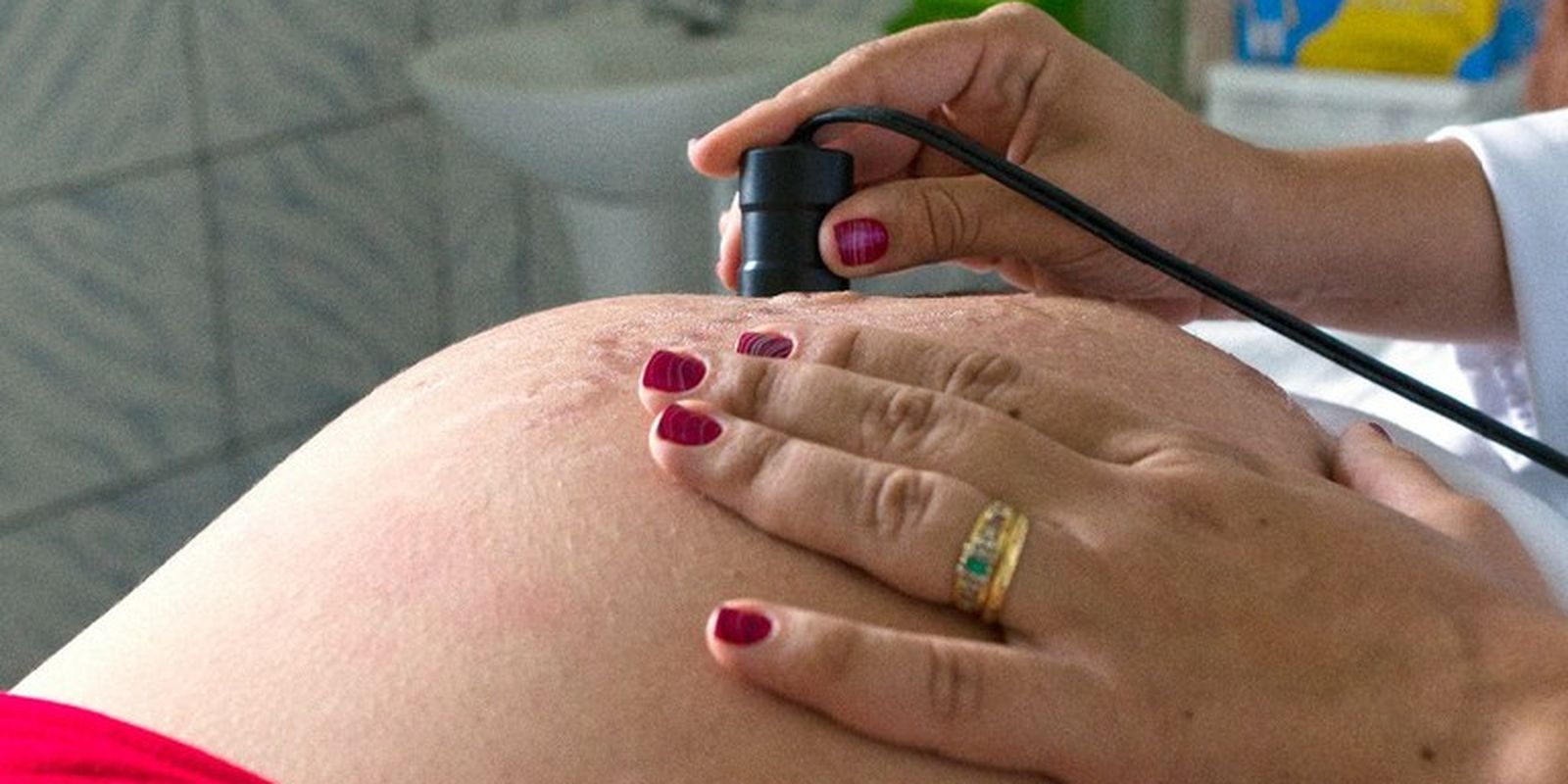
Data from the largest research on birth and birth in Brazil show significant advances in hospital practice. Episiotomy, cutting the vaginal channel with scalpel, supposedly increasing the baby’s passage, fell from 47% to 7% in vaginal deliveries in the Unified Health System (SUS), in about ten years. Similar drop (from 36% to 9%) was observed in the Kristeller maneuver, when the health professional rises over the pregnant woman or pushes his belly tightly to speed up birth.
In the private system, the reduction was even more significant: only 2% of women who had vaginal delivery reported having passed the maneuver, which is considered a form of obstetric violence and has a risk to the parturient and the baby. The data are part of the survey born in Brazil 2, conducted by Fiocruz, which collected data from more than 22,000 women between 2021 and 2023.
This Thursday (4), the researchers released the information regarding the State of Rio de Janeiro and advanced some national information, for comparison. They show that they increased the amount of women who could feed and move during delivery and that almost all who parked in Rio de Janeiro, both in the Unified Health System (SUS) and in private units, opted for vertical positions that favor the exit of the baby.
“It is a huge adhesion to good practices and an elimination of unnecessary interventions. In Rio, there is no more way to giving birth, in lithotomy, where the woman gets her legs up, without being able to make strength. This is beautiful! It is a change of culture that we are seeing. It is not perfect, but it is a huge change in attention to public policy,” said the coordinator of the research, Maria do Carmo Leal.
PThe other side, the proportion of those who had access to analgesia, to reduce the pain of contractions, fell from 7% to 2% in SUS throughout Brazil, and only 1% in Rio de Janeiro. In private services, the national drop went from 42% to 33%, reaching 30% in the state. “Among the women who went into labor in Rio de Janeiro, he walked better for vaginal delivery who made an analgesia, showing that we may have an ally here. It was almost six times the chance to end in a vaginal delivery,” Maria do Carmo added.
The research also shows that normal and cesarean section rates remain a major challenge in the country. The number of women who underwent SUS surgery increased from 43% to 48%, compared to the first edition of the survey, released in 2014.
The research coordinator of the research points out that, at least, most of this increase refers to cesarean sections, ie, performed after women enter labor, which totaled 13% in Brazil. Vaginal deliveries in SUS totaled 52% in Brazil and 50% in the state.
The proportion of cesarean sections in the private system was 81% in the country and 86% in Rio de Janeiro, and only 9% and 7%, respectively, were done after the start of labor. Still, there was a slight increase in the amount of vaginal deliveries in Brazil, from 12% to 19%. The recommendation of the World Health Organization is that surgeries are performed only in cases of need and the country’s index does not exceed 15%.
The scenario on the prenatal care shown by the research, however, is not so positive. Although 98.5% of Rio de Janeiro women received follow -up, only one third had a complete record of blood pressure measurement and blood glucose tests. These tests are essential to detect and control the two most common and dangerous complications of pregnancy: hypertension and diabetes. Less than 34% had registered prescription of folic acid, an essential substance for the neurological development of the fetus, and only 31.6% were vaccinated against tetanus and hepatitis B, two of the main immunizers that should be taken in pregnancy.
Maria do Carmo Leal highlights other important gaps in the care of high -risk pregnant women, that is, they already had some condition diagnosed at delivery.
“Seventy -five percent of them never made an appointment with expert, only in primary care. There is something wrong here. Thirty -six percent of these women said that their blood pressure was not measured in all consultations and also had no blood glucose exam, as recommended. They are women who were more admitted to childbirth) because they had no vague, but mainly because they should look for a suitable unit. Pilgrimage at delivery is all they didn’t have to do. “