The Dominicans’ pockets felt the impact of food and basic services in January. The Central Bank of the Dominican Republic (BCRD) reported that the Consumer Price Index (CPI) registered a monthly variation of 0.40% in January 2026, with increases concentrated mainly in food, restaurants and education.
Although interannual inflation was 4.98%, within the target range of 4.0% ± 1.0%, the detail by group reveals that some daily consumption products rose above the general average.
Chicken and groceries push inflation
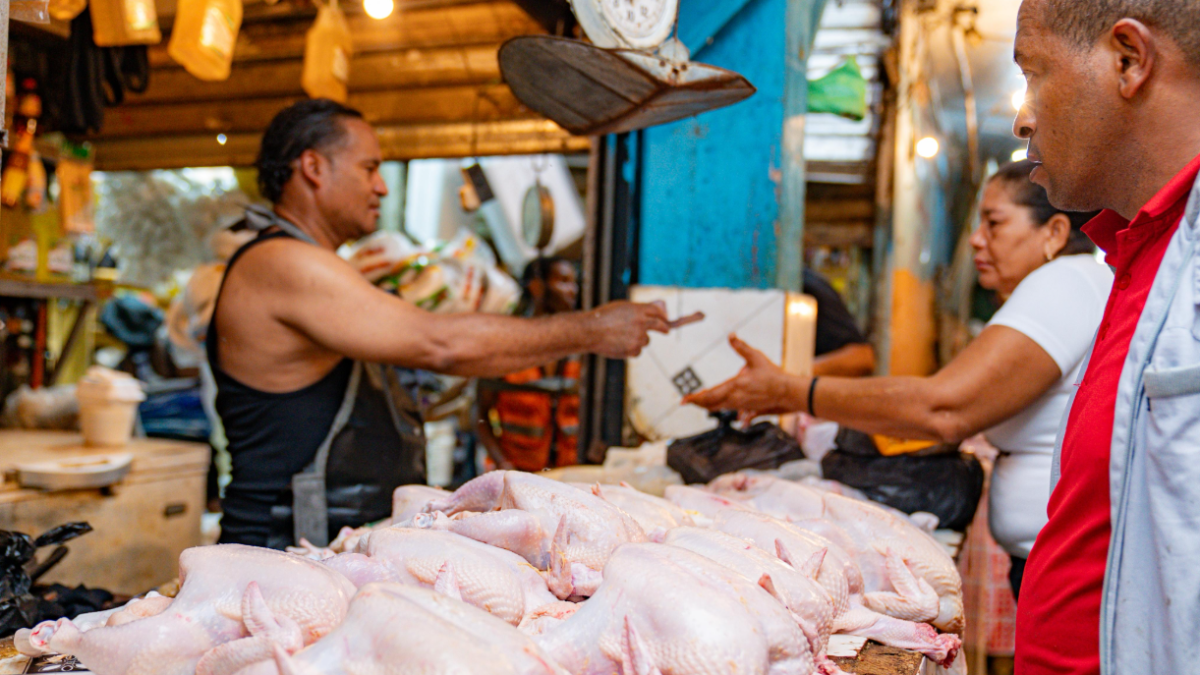
The Food and Non-Alcoholic Beverages group increased 0.68% and was responsible for almost half (45.68%) of the month’s inflation. The main protagonist was fresh chicken, one of the most important items in the family basket, whose price rose due to a demand higher than the available production.
Coffee, chicken broth, soft drinks, cassava, oranges, sour lemons and bananas in their different varieties also registered increases.
The Central Bank explained that these increases are associated, in part, with the delayed effects of adverse weather conditions, including the rains linked to Storm Melissa, which affected the production and marketing of agricultural goods at the end of last year.

However, some agricultural products such as chili peppers, tomatoes, eggplants, lettuce, onions and green pigeon peas fell in price, which prevented the group’s inflation from being higher.
Eating out also costs more
Eating out was also more expensive in January. The Restaurants and Hotels group presented a variation of 1.13%, driven by the increase in the price of the dish of the day, chicken service and groceries with accompaniments.
According to the BCRD, the increase in these services responds to the increase in the price of the basic inputs used in their preparation, which ends up being passed on to the final consumer.
Education starts the year with increases
The Education group was the one that increased the most in percentage terms, with 1.79%, due to the beginning of the first academic period in universities. Increases were recorded in tuition, registrations and monthly payments, in addition to increases in language teaching services.
Housing and personal care also increase
The Miscellaneous Goods and Services group increased 0.34%, due to the increase in the cost of personal care items and services. Meanwhile, Housing rose 0.26%, mainly due to the increase in rent and paintings.
Transport lowers and cushions the impact
In contrast, the Transportation group registered a negative variation of -0.28%, thanks to the reduction in air ticket rates. This decline helped moderate the growth of the general index, although it was partially offset by increases in vehicle repair and road passenger transportation.
Those most affected: lower-income households
The impact was not the same for everyone. The lowest income quintiles (1, 2 and 3) registered inflations of 0.58%, 0.59% and 0.53%, respectively, due to the greater incidence of food in their spending structure.
On the other hand, the 5th quintile—with the highest income—barely registered a variation of 0.09%, favored by the drop in air tickets, an item with greater weight in that segment.
In regional terms, the Eastern region presented the greatest variation (0.75%), while the Ozama region—National District and Santo Domingo province—recorded the lowest (0.25%).
Signals for monetary policy
Interannual core inflation stood at 4.89%, also within the target range, which, according to the Central Bank, offers clearer signals for the conduct of monetary policy by excluding volatile prices such as fresh food, fuel and regulated rates.