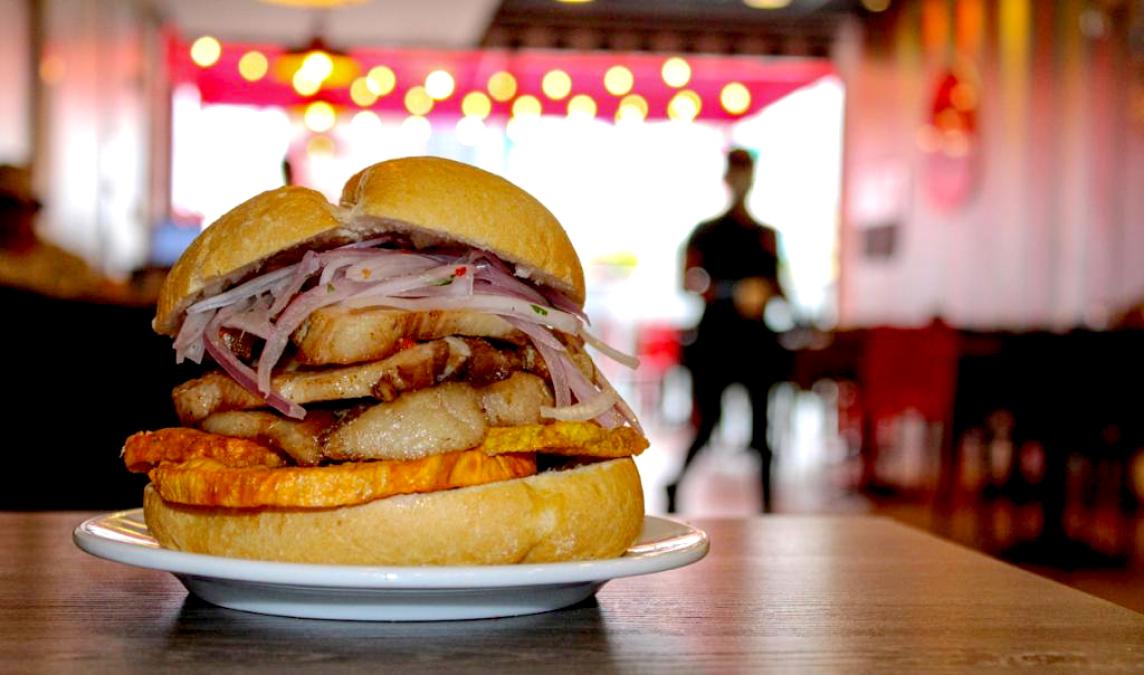
He crackling Not only is it a classic of the Peruvian breakfast and lunch: behind each crispy bread filled with pork, sweet potato and well -served Creole sauce there is an economic engine that does not stop growing. According to him Ministry of Production (Produce)Chicharronerías del País generate more than S/ 244 million in sales per year, a business that is already an essential part of the national gastronomic ecosystem.
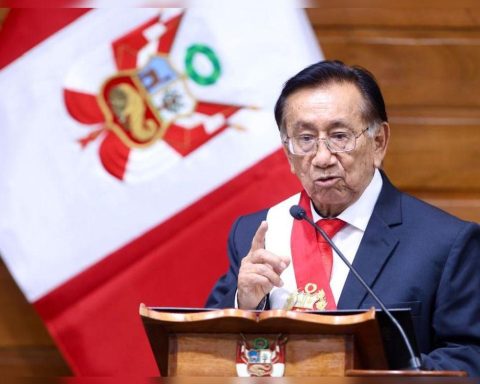
At the end of 2024, more than 730 formal restaurants dedicated exclusively to chicharronería were counted. Lima concentrates 40%of them, with 295 stores, followed by Cusco (12%), Puno (6%) and the rest of the regions with 42%. But the most revealing is the volume: more than 3,000 tons of pork rind in the country are sold on average, an indicator that speaks of the cultural roots and the good moment of this flag dish, according to the Minister of Production, Sergio González Guerrero.
Work, protein and tradition
The head of Produce stressed that this item generates about 8,900 formal jobs throughout the production chain. “Now that thanks to an international competition our bread with chicharrón has become fashionable, it is important to indicate that (…) contributes to food security, being a source of protein that helps fight anemia,” he said.
The recent Bread of the PAN with Chicharrón, reinforced by international competitions that have put it fashionable, has helped to make further visible the importance of this business. In practice, every time a Peruvian asks for this sandwich not only enjoys a traditional flavor, but also contributes to the country’s economic dynamism.
Consumption in figures
The Observatory produces business details that in 2024 the per capita consumption of chicharrón reached 5.3 kilos per person nationwide. Some regions stand out for much greater enthusiasm: Ucayali leads with 35 kilos per person a year, followed by Tacna (15 kilos), Ayacucho (12) and Mother of God (9).
Prices vary according to the area and preparation: a kilo of pork rinds can cost between S/ 70 and S/ 140, while a bread with pork rinds is sold between S/ 10 and S/ 30. As for spending, the monthly average per national home was S/33 in 2024, but with marked regional differences. Ucayali heads the ranking with S/83, followed by Tacna (S/70), Mother of God (S/69) and Ayacucho (S/60).
If observed by socioeconomic level, segment A spends on average S/51 per month in chicharrón, followed by strata B (S/42), C (S/41), D (S/36) and E (S/35). The preference crosses all pockets and strata, confirming that this dish is one of the most democratic and beloved of the Peruvian table.
Peruvian flavor growth
The numbers show that the chicharrón is not only a tradition, but also an expanding business that strengthens the restaurants and contributes to GDP. It produces that the sales of the chicharronerías represent 0.7% of the gastronomic sector and 0.02% of the national GDP.
Each bite of Chicharrón tells a double story: that of a recipe that has gone from generation to generation and that of an economic sector that continues to generate employment, income and national pride.
Receive your Peru21 by email or by WhatsApp. Subscribe to our enriched digital newspaper. Take advantage of discounts.