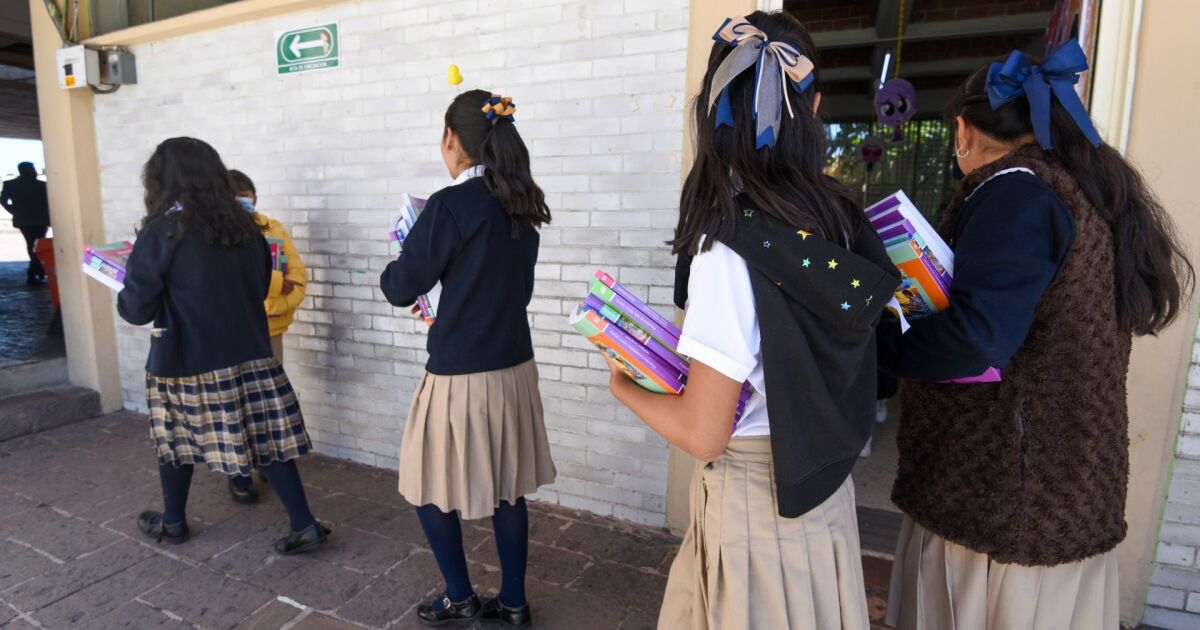
Despite the efforts, the country has not returned to prepaymia levels. 19% of the national population had an educational lag in 2018, and six years later, 18.6% of Mexicans remain in the same condition.
The marginal reduction in the previous administration was also exceeded by population growth. At the beginning of the last six -year term, 23.5 million people did not have compulsory education according to their age. In 2024 there were already 24.2 million.
In six states, even the educational lag increased. Five of them accumulate high levels of extreme poverty, above the national average.
Chiapas heads the list. Its population with school gap went from 31.2% to 34%. It is the state with more inhabitants without sufficient resources for food, by accumulating 27% of the total number of settlers in that situation.
In Oaxaca, Guerrero and Campeche also grew school backwardness. He did it at 0.9, 2.5 and 1.1 percentage points, respectively. Although the increases can be considered minimal, they demonstrate a sad reality: in the south of the country the inequalities and lack of educational opportunities are greater.
Only one state in central Mexico and another from the North registered the same problem. This is Puebla and Durango. The first with 22.7% of its population in educational delay, and the second, with 17.7%.
The academic lag accounts for the inability of the State to guarantee the right to education and to fulfill its obligation to provide quality school services in preschool, primary, secondary and upper middle.