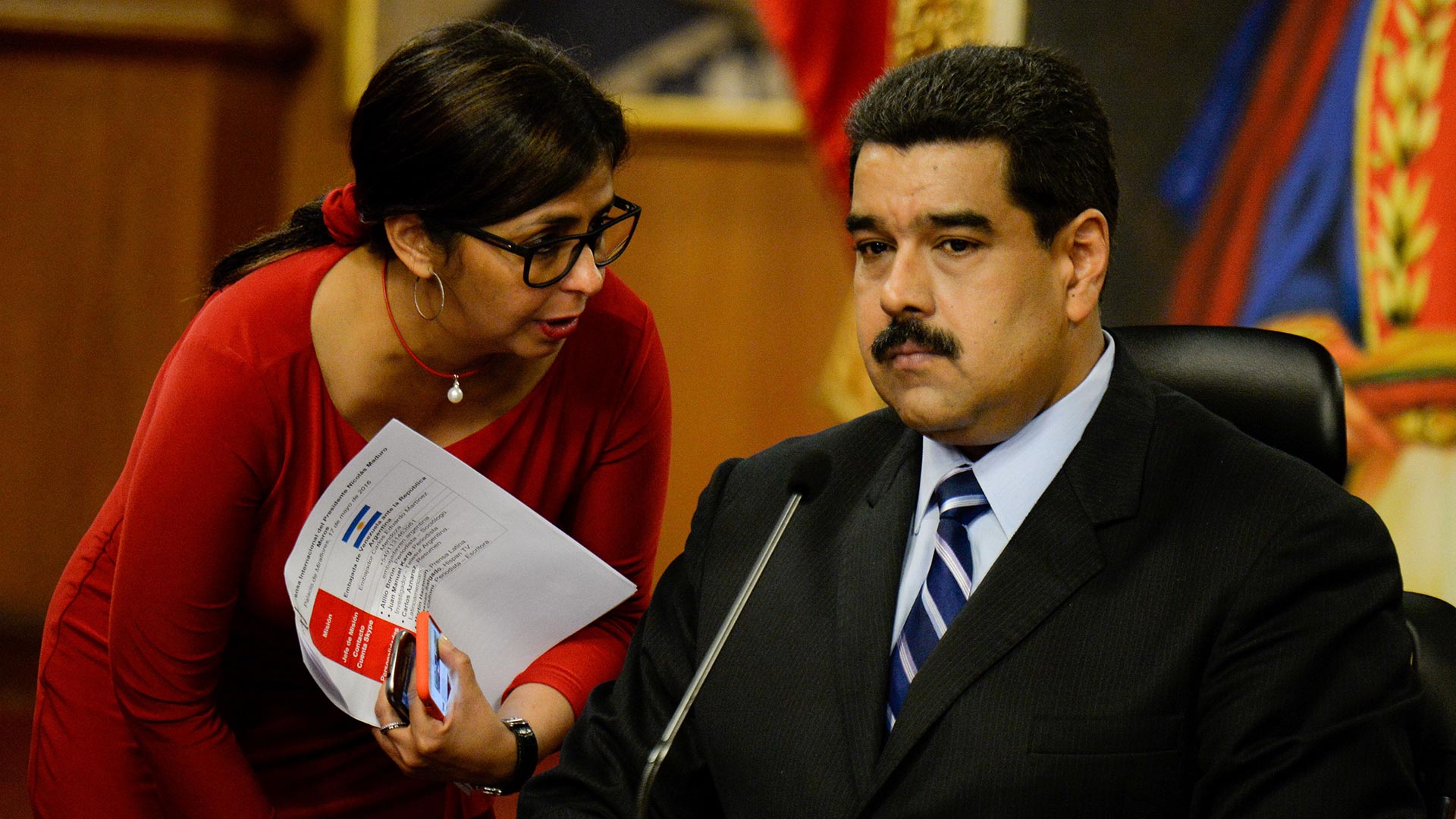
Chavismo assured this Friday that Nicolás Maduro, who is detained in the United States, had prepared Delcy Rodríguez to “assume the reins” of the country.
“The president had already prepared Delcy Rodríguez so that, in any circumstance, she would assume the reins of the republic and follow the plan and continue working for the Venezuelan people,” said the head of Government of the Capital District, Nahum Fernández, in a broadcast on the state channel VTV.
In this sense, he indicated that “they are thinking about maintaining President Nicolás Maduro’s agenda,” after Rodríguez took office as acting president on January 5.
Fernández took the opportunity to mention that the “ultra-right does not rest” and continues, he stressed, the “agenda of betrayal”, of “sanctions and blockades.”
In this context, he mentioned those he described as those “responsible” for this: the opposition leader María Corina Machado, Julio Borges and Leopoldo López, the latter two exiles.
Releases as Maduro’s mandate
On the other hand, he valued the release process that, he said, began at the end of last year for people who “were compromised and others who, in an act of confusion, were captured.”
Delcy Rodríguez, who served as Maduro’s vice president, assumed power by order of the Supreme Court of Justice (TSJ), after the capture of the Venezuelan president by US troops.
Since then, the government in charge has initiated an “exploratory” process to resume relations with the United States, has agreed to send millions of barrels of crude oil to the United States for marketing, has announced a process for the release of political prisoners and has proposed an amnesty law.
On January 8, the president of Parliament, the Chavista Jorge Rodríguez, announced the release of a “significant number” of people without specifying the number or the conditions of this measure. Previously, the Government had reported about 187 releases for Christmas and New Year, but NGOs assured that they managed to verify about half of them.
On Thursday, the Venezuelan Parliament, with a large pro-government majority, advanced an amnesty for the cases of political prisoners since 1999, when Chavismo came to power.
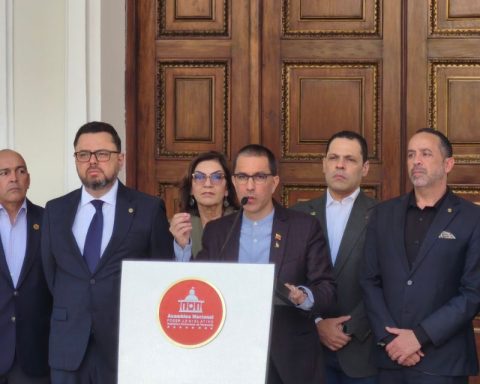
The project excludes those prosecuted and convicted of serious violations of human rights, crimes against humanity, war crimes, intentional homicide, corruption and drug trafficking, said Chavista deputy Jorge Arreaza when presenting the bill that was approved unanimously in its first discussion.
The Venezuelan Executive assures that the country is “free of political prisoners” and that those designated as such are imprisoned for the “commission of terrible punishable acts.”