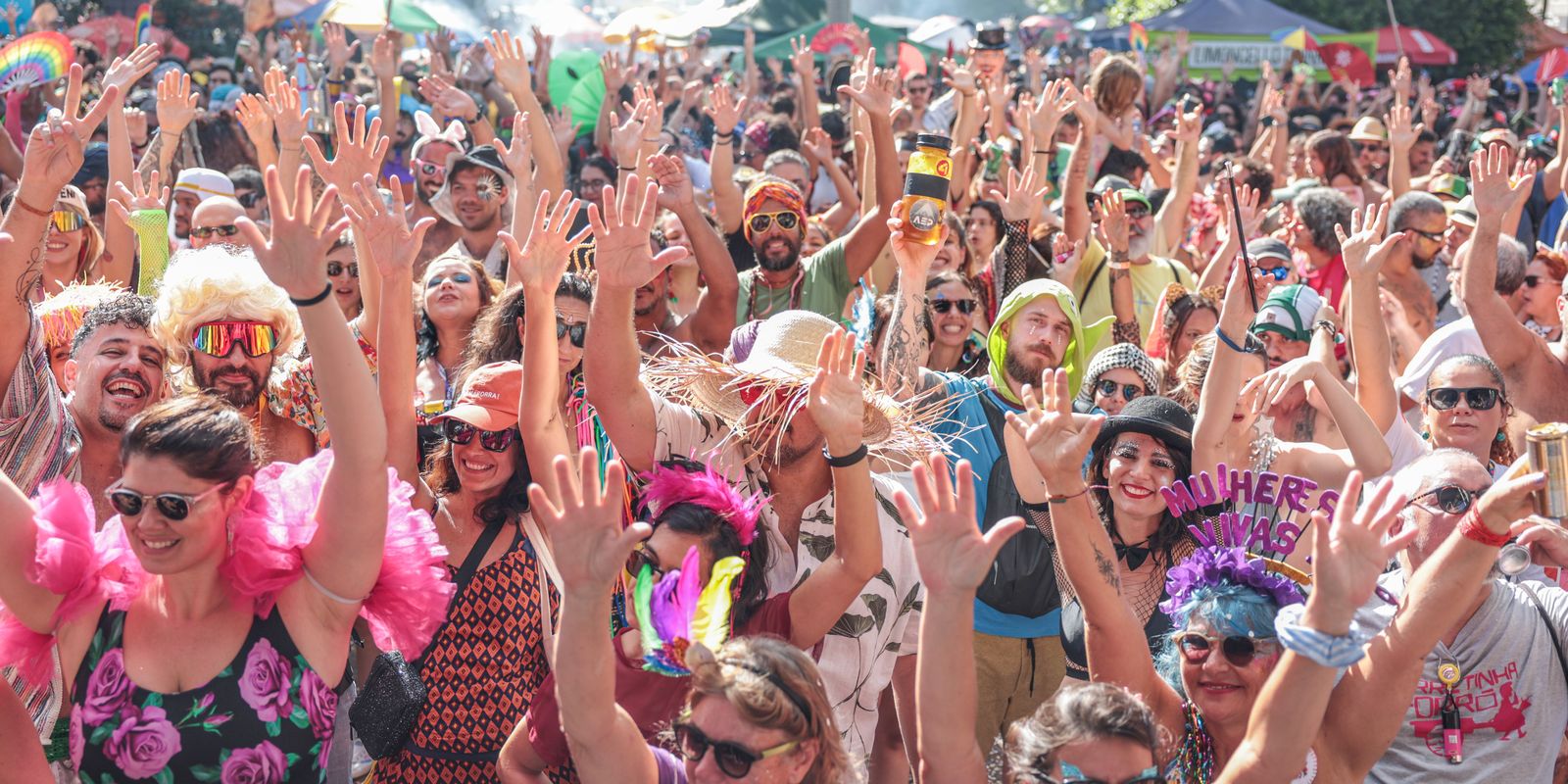
With the blessings of the doll of carnival artist Joãozinho da Vila, who died in 2017, Praça Zé Ramalho, 5 kilometers from Praça dos Três Poderes, in the center of Brasília, became a scene of cultural resistance this Sunday (15) of Carnival.
For another year, Bloco Charrete, dedicated to rhythms from the North, attracted revelers committed to maintaining joy in one of the most historically important neighborhoods in the Federal District.
Charrete’s mission is to maintain the legacy of the Vilões da Vila block, founded by Joãozinho. After the carnival worker’s death, Vila Planalto, a neighborhood close to Lake Paranoá where the workers who built Brasília originally lived, went without carnival festivities for two years.
The carnival silence was only broken in 2019, when producer Thiago Fanis, accompanied by members of Vilões da Vila and cultural figures from Vila Planalto, founded Charrete, formed by the union of the groups Fanfarra Tropicaos and Charretinha do Forró.
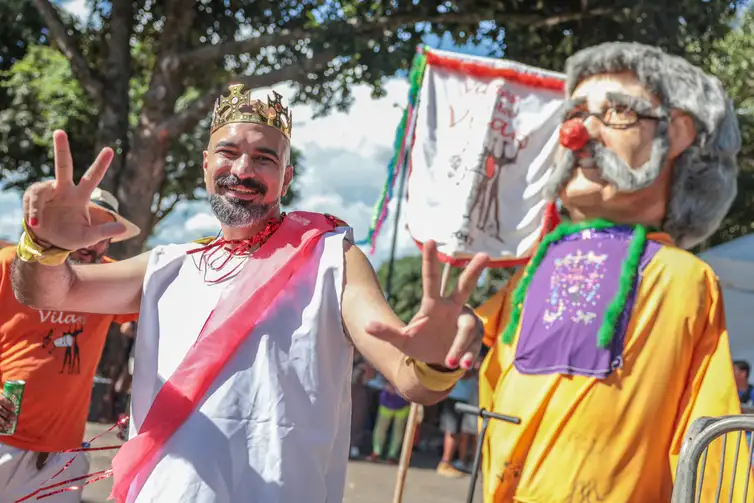
Producer Thiago Faniz next to the carnival puppet Joãozinho da Vila – Joédson Alves/Agência Brasil
“Vila Planalto is one of the territories with the greatest historical heritage in the Federal District. We try to keep the flame of carnival burning in this region, always with the blessings of Joãozinho da Vila”, explains Thiago, in front of the carnival doll.
He makes a point of highlighting that he asked the remaining members of Vilões da Vila for permission before founding the block.
Regional songs
Forget tambourines, tambourines and axé. In the Bloco Charrete carnival, rhythms from the North, Northeast and Central-West coexist. The band Charretinha do Forró plays northeastern rhythms. Fanfarra Tropicaos combines popular music with traditional carnival marches.
The presentation of DJs and cultural collectives from the DF is also planned, with styles ranging from reggae to tecnobrega. At the time that Agência Brasil’s report accompanied the block, traditional carnival marches and old boleros were played on stage.
Indoor carnival
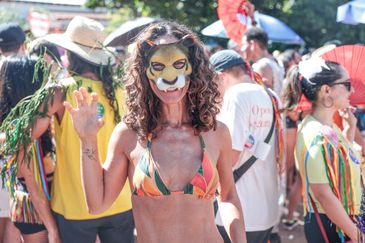
Monique Menezes likes the carnival atmosphere of a country town that she finds in Vila Planalto, in the center of the capital – Joédson Alves/Agência Brasil
Smaller than the most famous blocks in the Federal District, Charrete attracts a public looking for more traditional festivities and fewer crowds. Dressed as a lioness, self-employed Monique Menezes, 48 years old, says that Vila Planalto has become a reference for a different carnival.
“Vila Planalto is reminiscent of a village in the interior, and the carnival here ends up reflecting this atmosphere of small-town street revelry,” says Monique.
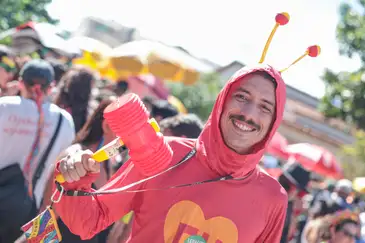
Álvaro Peres went to Charretinha do Forró for the first time and approved the festivities – Joédson Alves/Agência Brasil
For the first time on the blog following a recommendation from friends, bank employee Álvaro Peres, 36 years old, felt attracted to the more traditional format of Charrete.
“From what I’ve seen so far, I liked the group. It’s fun that values Brazilian culture, with a rhythm closer to Tropicalism”, he declares.
Resistance of joy
Even due to its proximity to Praça dos Três Poderes, carnival in Vila Planalto is not dissociated from politics.
While Joãozinho da Vila’s doll paraded in Praça Zé Ramalho, a reveler waved a Palestinian flag.

Reveler with tiara calling 180 to report crimes of violence against women – Joédson Alves/Agência Brasil
Feminist banners condemned the harassment of women at Carnival and the current wave of femicides.
Stickers against the amnesty for those convicted on January 8th and in favor of punishing those responsible for the liquidation of Banco Master were distributed to the revelers present.
Likewise, the public stuck stickers with the Brazilian flag on their clothes, calling for the country’s sovereignty in the face of Donald Trump’s harassment.
The block’s regulars agree that carnival is not just about having fun, but about sending messages.
“By definition, carnival is political. It is an act of resistance, only through joy. We need to smile, sing, dance”, defended Monique.
“The current system is built for us to get frustrated. Carnival is an opportunity to have fun and return to our routine in a more relaxed way”, comments Álvaro.